


Inspired by the GGGWeek 2025 session “Advancing Sustainable AI for Green Growth,” held on 29 October 2025 in Seoul, Republic of Korea
Artificial intelligence is rapidly reshaping how societies plan, adapt, and respond to global challenges. At the same time, the accelerating climate crisis is placing greater pressure on governments and institutions to ensure that digital innovation supports environmental sustainability.
In response to these evolving needs, Global Green Growth Week (GGGWeek) 2025 convened a high-level dialogue on “Advancing Sustainable AI for Green Growth,” bringing together policymakers, industry leaders, researchers and international organisations to examine opportunities and risks at the intersection of AI and climate action.
The session formed part of wider global efforts under the Coalition for Sustainable AI, launched at the Paris AI Action Summit. The Coalition provides a platform for governments, industry, academia and civil society to collaborate on responsible AI development that supports environmental protection and climate-resilient growth. GGGI, the International Telecommunication Union (ITU) and the Republic of Korea are among the key stakeholders contributing to these initiatives, helping shape emerging frameworks for accountability, innovation and cooperation.
Within this context, the dialogue gathered GGGI Member States, partners and private-sector innovators to review progress, identify priorities and discuss how AI can be leveraged to strengthen climate mitigation, adaptation and inclusive green growth. Speakers underscored the importance of ensuring that digital transformation and climate action advance together, highlighting practical examples where AI is already enabling more resilient, data-driven and sustainable development pathways.
“AI must be green at its core”
Opening the session, Sang-Hyup Kim, Executive Director of the Global Green Growth Institute (GGGI), linked the rise of AI with the shifting centre of gravity in the global economy. With Asia now accounting for roughly 40 percent of global carbon emissions due to rapid growth and industrialisation, the region sits at the heart of both the climate challenge and the AI transition. He emphasised that “for AI to be truly transformative, it must be green at its core,” noting GGGI’s engagement in the Coalition for Sustainable AI and its role in connecting governments with innovators. Country examples that GGGI is a part of illustrate how AI is already supporting climate action: AI-based weather forecasting in Ecuador, seagrass mapping for blue carbon in Indonesia, and new measurable, reportable and verifiable (MRV) systems that use AI to strengthen the reliability of climate plans. Together with the Green Growth Knowledge Partnership (GGKP), GGGI is also exploring ways to make decades of green growth knowledge and policy insights accessible in real time through AI-enabled platforms.

National leadership on sustainable AI
Kyunghoon Bae, Deputy-Prime Minister and Minister of Science and ICT of the Republic of Korea, outlined Korea’s ambition to be among the world’s leading AI nations while aligning its digital transition with climate objectives. Korea is expanding AI data centres powered by renewable energy—including offshore wind—and advancing high-efficiency AI semiconductors and power electronics to reduce the energy footprint of digital technologies.
These investments are coupled with efforts to apply AI to global challenges such as climate change and food security, along with a commitment to share successful approaches with the international community.
Rwanda’s contributions highlighted how AI is being positioned as a pillar of national development. The Honorable Jimmy Gasore, Minister of Infrastructure of Rwanda, described the country’s national AI policy, the Africa AI Summit, and the establishment of an AI training hub as key enablers of locally developed solutions. Rwanda is applying AI across practical priority areas—precision agriculture, deforestation monitoring, clean energy, and infrastructure resilience—supported by investments in digital infrastructure and human capital. Ensuring equitable access and environmental sustainability remains central to this approach.
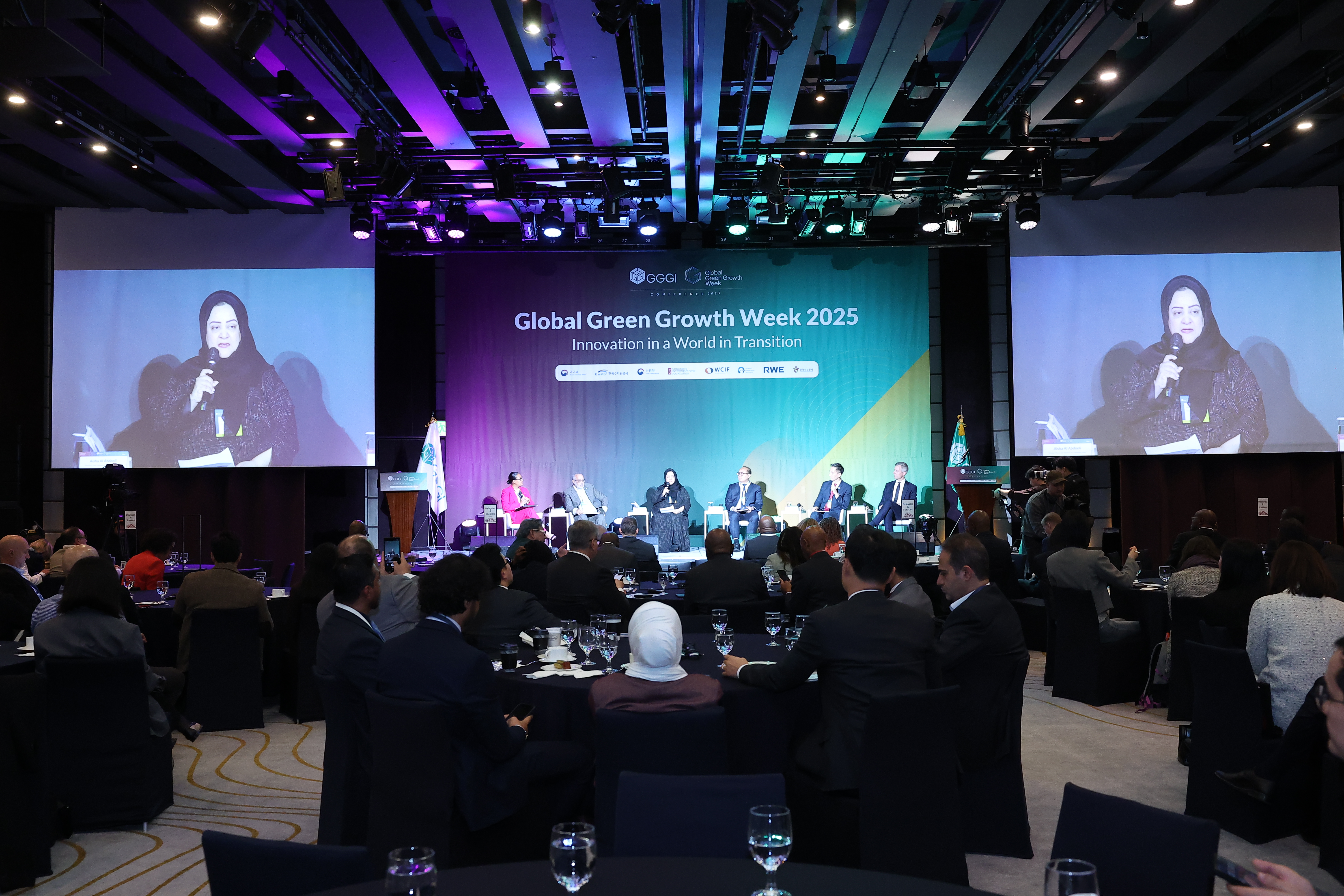
Perspectives from the United Arab Emirates and Indonesia added governance and ethics dimensions. Aisha Al Abdooli, Director at the Ministry of Climate Change and Environment of the United Arab Emirates, noted that the UAE’s AI principles and ethics framework place sustainability and privacy at the core of deployment, with growing attention to the environmental footprint of global data centres.
From Indonesia, Nizhar Marizi, Director of Environmental Affairs at the Ministry of National Development Planning (BAPPENAS) of the Republic of Indonesia, highlighted ongoing updates to the national AI roadmap, which strengthen environmental and social safeguards. Indonesia is advancing green digital infrastructure—including energy-efficient, renewables-powered data centres—while promoting human-centred AI through investments in digital literacy and community-oriented applications such as early warning systems, climate-smart planning and ecosystem monitoring.
From the Organisation of Eastern Caribbean States (OECS), Didacus Jules, Director General, emphasised the specific realities of small island developing states. High infrastructure costs, data sovereignty concerns and the need for regional solutions—such as shared renewable-powered data centres—shape how AI can be integrated. He noted that many promising initiatives in the Eastern Caribbean are being driven by young innovators, underscoring the importance of retaining control over data and software while strengthening regional research cooperation and financing partnerships, including with the Republic of Korea.
Throughout the discussion, Caroline Raes, GGGI Country Representative to Rwanda, moderated the dialogue, connecting experiences across regions and guiding the conversation from strategic vision toward practical implementation.
Private sector perspectives: opportunity and risk
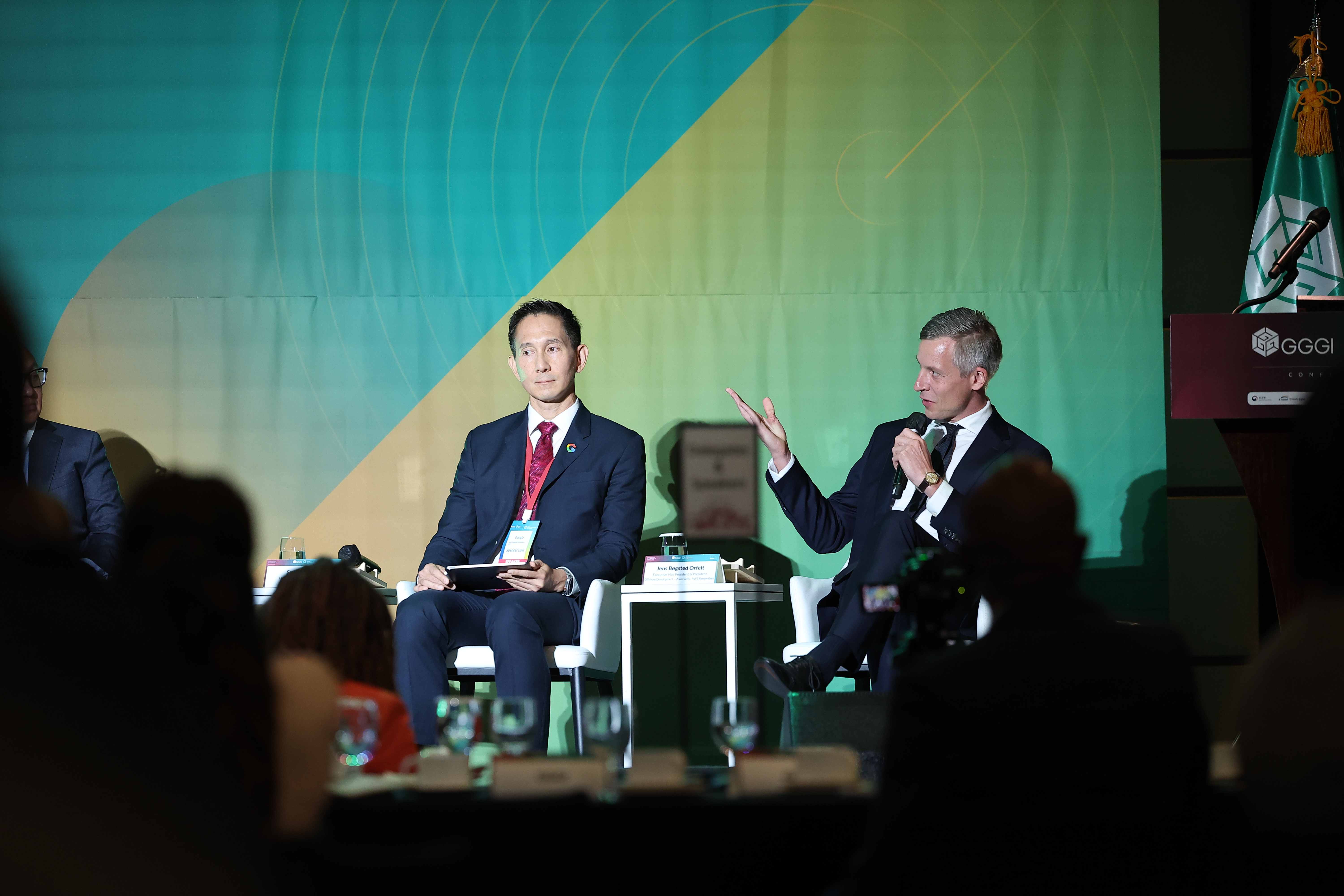
Private sector representatives offered insights into both the potential and the challenges of AI deployment. From the energy sector, Jens Bøgsted Orfelt, Executive Vice President & President for Offshore Development – Asia-Pacific at RWE Renewables, pointed to rising electricity demand driven by large-scale AI applications at a time when energy transitions remain uneven. Without accelerated investment in grid infrastructure and renewable energy, AI could add pressure to decarbonisation efforts. He noted the disparity between the financial resources flowing into AI and the comparatively limited investments in clean power and grid upgrades—reminding participants that “without energy, there is no AI.”
From the technology sector, Spencer Low, Head of Regional Sustainability for Asia-Pacific at Google, described how AI is contributing to climate action across mitigation, adaptation and livelihoods. Examples included AI-assisted mapping and navigation to reduce congestion; traffic signal optimisation in Hyderabad and Jakarta; and tools supporting solar energy deployment.
On adaptation, he highlighted AI-based monsoon and weather prediction systems developed with India, which enabled tens of millions of SMS advisories to farmers. Satellite-based tools for early wildfire detection and AI-supported landscape monitoring for agriculture are being expanded across Asia to strengthen climate resilience and inform land-use planning. These examples illustrated that responsibly designed AI can generate tangible benefits for communities most affected by climate impacts.
AI for inclusive green growth planning
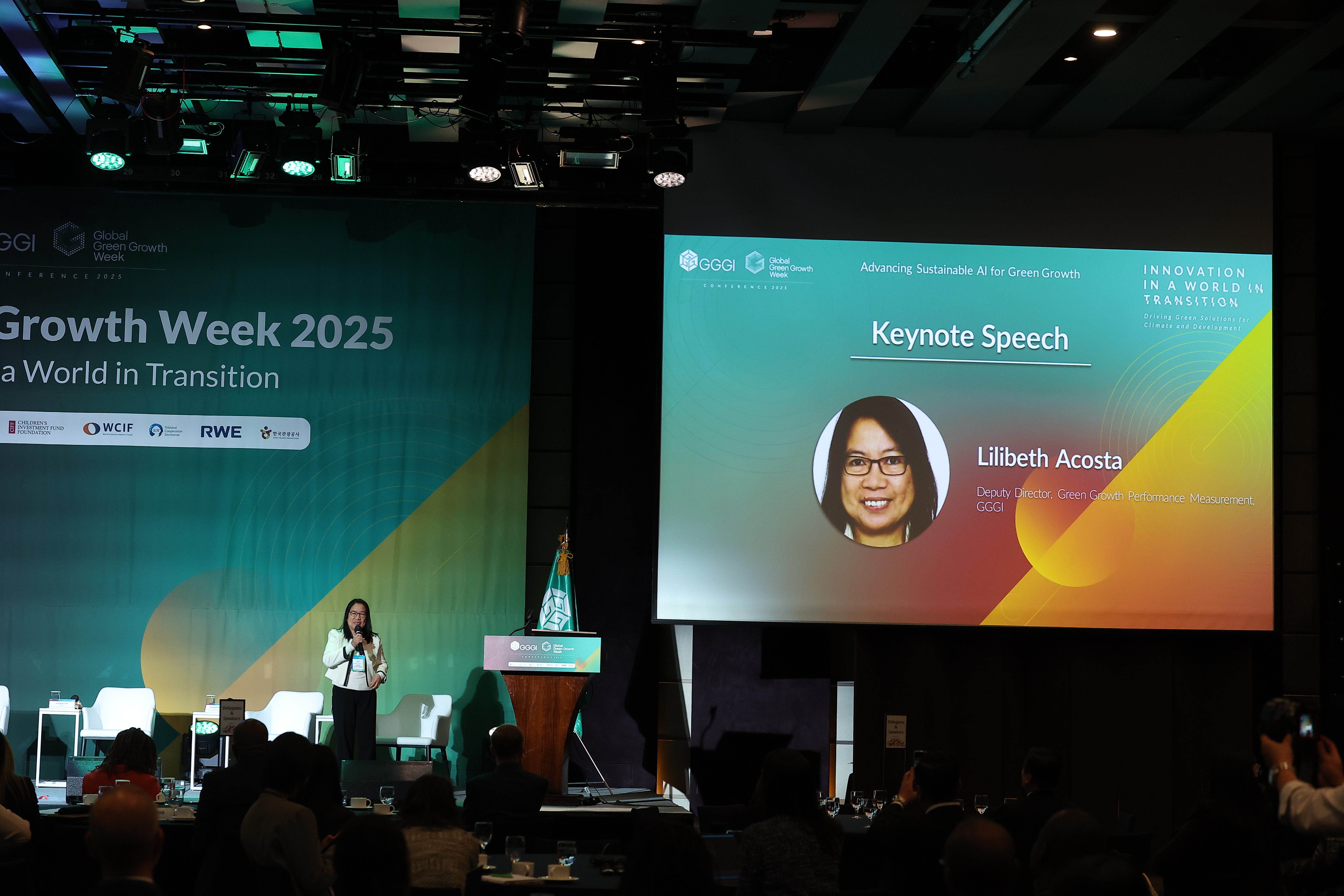
The session also showcased emerging AI applications for policy planning. Dr. Lilibeth Acosta, Deputy Director and Programme Manager for the Green Growth Performance Measurement at GGGI, presented an AI-enhanced green growth simulation toolkit developed with international partners.
The tool integrates models covering energy, water, land use, materials and waste, alongside indicators for gender equality and social inclusion. AI techniques are used to harmonize data, fill gaps through machine learning, and improve model performance. The resulting outputs are translated into interactive tools that allow policymakers to explore scenarios and assess the environmental and social impacts of climate and green growth policies. This approach has already been applied by GGGI in several African countries to analyse gender and inclusion outcomes of NDC measures and has been recognised by international partners for supporting SDG implementation.
In a subsequent technical segment, Professor Hyungjun Kim of the Korea Advanced Institute of Science & Technology (KAIST) discussed the growing computational requirements of high-resolution climate and Earth system modelling. Advances in modelling and AI are improving the representation of climate extremes and supporting decision-making, but also highlight the need to manage the carbon footprint of large-scale computing. More efficient model architectures and AI-based platforms can help expand access to advanced climate information in developing countries without replicating full supercomputing demands.
A call for collaboration and inclusive governance
In closing, Ji-Ho Cha, Member of the National Assembly of the Republic of Korea, underscored that the trajectory of AI will be determined not only by technology, but by institutions, governance and cooperation. He linked AI and climate change to broader issues of social resilience, public health and inequality, noting that disparities in human and institutional capacity shape how countries can use AI to respond to complex crises. Strengthening AI architectures and knowledge systems that enable universal access to information can help reduce these disparities and bolster collective resilience.
This dialogue pointed to a collective understanding of the principles needed to advance sustainable AI. Sustainable AI requires intentional choices—from energy sources and data standards to infrastructure design and regulation. Inclusivity remains essential, particularly for small island developing states and least developed countries, and AI governance must support equitable access, capacity building and data sovereignty. Public–private collaboration remains central to this effort, as each stakeholder group plays a role in aligning AI innovation with climate and development goals. Notably, human judgement remains indispensable: AI can augment decision-making, but responsibility and accountability must continue to guide the green transition.
The session concluded with a shared recognition that the rapid expansion of AI can either accelerate or hinder climate-resilient development. Ensuring that it becomes a force for sustainability—not a new source of risk—depends on the governance choices we make now. With deliberate commitment to responsible, inclusive, and environmentally aligned AI technologies, we can harness its potential to drive a just and resilient future.
Photos @ 2025 Global Green Growth Institute