

Inspired by the session “Climate Resilient Infrastructure” at Global Green Growth Week (GGGWeek) 2025
Seoul, 30 October — Global Green Growth Institute (GGGI) Headquarters
Infrastructure forms the backbone of socio-economic development, providing essential services such as water, energy, transport, and public facilities. Yet, as climate risks intensify and biodiversity loss accelerates, infrastructure systems—many with operational lifespans of 50 to 100 years—are increasingly vulnerable to disruption. This calls for a fundamental shift in how infrastructure is financed, designed, and governed. This perspective reflects global policy directions, including reaffirmations at the Fourth International Conference on Financing for Development (FFD4), where Member States underscored the need for “quality, reliable, resilient and sustainable infrastructure.” emphasizing the need to integrate climate and nature considerations into investment frameworks.
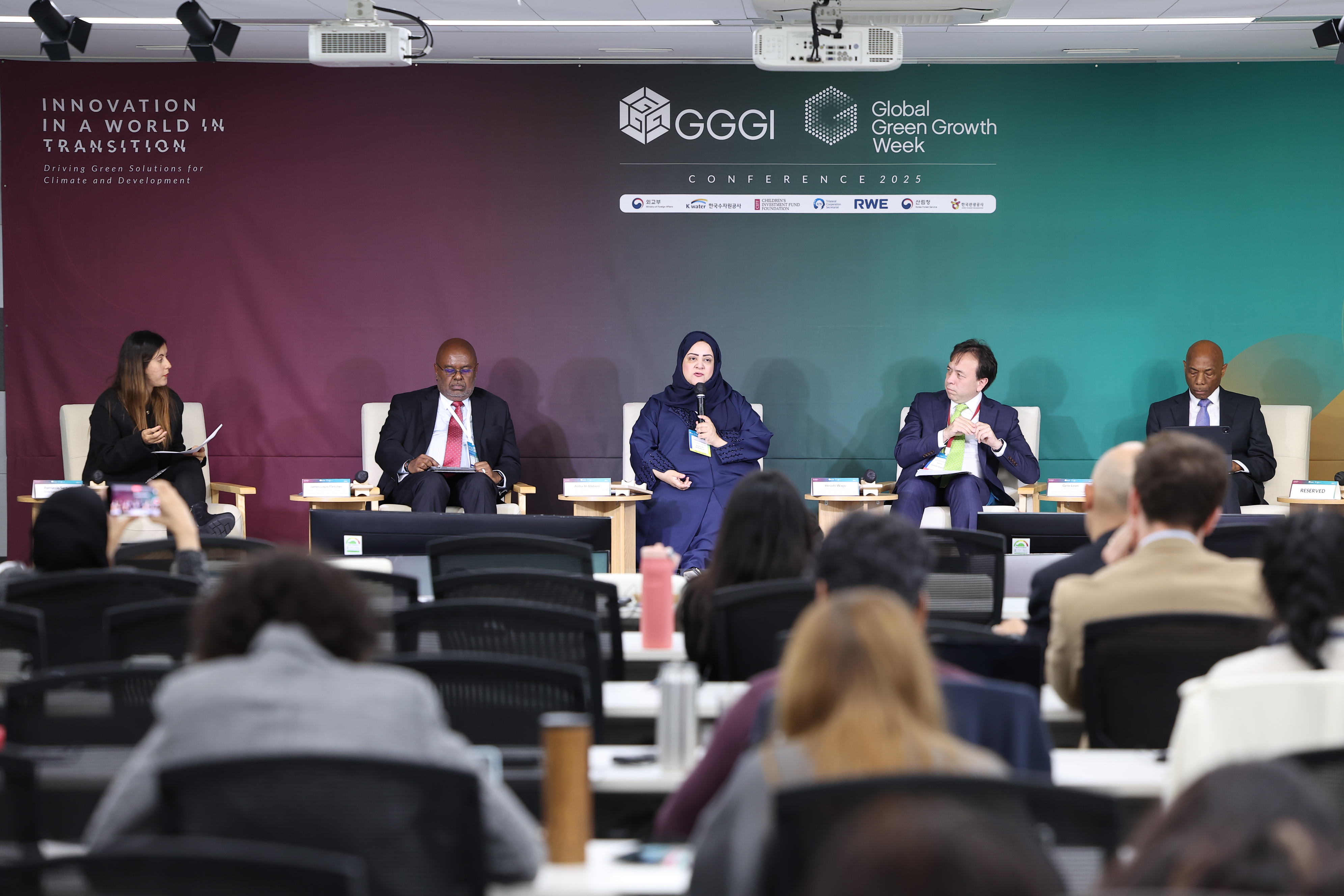
Against this backdrop, the session convened policymakers, practitioners and development financiers to discuss how infrastructure finance can move beyond business-as-usual by embracing climate-resilient, nature-positive, and socially inclusive approaches. Discussions focused on how these considerations can be systematically integrated across the entire infrastructure lifecycle—from planning and design to procurement, financing, and long-term operation and maintenance.
Making Resilience a Standard Requirement for Infrastructure
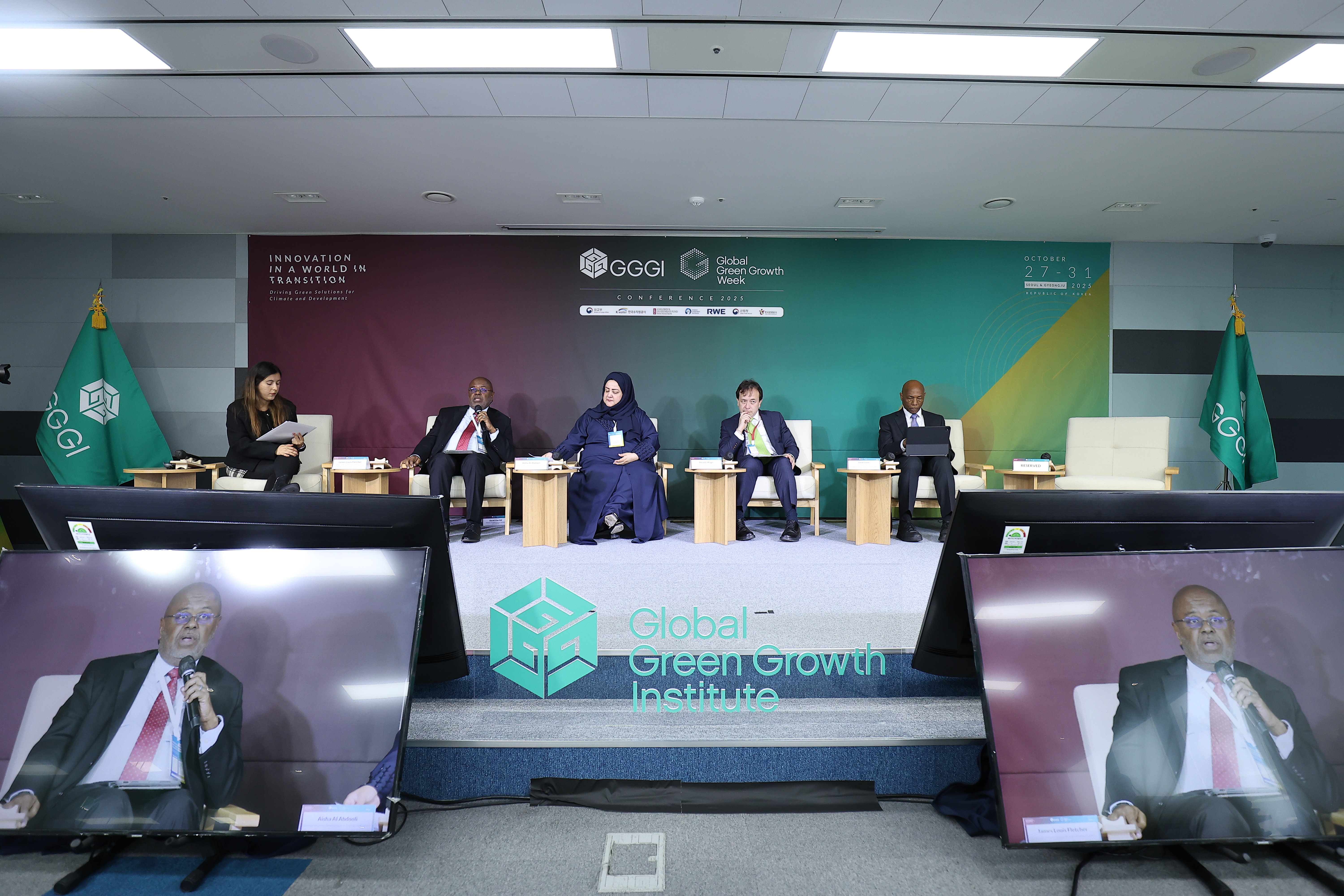
Dr James Fletcher, Chairman of the Executive Board of the Caribbean Centre for Renewable Energy and Energy Efficiency (CCREEE), emphasized that for Small Island Developing States (SIDS)— which are regularly impacted by high-intensity storms such as Hurricane Melissa—climate shocks are no longer rare, low-probability events but recurring systemic risks. As such, climate resilience must be embedded as a baseline standard across all public infrastructure planning, design, and delivery.
Dr Fletcher called for climate-responsive procurement frameworks that mandate that procurement processes explicitly require infrastructure assets—such as clinics, schools, substations and water plants—to be designed for Category 4–5 hurricane conditions ensuring structural integrity, service continuity, and rapid post-disaster recovery.He highlighted the need for project pipelines based on updated climate data and current risk profiles rather than historical assumptions. Coastal ecosystems such as mangroves, coral reefs, wetlands and floodplains should be recognised as essential protective infrastructure.
Dr. Fletcher also observed that many SIDS, already carrying substantial debt burdens, face challenges in financing resilience through non-concessional borrowing. He stressed the importance of blended financing mechanisms that combine concessional capital, risk-transfer instruments, and resilience-linked performance metrics.
GGGWeek 2025
National Approaches to Integrating Climate and Nature in Infrastructure Planning
Aisha Al-Abdooli, Director at the Ministry of Climate Change and Environment of the United Arab Emirates (UAE), presented the country’s integrated approach to embedding climate resilience and nature-positive into infrastructure planning, regulatory frameworks, and capital allocation. She highlighted the UAE’s “Istidama” programme as a national sustainability framework that integrates sustainability requirements into building guidelines, forming a basis for resilient and environmentally aligned infrastructure.
She explained that the UAE’s Sustainable Finance Framework guides financiers and developers in aligning capital flows with climate objectives. Through mechanisms such as climate-aligned public-private partnerships (PPPs) and long-term power purchase agreements (PPAs), the country has accelerated investment in renewable energy, clean technologies, and climate-adaptive infrastructure systems.
Ms. Al-Abdooli also highlighted financial sector contributions. By the end of 2022, six major UAE banks had collectively allocated USD 51.8 billion for green financing, focusing on renewable energy, waste-to-energy and climate-related technologies. These efforts complement the UAE’s USD 30 billion contribution to the ALTÉRRA global climate fund, reinforcing its position as a regional leader in climate finance. She also stressed that institutional capacity building remains central to these efforts. She emphasized the importance of strengthening skills not only within government but also across financial institutions, academia, and youth networks to ensure long-term continuity in climate-responsive planning.
How a Regional Development Bank is Embedding Resilience Across Its Portfolio
Hiroshi Wago, Global Partnerships Director at CAF – Development Bank of Latin America and the Caribbean, highlighted the institution’s strategic evolution to mainstream climate resilience and nature-positive principles across its infrastructure financing portfolio. Originally founded with a strong infrastructure mandate, CAF now serves 24 member countries and is leveraging a USD 7 billion capital increase to expand its climate relevant programs at scale. CAF aims for at least 40% of its operations to carry green components by 2026—a target already surpassed. The institution supports member countries in integrating disaster risk management and climate adaptation into project design. Internal guidelines, taxonomies, eligibility criteria and emissions calculation tools help standardize resilience considerations across sectors.
To enhance financial innovation and catalyze climate-aligned infrastructure, CAF mobilizes blended finance instruments, including green bonds, blue bonds, and sustainability-linked sovereign loans. Flagship initiatives include the Rio La Lampa debt-for-nature swap in El Salvador, which reallocates fiscal savings toward watershed restoration and flood resilience, and a suite of low-carbon, climate-resilient investments in the Galápagos Islands aimed at protecting biodiversity while enhancing service delivery. CAF’s portfolio increasingly reflects a shift toward nature-positive infrastructure models that deliver climate adaptation, ecosystem regeneration, and long-term social co-benefits.
GGGWeek 2025
Re-defining Value and Risk in Infrastructure Finance
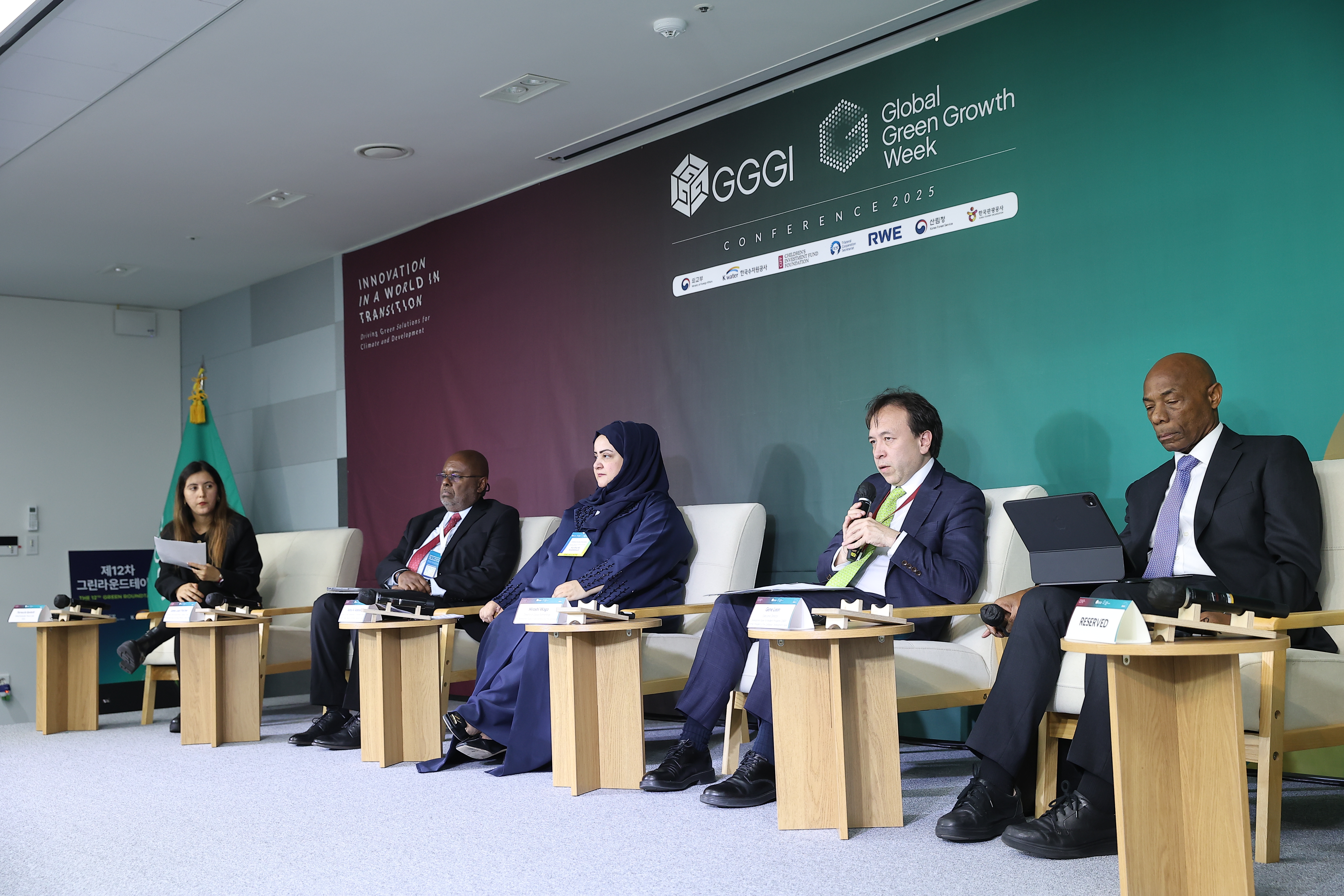
Dr. Hyginus Leon, Executive Director of the Development Bank for Resilient Prosperity (DBRP), emphasized the need to reframe how value and risk are conceptualized within infrastructure systems. From his perspective, infrastructure should not be treated merely as a portfolio of physical assets, but as part of a broader, interconnected system where produced capital, natural capital, and human capital co-function to generate long-term socio-economic value. Financing approaches that focus only on short-term economic returns, he noted, overlook this interconnected reality.
Building on this point, the discussion turned to the conditions that make long-term resilience investable. When outcomes can be measured, verified, and integrated into financial decision-making, resilience shifts from an abstract concept to a quantifiable benefit. This requires tools that adjust project valuations to account for ecosystem contributions, as well as mechanisms that recognise natural systems as assets capable of reducing risk.
He also highlighted the value of incorporating resilience-linked provisions into loan terms and assessing creditworthiness through a country’s balance sheet—reflecting long-term stability—rather than relying solely on short-term cash flow indicators. By aligning financial incentives, MRV systems (Monitoring, Reporting & Verification), and risk-sharing mechanisms, investors are more likely to provide capital toward climate-resilient, nature-positive infrastructure. This shift supports a new financial architecture that recognizes resilience not as a cost, but as a strategic asset.
Integrating Nature-Based Options into Feasibility and Safeguards
Returning to implementation challenges, Dr. Fletcher outlined practical steps for embedding Nature-Based Solutions (NBS) into feasibility studies and safeguards. He stressed that feasibility assessments should begin with identifying appropriate combinations of natural and engineered measures—such as mangrove restoration, reef reinforcement, coastal setbacks and drainage systems—rather than defaulting to concrete structures.
Environmental and Social Impact Assessments (ESIAs) and Environmental and Social Management Plans (ESMPs) should treat natural systems as essential assets. This includes setting ecosystem performance benchmarks, integrating Free, Prior and Informed Consent processes, engaging women and marginalised communities in planning, instituting robust grievance mechanisms, and applying “no-net-loss” or “net-gain” biodiversity standards. Dr. Fletcher also raised the critical issue of long-term maintenance and financing for NBS, noting that many nature-based interventions degrade over time due to insufficient operational funding. He proposed leveraging resilience credit schemes, where stakeholders—such as insurers, utility providers, and tourism operators—financially contribute to NBS upkeep in recognition of the risk-reduction and co-benefits these systems deliver.
Strengthening Regional and Financial Mechanisms for Resilience
In closing reflections, Dr Fletcher proposed establishing a regional resilience facility for the Caribbean to enable rapid-response disbursements—within 30 days post-disaster—to restore essential services and natural defenses. This facility would complement sovereign-level parametric insurance schemes by directly supporting households, MSMEs, and community-led adaptation initiatives, thereby enhancing bottom-up resilience and speeding recovery.
He also reiterated the importance of vulnerability-based concessional financing, disaster-linked debt clauses and debt-for-resilience swaps to prevent recovery efforts from worsening debt trajectories in small island developing states.
Ms. Al-Abdooli stressed the role of capacity development and inclusive stakeholder engagement- including academia, private sector and youth— in institutionalizing resilience within planning, procurement, and investment decision-making processes. Mr. Wago highlighted CAF’s technical assistance and blended-finance instruments as practical enablers of resilience integration. Dr. Leon underscored that financial systems must evolve so that verified resilience is recognized as a contributor to creditworthiness.
Conclusion: Embedding Resilience Across Infrastructure Systems
Across all interventions, the discussion affirmed that resilience is most effective when embedded throughout the infrastructure cycle—from design and procurement to financing and long-term maintenance. Integrating ecosystems as critical infrastructure, aligning financial flows with climate and nature-related risks, and strengthening institutional and technical capacities are essential to ensure infrastructure delivers adaptive, low-carbon, and inclusive development outcomes in a rapidly changing environment.
The session underscored that infrastructure decisions made today will influence resilience outcomes for decades to come, highlighting the need for coordinated, evidence-based approaches that integrate climate and nature considerations into mainstream infrastructure planning and investment.
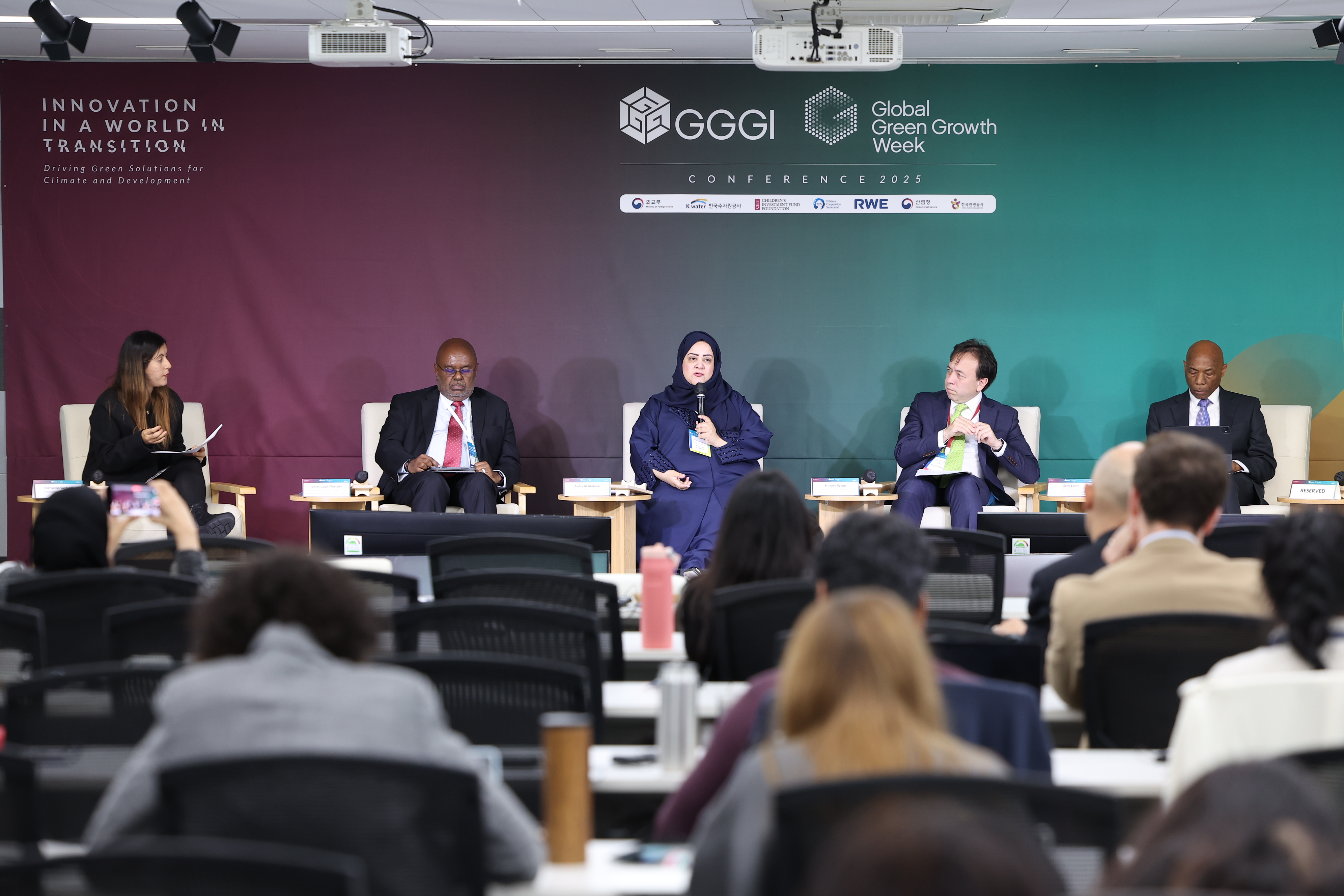
GGGWeek 2025
Photos @ 2025 Global Green Growth Institute
Watch the session recording: