

Inspired by the session “Enabling Circular Economy Investments: Financing Pathways and Scalable Solutions for the Philippines” at GGGWeek 2025
Seoul, 27 October — Global Green Growth Week, GGGI Headquarters
A new chapter for circular finance
The global transition toward a circular economy is accelerating, with countries recognizing that resource efficiency, waste reduction, and climate resilience are not just environmental goals; they are economic imperatives. For the Philippines, a country balancing rapid growth with significant resource and waste management challenges, the shift toward circularity represents a transformative opportunity. The key question is no longer why circularity matters, but how to mobilize the financing, partnerships, and innovation systems needed to make it real.
At Global Green Growth Week 2025, policymakers, financiers, project developers, and impact investors gathered to explore exactly what it will take to build a dynamic and investable circular economy ecosystem that delivers impact at scale.
Opening the session, Marcel J. Silvius, GGGI Country Representative to the Philippines and Deputy Regional Director for Asia, underscored the need to rethink how resources are used and how value is created across the economy. He emphasized that the transition to a circular economy demands a fundamental shift in how we create value. His remarks set the tone for a discussion focused on building credible pipelines of bankable circular projects, backed by clear standards, and strengthening investor confidence as well as the financial ecosystem needed to scale them.
Defining the framework: a circular economy taxonomy for credible investments
The shift toward a circular economy (CE) requires more than ambition—it requires clarity. Financial institutions, regulators, and project developers need a shared language to distinguish genuinely circular activities from business-as-usual models. A circular economy taxonomy provides exactly that foundation. It defines what “circular” means in operational, financial, environmental, and social terms, enabling governments to design incentives, investors to assess risk, and developers to structure projects that qualify for green or circular finance.
Without taxonomy, circular projects, such as biochar production, waste-to-value systems, and low-carbon aviation fuels, struggle with inconsistent criteria, unclear eligibility, and unpredictable financing pathways. Availability of such taxonomy as a reference can help countries align with global practices, strengthen investor confidence, and build pipelines of credible, financeable, and scalable CE projects.
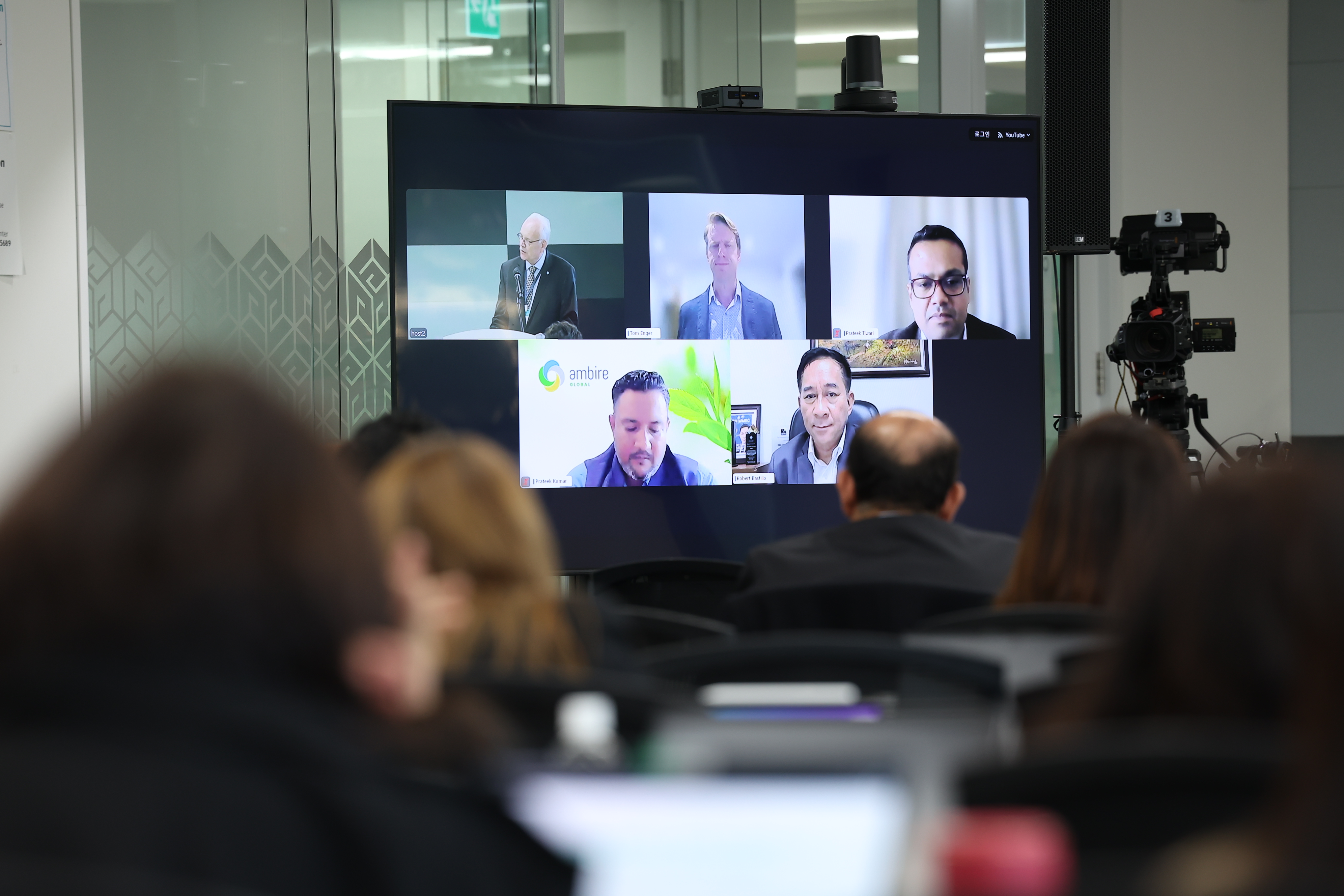
Prateek Kumar of Ambire Global presented how the Philippines is the first country to integrate circularity into its Sustainable Finance Taxonomy Guidelines (SFTG) by introducing a circular economy objective. This Phase II update is being developed through the Financial Sector Forum and the Green Force, led by the Bangko Sentral ng Pilipinas (BSP) and the Department of Finance (DOF), respectively. The expansion of the SFTG, which includes a technical annex on circular economy activities, is grounded in the country’s broader economic and policy landscape, raising an important question: why circularity, and why now?
Why circularity, and why now?
Circularity has become increasingly urgent for the Philippines for four practical reasons. First, the country faces growing resource constraints and a high dependence on imported materials, making efficient resource use not just desirable but essential. Second, improved resource and waste management offers significant economic benefits, opening opportunities for value recovery, reduced system costs, and new green industries. Third the Philippines has made strong national and global commitments to advance circular economy approaches, positioning circularity as a core strategy for sustainable development. Finally, these commitments are reinforced by existing policies such as the Extended Producer Responsibility Act and the National Plastic Action Partnership, which provide regulatory momentum and clear direction for implementation.
Together, these four drivers shape the expansion of the Sustainable Finance Taxonomy Guidelines (SFTG) with circular economy activities and make the shift toward circularity both timely and necessary.
Phase II of the SFTG, expected completion by 2026, will classify circular activities across four business models—circular design, optimal use, value recovery, and circular support—and tag them green, amber, or red to guide financial institutions and project developers. For instance, municipal material recovery facilities (MRFs) will need high recovery rates and strong residue management to qualify as ‘green’, while ‘amber’ classification provides a pathway for upgrading existing assets toward higher performance. The taxonomy will also apply Do No Significant Harm (DNSH) and Minimum Social Safeguards (MSS), ensuring alignment with Philippine laws and interoperability with ASEAN and EU frameworks.
Beyond categorization, the taxonomy is designed to align with the ICMA Green Bond Principles, covering use of proceeds, project selection, management of proceeds, and reporting—further strengthening verification processes and enhancing investor confidence and credibility in circular economy investments.
Financing inclusion: building circularity through increased access to green financing
Financing institutions are essential for enabling the circular economy on the ground. They are often the first to see which ideas can scale, which small businesses are facing pressure points, and where modest support can unlock transformative change. This is precisely the role that Small Business Corporation (SB Corp) plays in the Philippines.
Roberto Bastillo, President & CEO of Small Business Corporation (SB Corp), shared how public lending can empower micro, small, and medium-sized enterprises (MSMEs) to take their first steps into greener and more circular business models. To date, SB Corp has extended PHP 93.3 billion in loans to more than half a million borrowers through its network of 534 partner institutions. The institution continues to modernize—introducing mobile onboarding, machine-learning credit scoring, and digital loan disbursement—to make financing more accessible and responsive to the needs of small businesses.
Looking ahead to 2026–2028, SB Corp aims to integrate circular economy lending more deliberately into its portfolio. This includes allocating up to 10% of its lending for green or circular projects, supporting enterprises in small-island and off-grid communities where technologies like solar energy systems or gasifiers can have outsized impact, and encouraging repeat borrowers to adopt simple energy-efficiency measures as part of the loan renewal process.
The message is simple: by lowering barriers to finance and gradually embedding green and circular criteria into mainstream lending, SB Corp can help MSMEs transition toward more sustainable and competitive practices. One example highlighted during the session involved an MSME that began upcycling discarded juice pouches into durable furniture for hotels and export markets—a business that not only reduced waste but also created jobs for local waste collectors. It demonstrated how circular ideas, when paired with accessible finance, can grow into viable and inclusive enterprises.
Investment readiness: connecting impact entrepreneurs with catalytic capital
Circular economy businesses often have strong ideas and promising solutions, but they must still demonstrate to investors that these innovations can scale, deliver measurable impact, and manage risks effectively. Jonathan Abeywickrema of the Impact Investment Exchange (IIX) emphasized that investors consistently look for three critical elements: a scalable business model, sound governance and compliance systems, and clear, verifiable impact results. When these foundations are in place, circular startups become significantly more investable and better positioned to attract long-term capital.
IIX brings significant experience to this work. The organization manages approximately USD 750 million across a range of financial instruments and is widely recognized for its Women’s Livelihood Bond® series, now on its seventh issuance and listed on the Singapore Exchange. Across Asia and Africa, IIX reports reaching 1.9 million people through more than 1,300 deals, reflecting its strong pipeline development and impact track record
Through the Greenpreneurs Accelerator Program, IIX and GGGI are working to strengthen the investment readiness of promising circular startups in the Philippines. Out of nearly 100 SMEs scouted through a nationwide call for applications, IIX evaluated over 50 and shortlisted 10 high-potential green enterprises to pitch at the Demo Day in Manila on 6 November 2025. During the event, startups met with approximately 50 investors through curated one-on-one matchmaking sessions. The top three to five enterprises will receive catalytic capital investments alongside tailored support to strengthen their financial models, operational systems, and impact strategies.
IIX is also working with GGGI to design a new local investment vehicle for the Philippines. His initiative is grounded in insights from over 50 stakeholders—including banks, institutional and angel investors, ecosystem partners, universities, and SMEs—to ensure that the fund reflects real market needs. The goal: to create a mechanism capable of channeling catalytic capital into circular economy projects at scale and accelerating the growth of the country’s most impactful green enterprises.
Circularity at scale: turning agricultural waste into carbon value chains
On the ground, Alcom Carbon Markets Philippines Inc. is proving that circular economy models can be both bankable and scalable. The company’s CEO, Prateek Tiwari, traced Alcom’s progression from its launch in 2020 to its first flagship project—Nueva Char in Nueva Ecija—in 2022, implemented as a public–private partnership with the provincial government. The facility converts rice husk and straw into biochar through pyrolysis, while supplying green heat energy back to participating rice mills. As a carbon removal developer, Alcom generates high-quality carbon credits and sells them to international buyers under both short- and long-term offtake agreements.
With support from GGGI, Alcom organized a national biochar study tour that gathered more than 100 participants from government agencies, farmer groups, cooperatives, and private sector partners. The company is now expanding its operations from two pilot facilities in Nueva Ecija and Oriental Mindoro, to 4 clusters of 16 pyrolysis units in major rice mills across Luzon under the Green Transition Investment Program (GTIP).
Alcom is also working with GGGI, the Philippine Technical Education and Skills Development Authority (TESDA), and partner universities to establish a Technical Vocational Education and Training (TVET) program on carbon removals and biochar—helping localize technical skills, create green jobs, and strengthen the talent pipeline for this emerging industry.
The pyrolysis process produces three outputs: Biochar (solid), Bio-oil (liquid), and Syngas (hydrogen–carbon monoxide gas). The syngas provides renewable heat that can be used for electricity generation. Biochar itself has multiple circular applications: it can serve as poultry bedding, with the resulting enriched litter processed into organic fertilizer to improve soil health and reduce dependence on chemical fertilizers—creating what Tiwari calls “super-circularity.”
“This needs to be scaled up—but we cannot do it alone,” he emphasized, calling for stronger partnerships, supportive policies, and investment to accelerate the growth of innovative circular economy initiatives across the Philippines.
Looking to the skies: sustainable aviation fuel (SAF)
Tom Enger, Head of Strategy for Alcom Carbon Markets and Technical Advisor for SAFAL Inc. extended the session’s circularity lens from land to air. As global SAF supply remains tight and prices significantly exceed those of conventional jet fuel, Philippine airlines risk growing exposure if they rely solely on imports.
A domestic SAF project is now being developed using an alcohol-to-jet (ATJ) pathway in partnership with Petron Scientech, converting large volumes of corn waste from Isabela province into approximately 100,000 tonnes of SAF annually helping to establish the country’s first integrated SAF value chain grounded in agricultural residues.
Feasibility studies are underway, and regional interest from Thailand, Malaysia, Taiwan, and Japan is already strong. With abundant cellulosic feedstock and rising compliance demand driven by CORSIA and emerging national SAF mandates, the Philippines is well-positioned not only to meet domestic aviation needs but also to serve as a competitive SAF exporter in Asia.
Carbon markets as enablers of scale and de-risking
Both the biochar and SAF examples highlighted a broader theme of the session: that unlocking circular value chains requires mechanisms capable of reducing risk and attracting capital at scale. Carbon markets crowd in international finance for domestic projects, helping circular economy projects get off the ground by subsidizing capital expenditure (CAPEX) and de‑risking operations with carbon credits. Notably for SAF, the international jet fuel buyer market overlaps with the carbon financiers interested in co‑financing, creating a path to co‑investment production. Philippines’ national policy is progressing to match international market practices, strengthening signals for circular economy investments.
Closing reflections: Lessons from the Philippines
As Achilles Voltaire Estrada, Senior Investment Officer of GGGI Philippines, emphasized in his closing remarks: “The Philippines is at a pivotal moment in mainstreaming circular economy principles into its financial and industrial systems.”
Across the session, four key pillars emerged. First, the Sustainable Finance Taxonomy Guidelines (SFTG) Phase II establishes a shared national framework and common language for identifying and classifying circular economy activities. Second, SB Corp outlined clear pathways for embedding circular and green criteria into public lending programs—laying the groundwork for more accessible and inclusive financing. Third, the Greenpreneurs Accelerator Program with IIX demonstrates how investment readiness support can surface scalable SMEs and connect them to catalytic capital. Lastly, real-world demonstration projects—such as biochar and sustainable aviation fuel (SAF)—show how agricultural residues and industrial byproducts can be transformed into high-value products, with carbon finance and public–private partnerships helping improve bankability and reduce investment risk.
Underlying all these initiatives is the recognition that project aggregation, digital infrastructure, cross-sector collaboration, and robust monitoring systems will be essential to building a strong and investable pipeline of circular economy projects. With these elements coming together, the Philippines is positioning itself not only to advance its national circularity agenda but also to emerge as a regional leader in circular economy–aligned green finance. 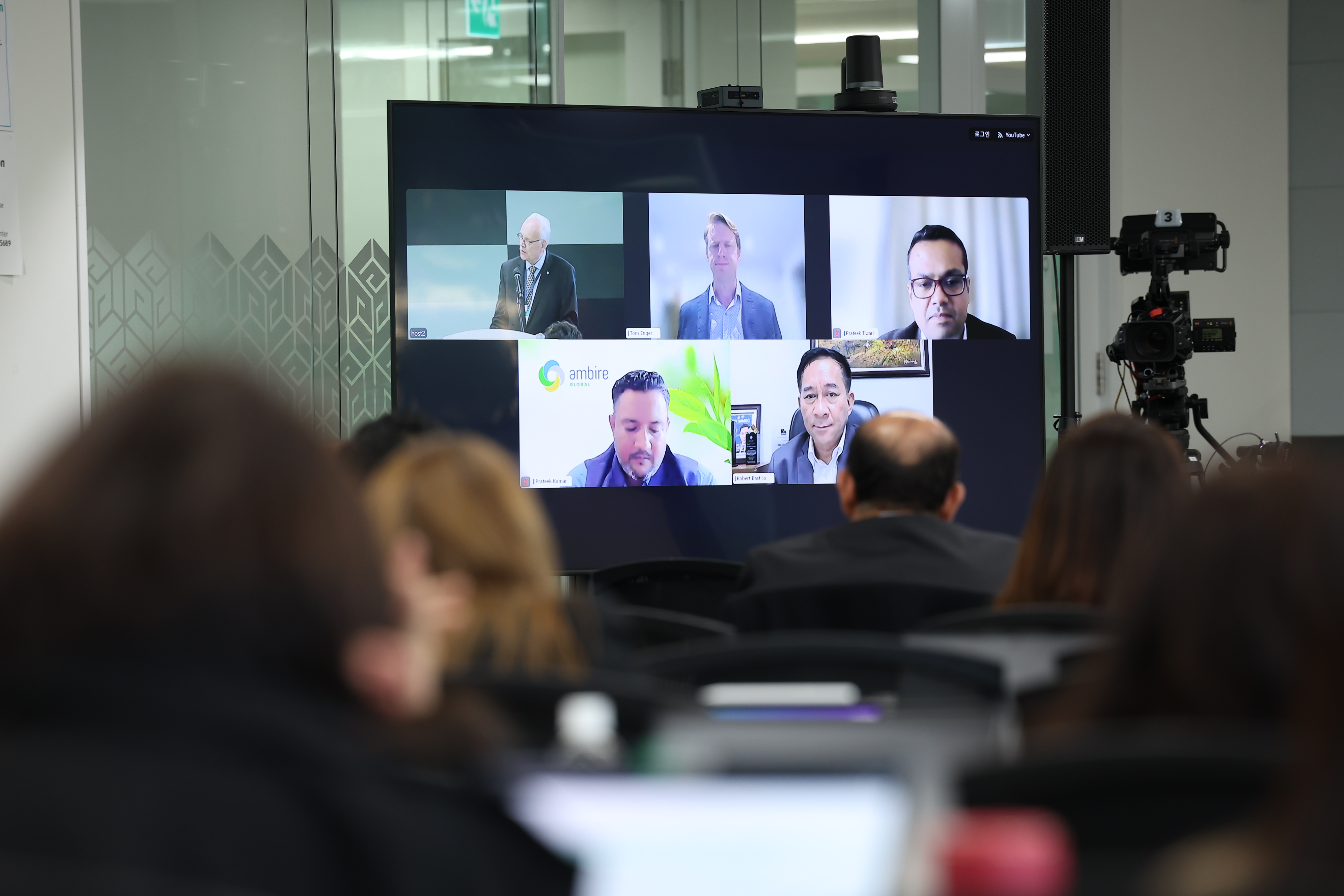
GGGWeek 2025
Photos @ 2025 Global Green Growth Institute
Watch the session recording: