

Inspired by the session “Measuring What Matters: Tools for Tracking and Accelerating the Green Growth Transition” at GGGWeek 2025
Seoul, 27 October — Global Green Growth Week
As climate pressures intensify, governments are increasingly seeking reliable and comparable ways to assess progress toward greener and more resilient development pathways. Data systems, analytical tools, and strategic foresight methods are becoming essential components of this effort, helping countries determine whether their policies are delivering the intended results and where course corrections may be required. This was the backdrop for the GGGWeek session “Measuring What Matters,” which brought together institutions advancing the evidence base for green growth.
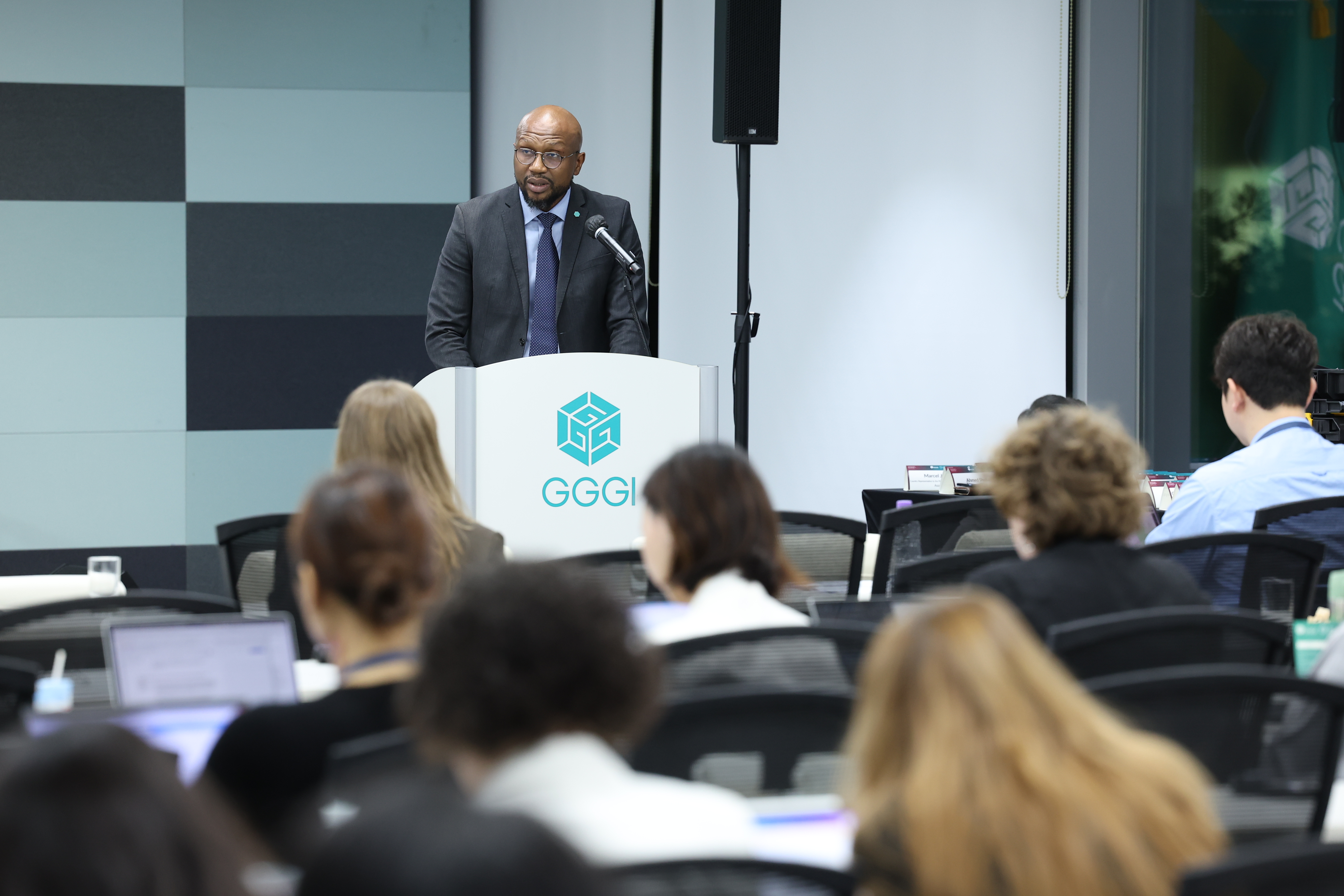
Opening the dialogue, Dr. Mallé Fofana, Acting Deputy Director-General for Green Growth Implementation and Regional Director for Asia, underscored that measurement begins with real-world impacts. Communities are already facing rising seas, disrupted livelihoods, poor air quality, and energy constraints—clear signals that measurement is not a technical exercise but a means of ensuring that policy choices respond to the needs of people and ecosystems. Reliable indicators are indispensable to tracking progress, he noted, recalling that “we cannot manage what we do not measure,” and reaffirming GGGI’s commitment to strengthening the tools that support national and regional decision-making.
GGGWeek 2025
Establishing Measurement as a Strategic Instrument
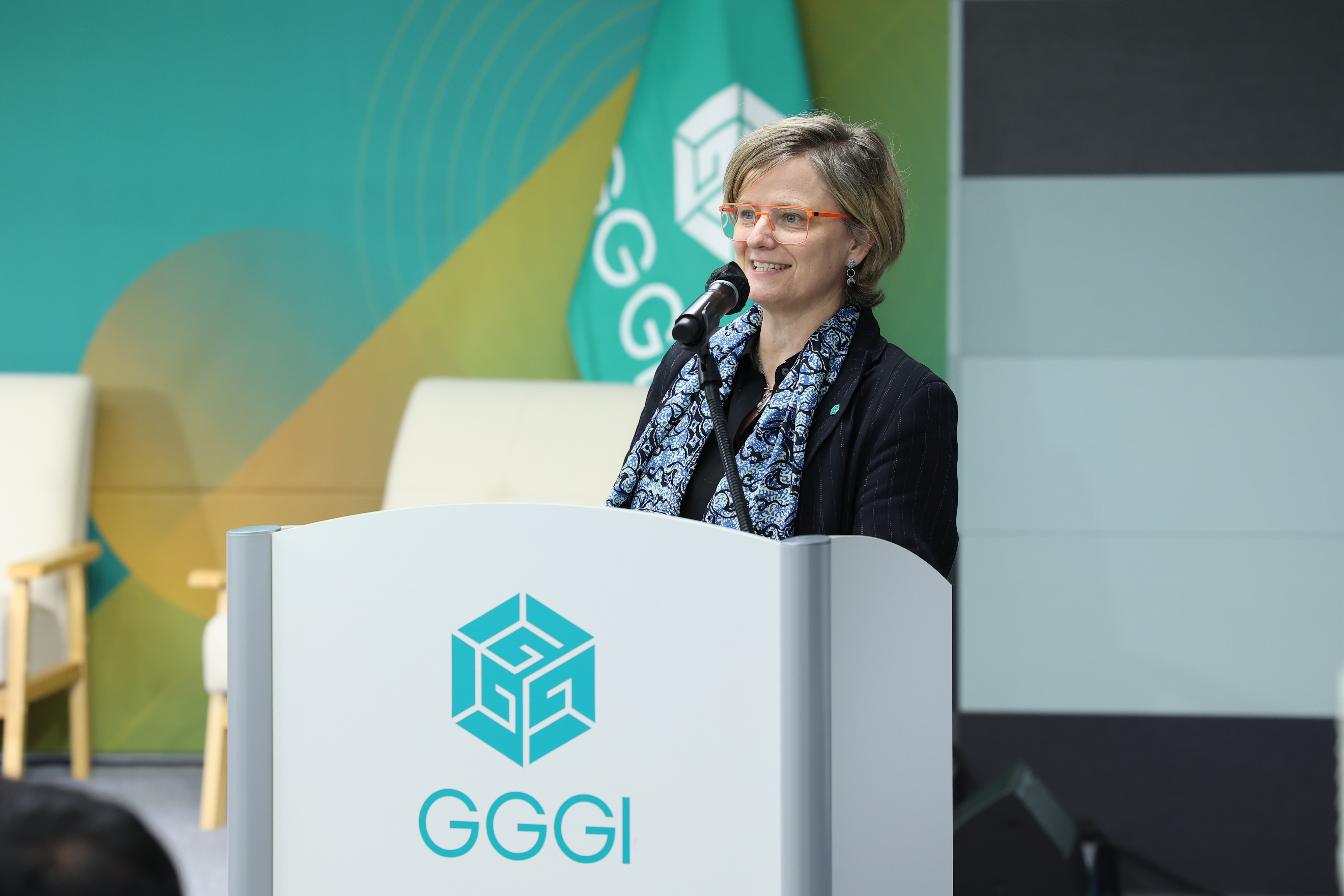
The session began with Ms. Ingvild Solvang, Head of the Front Office in GGGI’s Directorate of Green Growth Implementation, who framed the discussion by emphasising the importance of credible and comparable measurement for guiding green growth transitions. She noted that this segment would highlight innovative approaches and good practices in green growth measurement. Accurate and comparable metrics enable governments to track progress, identify gaps, and align national planning with long-term sustainability goals. Clear and actionable indicators are increasingly necessary to translate sustainability commitments into operational decisions. At the same time, robust measurement goes beyond individual metrics; it provides the clarity decision-makers need to steer transitions effectively.
GGGWeek 2025
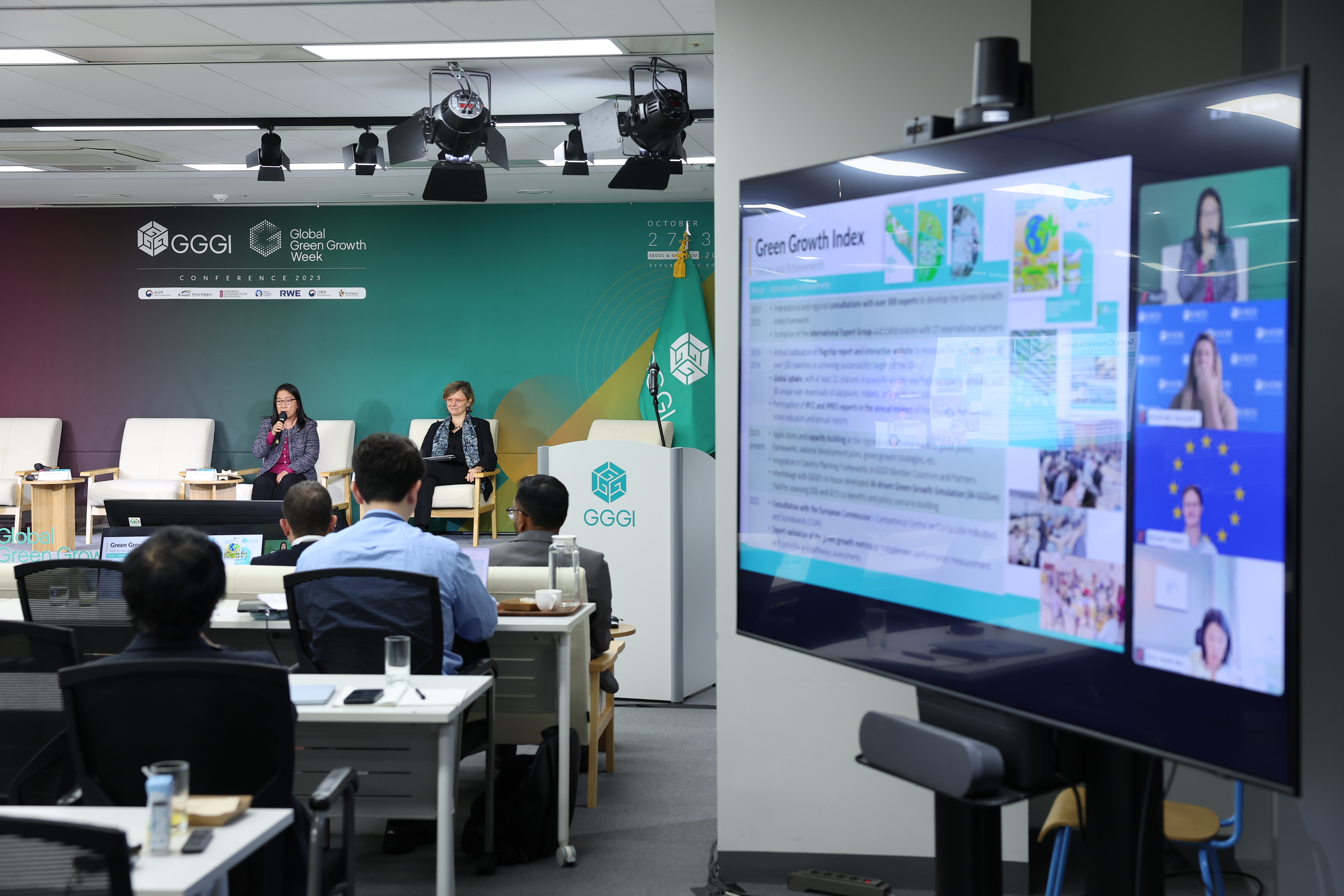
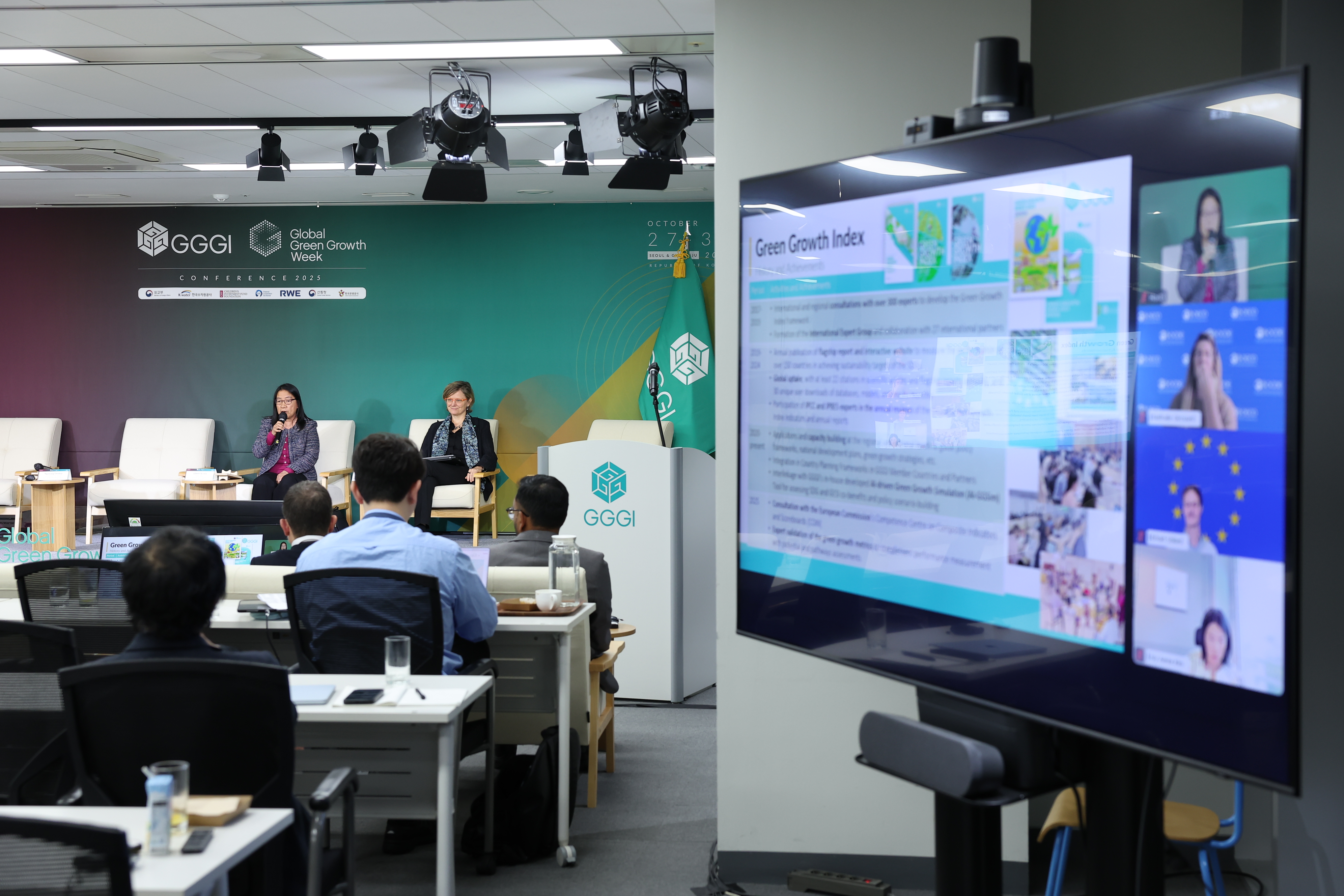
With this context, the discussion turned to GGGI’s own measurement tools, which aim to translate sustainability concepts into usable evidence. Dr. Lilibeth Acosta, Deputy Director and Global Program Manager for the Green Growth Performance Measurement (GGPM), provided an overview of the Green Growth Index, explaining how it was shaped through global collaboration and designed to reflect the four dimensions that underpin green growth: efficient and sustainable resource use, natural capital protection, green economic opportunities, and social inclusion. Because many indicators are aligned with SDG targets, the Index connects national development priorities with international commitments.
Building on this foundation, Dr. Acosta presented the evolution to Green Growth Index 2.0, designed in response to member countries’ growing need to assess not only current performance but also transition momentum. The enhanced framework distinguishes between performance, showing how close countries are to sustainability targets, and potential, capturing the rate of progress. When combined, these complementary measurement tools measure reveal the green growth transition pathways countries follow: Leaders in Motion, High Achievers Plateauing, Emerging Improvers, and Stagnating Laggards. She highlighted how this approach helps governments pinpoint priority areas for policy action and showcased the collaborative development effort carried out with the European Commission’s Joint Research Centre (JRC), the Organisation for Economic Co-operation and Development (OECD), and the Green Growth Index International Expert Group.
Global Measurement Systems and Emerging Trends
The emphasis on structured, multidimensional evidence opened the door to a wider international perspective on sustainability metrics. This shift provides context on how countries’ efforts compare globally and where systemic gaps persist.
Nathalie Girouard, Head of the Environmental Performance and Information Division at the OECD, demonstrated how the organisation’s Green Transition Indicators complement GGGI’s work by positioning environmental data within broader economic and social systems. Through the Environment at a Glance platform, OECD bridges information on labour markets, investment, innovation, education, and regulatory frameworks, highlighting how transitions unfold across entire economies.
The data points to several structural trends shaping national transitions. Green employment continues to expand, although gains remain uneven across countries and skill levels. Environmental innovation, which accelerated in the early 2000s, has slowed in recent years, suggesting the need for renewed policy incentives. Environmental taxation remains comparatively low and does not yet reflect the scale of environmental ambition. At the same time, low-carbon investment has increased substantially, approaching USD 2 trillion in 2024, with private capital accounting for a large share of the growth.
The analysis also highlighted persistent data gaps, particularly in natural capital accounting, green finance taxonomies, and climate-related learning outcomes in education systems. These gaps limit countries' ability to benchmark progress and design coherent policy responses. The OECD intervention reinforced a common theme running through the session: credible measurement depends not only on methodological rigor but also on clear, accessible tools that policymakers can apply in practice.
Ensuring Robustness: The Craft of Composite Indicators
The question of rigor and credibility created a natural bridge to the methodological considerations behind complex composite indices. High-quality measurement frameworks depend on transparent and defensible methods. Erhard Szilárd, Senior Statistical Officer at the Joint Research Centre of the European Commission, explained how composite indicators must balance scientific discipline with transparency. His overview of the JRC’s ten-step approach, from conceptual design to uncertainty analysis, showed why the construction of such indicators requires expert judgement, not simply technical assembly.
Szilárd explained that the technical choices behind an index, such as how data is standardized or how indicators are weighted, can significantly shape the final results. He emphasized the importance of checking how sensitive these results are to different assumptions. To achieve this, methods such as Monte Carlo simulations are employed, and he highlighted that the Global Green Growth Index already utilizes this approach to validate its scores. Drawing on examples from Environmental, Social, and Governance (ESG) rating audits, he showed why transparency and robust methods are essential as governments expand sustainability reporting. He also introduced JRC’s analytical tools, such as the Composite Indicator Explorer, which can strengthen measurement efforts like GGGI’s Green Growth Index 2.0.
From Measurement to Policy Planning
Once the foundational measurement tools are in place, the next step is understanding how evidence can guide long-term planning. Ngawang Dendup, Junior Research Economist at the Asian Development Bank Institute (ADBI), explained how ADBI’s policy research contributes to green and inclusive growth even when not explicitly labelled as such. He outlined research clusters covering environmental and climate policy, digital governance, financial systems, inclusive development and structural transformation—areas that collectively shape how countries navigate economic transitions and address middle-income development challenges.
Dendup emphasised that evidence has practical influence only when accompanied by sustained capacity-building and structured policy dialogue. ADBI’s training programmes, e-learning platforms and consensus-building workshops are designed to help public officials interpret analytical findings and adapt them to national contexts. This approach, he noted, is essential for ensuring that measurement, modelling, and research translate into policies that are both feasible and aligned with long-term development objectives.
Designing a Forward-Looking Green Growth Outlook
A natural next step is helping countries not only understand current performance but anticipate future pathways. Dr. Shivenes Shammugam, Lead Economist at GGGI’s Center for Thought Leadership, outlined the concept for a Green Growth Outlook. It is designed to help countries examine how economic performance, climate action, biodiversity objectives and social progress might evolve in parallel. He introduced a six-pillar framework—covering climate-resilient economy, low-carbon growth, finance, technology, policy, and human development—and described how these elements could draw on existing indicators, macroeconomic models, qualitative assessments, and scenario analysis. Building on GGGI’s work supporting NDCs, long-term low-emission strategies and adaptation planning, he explained that such an outlook could provide a structured way for countries to assess trade-offs and sequence policy reforms. The intention is not to duplicate existing sector outlooks, but to integrate them into a coherent growth narrative that provides value to policymakers and investors looking for potential green growth pathways. The Green Growth Outlook is in the early design stage with the goal of moving towards a multi-partner consortium.
Integrating Climate and Nature Through Modeling
The discussion then shifted from measurement frameworks to the practical realities of applying modelling within governments. Effective modelling requires not only tools but the institutional capacity to operate and sustain them. Dr. Joy Aeree Kim, Technical Director of UNEP’s Net Zero Nature-Positive Accelerator, outlined how UNEP has been supporting countries in aligning climate and biodiversity objectives through integrated modelling approaches. Since 2012, macroeconomic models have been used to help national planners incorporate green economy considerations into development strategies, assess fiscal reforms, and understand the economy-wide implications of decarbonisation.
Within the GEF-8 Integrated Programme, this work is now evolving toward national strategies that combine net-zero and nature-positive outcomes in a single analytical framework. Modelling capacity differs significantly across countries. Some ministries already operate multiple models for energy, land use, or fiscal planning, while others are only beginning to develop such capabilities. Achieving coherence requires choosing an appropriate mix of tools—whether economy-wide models, sector-specific systems, or nested configurations that link the two.
One challenge is maintaining expertise over time. High staff turnover in government agencies can undermine continuity, making it difficult to sustain complex modelling systems. For this reason, UNEP is increasingly working with universities and technical institutes to embed modelling skills within national education systems, ensuring a more durable and renewable base of expertise that governments can draw upon as planning needs evolve.
Closing Reflections: Using Data to Inform Decisions
By the close of the session, a coherent narrative had emerged across all interventions. Measurement, modelling, and foresight are not standalone exercises but interconnected elements of governance. The insights shared by OECD, JRC, ADBI, GGGI, and UNEP illustrated how different components—indicators, composite indices, analytical platforms, research, and models—collectively help governments understand progress, anticipate risks, and design informed policies.
Across these contributions, one conclusion was clear: countries require tools that are both technically sound and practical to use. Measurement frameworks such as the Green Growth Index 2.0 provide a basis for assessing performance and momentum; international datasets highlight where structural gaps remain; composite indicator methodologies ensure transparency; institutional research supports policy dialogue; and modeling tools help explore long-term scenarios. Together, these approaches strengthen the evidence base for green growth and support decision-makers navigating complex transitions.
The session concluded with a shared understanding that numerical analysis and lived realities must inform one another. Measurement is not an end in itself; it is an essential part of planning and prioritising actions that can deliver more resilient, inclusive, and sustainable outcomes.
GGGWeek 2025
Photos @2025 Global Green Growth Institute
Watch the session recording: