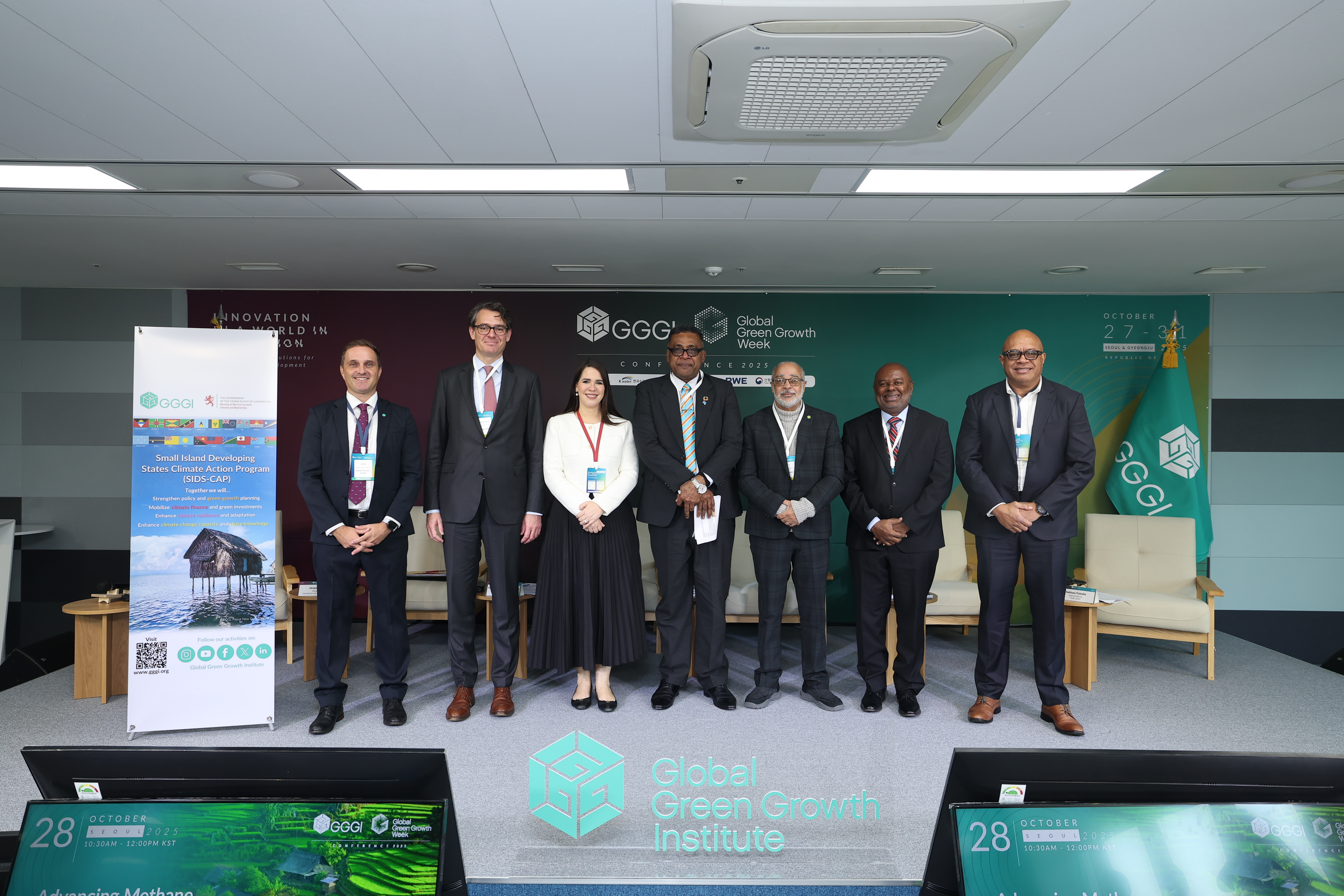


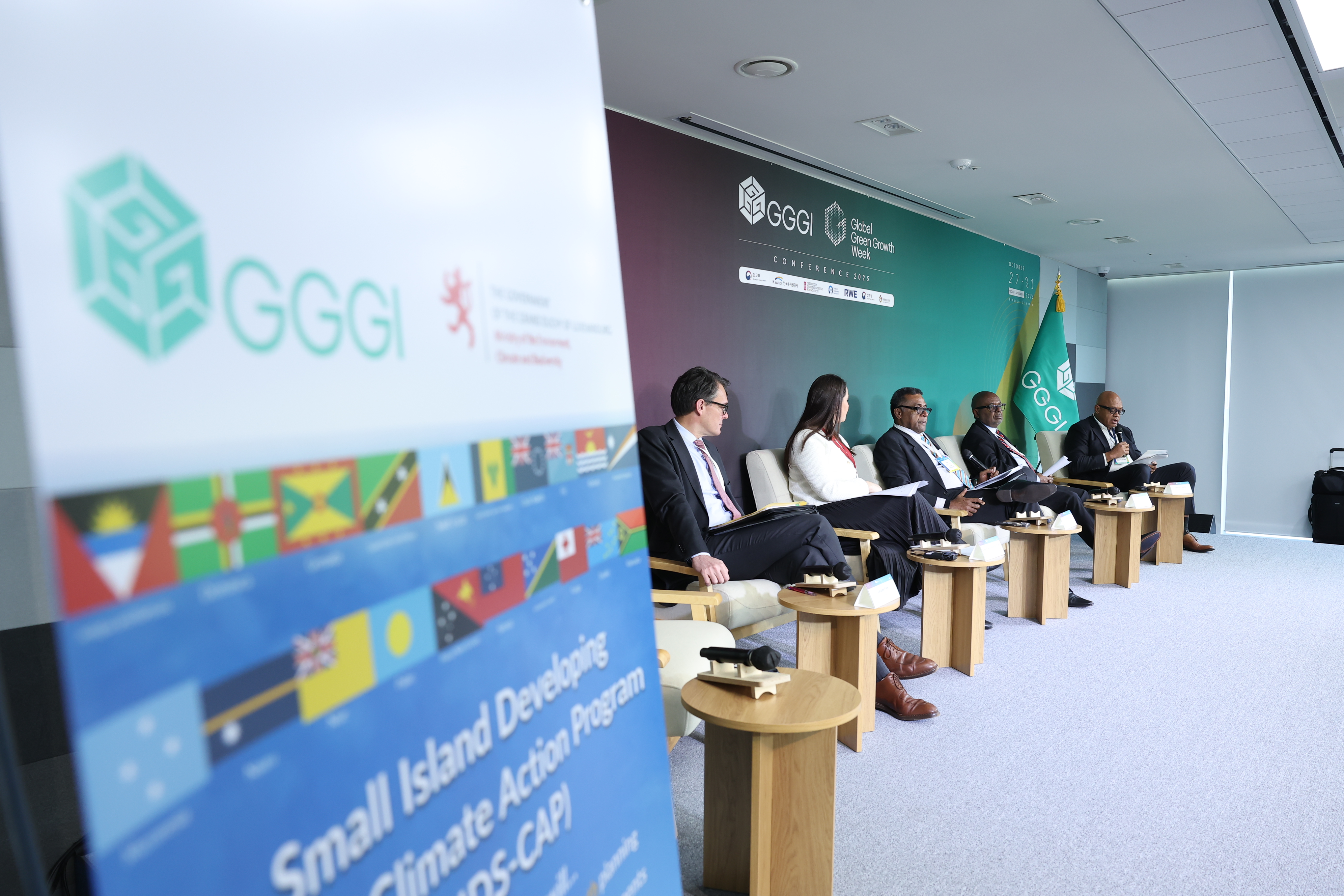
Inspired by the session “Mobilizing Sustainable Finance in Caribbean and Pacific Small Island Developing States” at GGGWeek 2025
Seoul, 28 October — GGGI Headquarters, Global Green Growth Week
Small Island Developing States (SIDS) face climate impacts with a frequency and intensity that make climate finance a daily operational necessity rather than an abstract policy debate. As storms intensify, coastlines erode, and public finances strain under repeated shocks, the question is no longer whether SIDS need sustainable finance, but how quickly and effectively it can be mobilized.
At Global Green Growth Week 2025, stakeholders from the Caribbean, the Pacific, and key development partners came together to explore that question through concrete experiences. What emerged was a shared picture: despite deep systemic barriers to accessing and deploying climate finance, SIDS are building new financial tools, strengthening institutions, and reshaping markets to support low-carbon, inclusive development. The session traced this journey—from the structural challenges that define climate vulnerability, to the practical innovations taking shape in resilient housing, water security, and green financial systems.
The Arithmetic of Survival
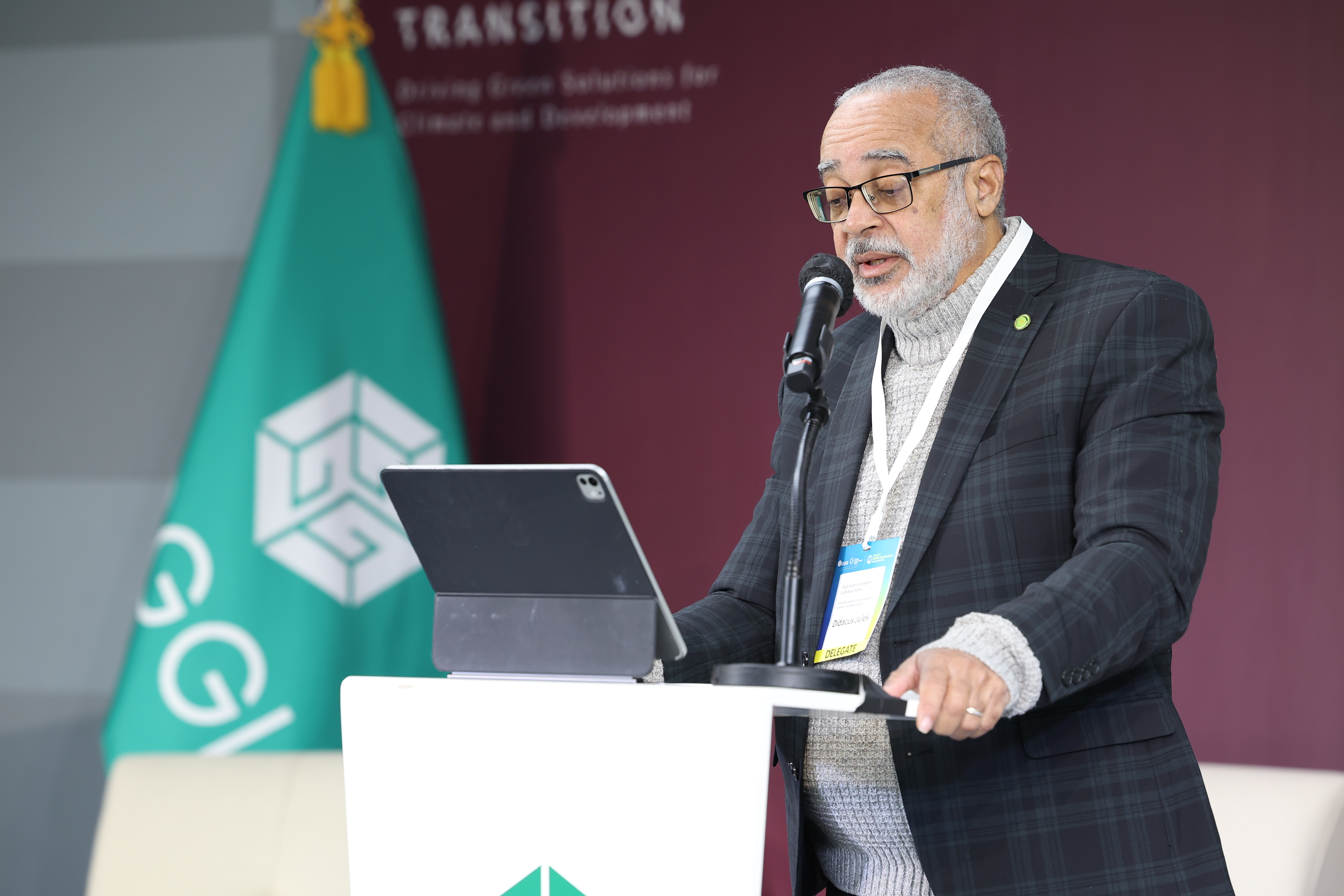
Dr. Didacus Jules, Director General of the Organisation of Eastern Caribbean States (OECS), described a calculus that has turned decisively against SIDS, noting that climate impacts now result in average annual losses of 5–15% of GDP, while access to global climate finance “hovers around 2% of total flows.” Category-five storms can erase decades of investment: in 2017, Hurricane Maria inflicted losses “equivalent to 226% of Dominica’s GDP,” and in 2023 Hurricane Beryl cost “16.5% of the Grenada economy,” with 65 deaths in a population of around 71,000. To illustrate the proportional impact, he compared this to the toll such an event would represent in Florida or the Philippines, underlining that “when 65 souls perish in a population of 70,000 the world calls it small numbers… not seeing that proportionately our islands bleed as entire nations would.”
GGGWeek 2025
For Dr. Jules, climate finance cannot remain “an episodic act of generosity.” It must be embedded “in the architecture of resilience,” anchored in three shifts: from projects to ecosystems, from debt to dignity, and from aid to alignment. He pointed to an OECS prototype—“the Nature Bank… to unlock over US$5 billion in financing over five years,” and nature-positive infrastructure “such as mangrove and reef restoration” that can reduce disaster losses “by up to 60%.” A pipeline of projects is already being operationalized with support from GGGI, including Dominica’s national financing vehicle (US$25 million), the Eastern Caribbean Solar Challenge (US$10 million), and Saint Lucia’s Green Affordable Housing Program (about US$60 million).
Yet he also named four persistent barriers—the “four As”: access, because complex processes exclude SIDS from major climate funds; absorptive capacity, as national systems often lack specialized climate finance units; aggregation, because fragmented projects dissipate impact and regional pipelines are still emerging; and alignment, where partners must shift from supply-driven offers to demand-driven support. He closed with a principled line that framed the rest of the discussion: “For SIDS, climate finance is not about sustainability alone. It is about sovereignty… Let us value nature, unlock resilience, and finance the future, not with debt, but with dignity.”
Greening Financial Systems: A Pacific Case in Motion
Joining from Port Moresby, Mr. Benoit Chassatte of Agence Française de Développement (AFD) offered a practitioner’s view from Papua New Guinea. He described how a regional initiative—initially piloted under an inclusive green finance project funded by New Zealand in 2021—has evolved into a €6 million programme with the bulk of resources focused on Papua New Guinea. The collaboration with the Bank of Papua New Guinea and GGGI has moved beyond policy into implementation, pairing a green refinancing facility with a green guarantee mechanism to address two structural obstacles: high lending rates with short maturities, and the absence of collateral.
The effort is being strengthened by a new Green Finance Centre, work on a national green taxonomy and catalog, and staff training across participating institutions. AFD, the Central Bank and GGGI are working alongside IFC, ADB, New Zealand and several commercial banks, with operational manuals drafted, due diligence completed and trust accounts in the process of being established. Reflecting on what enables such initiatives to take root, he emphasized institutional commitment. “The key factor for success is the motivation of the Bank of Papua New Guinea and the interest of the commercial banks to join in.” This alignment, he noted, is what can turn a pilot into a regional pathway. If sustained, the model offers a replicable blueprint for other Pacific countries seeking to mobilize green investment through their domestic financial systems.
Taxonomies, Bonds, and Market Confidence in the Caribbean
Her Excellency Angie Shakira Martínez Tejera, Ambassador of the Dominican Republic to Jamaica, situated finance within lived impacts, referencing the category-five storm Melissa “impacting Jamaica” after being stationary over Hispaniola and displacing thousands of families in the Dominican Republic and Haiti. She recalled that more frequent and intense tropical storms have already transformed risk in the Caribbean and stressed that climate change is “not only a concept, but it is also our daily life.” Against this backdrop, she outlined how the Dominican Republic has mobilized more than US$750 million in green investments in recent years, issued the Caribbean’s first sovereign green bond, and launched a sustainable microfinance bond, alongside green jobs strategies that benefit people, the economy and the environment. A cornerstone of confidence is the national green taxonomy, launched in June 2024, developed through a public–private process involving the Ministry of Environment, the securities supervisor, key productive sectors and financial institutions, with technical support from GGGI.
Taxonomy provides a clear framework for domestic and international investors on what is considered green under national strategies. It currently covers seven economic sectors and six environmental objectives (mitigation, adaptation and sustainable natural resources among them) and is the first taxonomy in Latin America to include water and water management as a main environmental goal—critical for a Caribbean island state. Priority sectors include renewable energy, sustainable transport, water management, and green construction, with agriculture expected to follow. The taxonomy is aligned with EU taxonomy principles under the Global Gateway initiative, which, she noted, gives more confidence to investors and strengthens their financial system. Her through-line was agency: “Small and mid-sized economies can lead by example when political will, discipline, and strong partnership come together.”
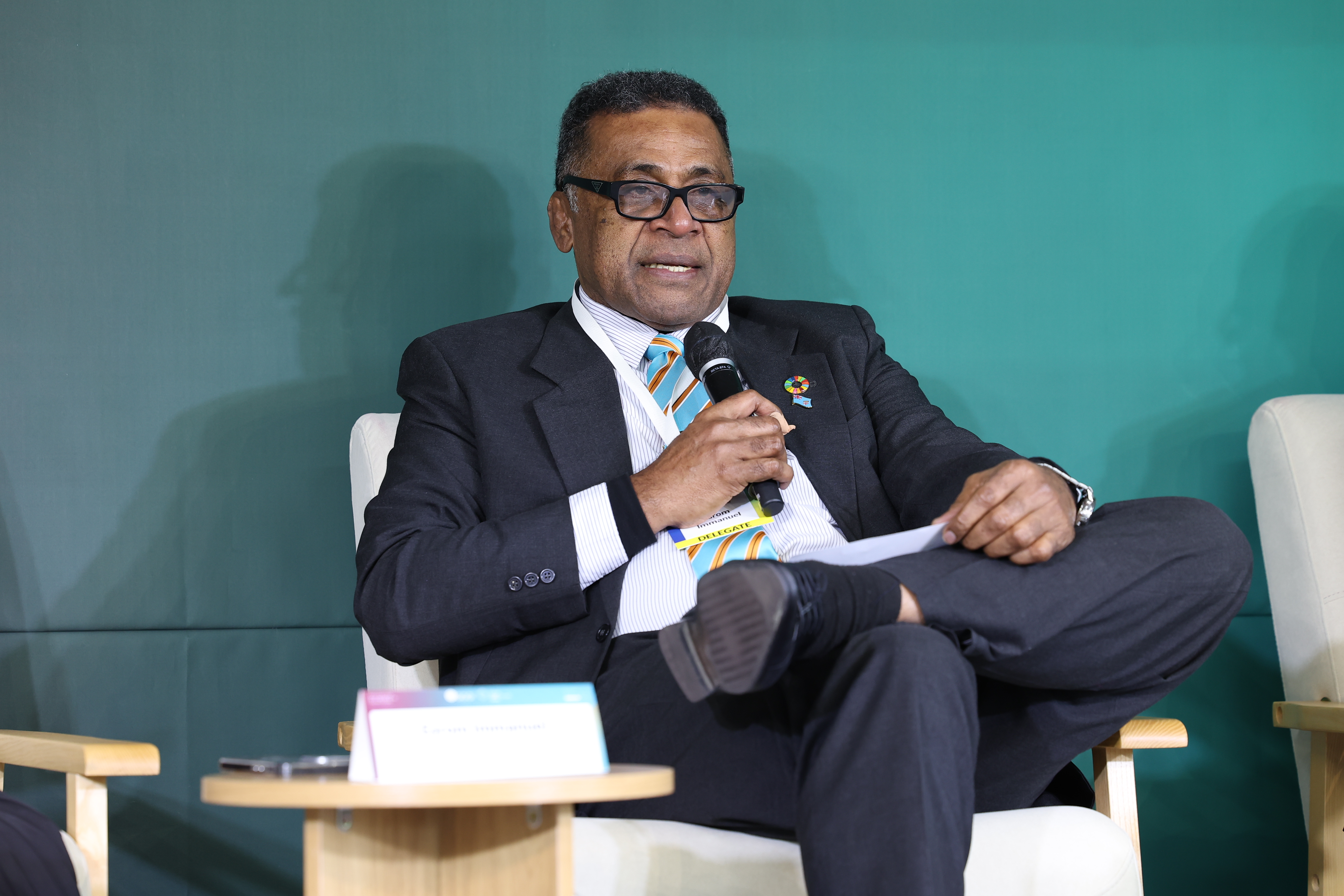
From the Pacific, Esrom Immanuel, Assistant Minister of Finance of Fiji, offered a perspective that bridged early innovation with present-day fiscal considerations. In 2017, Fiji made history as the first emerging market to issue a sovereign green bond—targeting FJ$100 million and attracting bids of around FJ$260 million—demonstrating investor confidence in Fiji’s climate strategy and financial governance.
GGGWeek 2025
Fiji has since advanced this agenda through a 2023 sustainable bond framework and the issuance of FJ$50 million in sovereign blue bonds, the first by a Pacific Island state. These instruments are supporting investments in the blue economy and sustainable marine resource management. Yet he emphasized that the pace of future issuances must reflect macro-fiscal realities. With debt-to-GDP having exceeded 90 percent and the fiscal deficit once above 12 percent, Fiji is now pursuing consolidation toward a 3 percent deficit while leveraging new ADB concessional facilities designed for SIDS, offering interest rates near 1 percent and extended maturities. As he noted, “Bond is debt,” underscoring the government’s intention to issue strategically rather than routinely.
Institutions that Convene and Deliver
For Saint Lucia, Chief Economist, Ms. Nadia Wells Hyacinth described the Climate Finance Unit as a demand-driven coordinator situated at the heart of government—the Ministry of Finance—so that financing strategy and national priorities are inseparable. The unit moves from isolated projects to programmatic pipelines, convening ministries, academia, finance, and communities around sectors where resilience is most urgent. Water, she said, is “the first one, two and three priority sectors,” spanning wastewater, non-revenue water, and potable systems. She highlighted Saint Lucia’s Green Affordable Housing programme as a flagship initiative: a master-planned resilient community on state land, used as a prototype to define what climate-resilient housing should look like in a small island context. The design process considers site-specific factors such as roads, water flows, hurricane shelters, foundations and natural habitats, alongside mortgage and retrofit financing models adapted to households’ realities. The emphasis, she noted, is on packaging investments so that funding is accessible, bankable and transformative rather than ad hoc.
Donor Alignment, Focus, and Agility
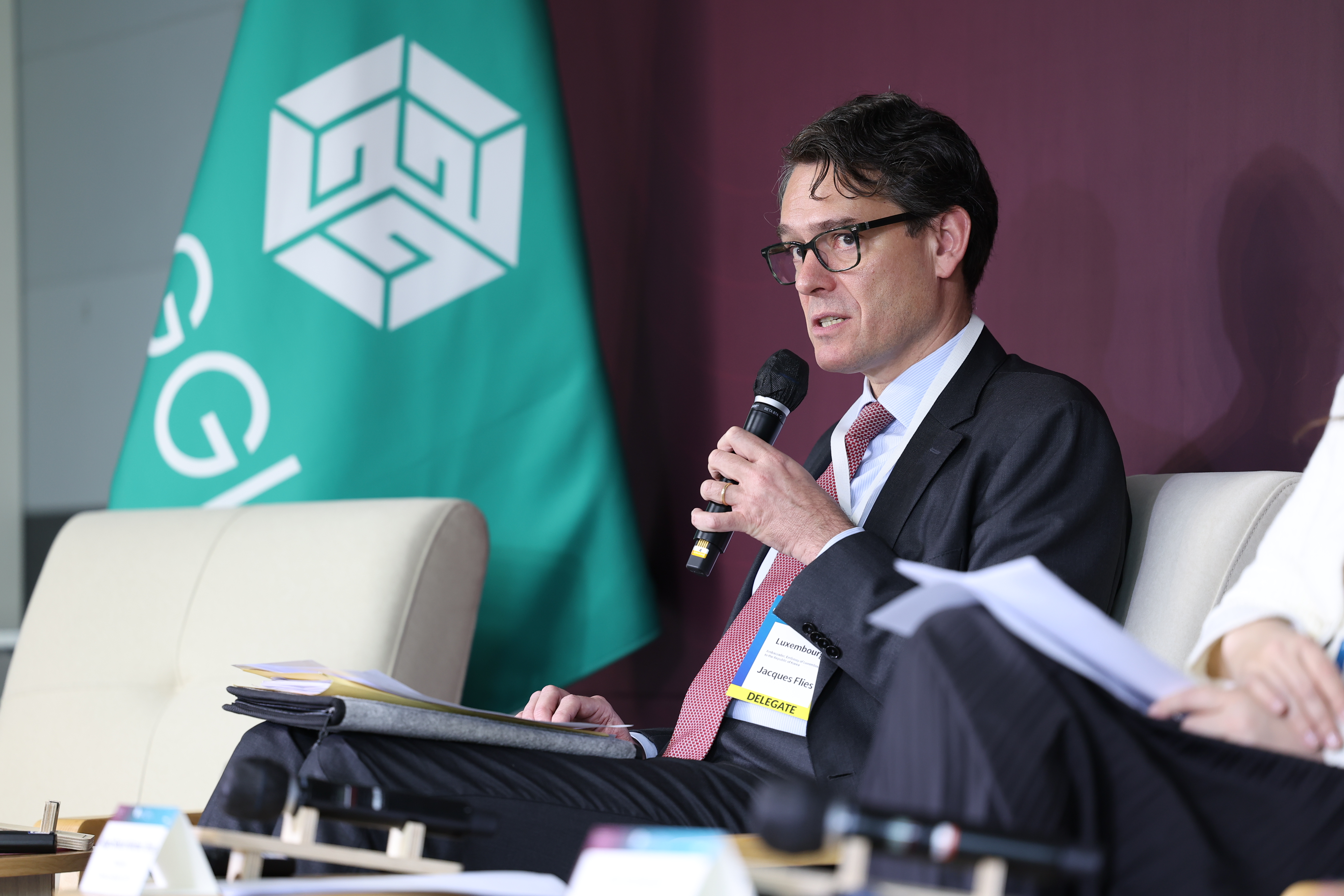
Speaking as a donor, His Excellency Jacques Flies, Ambassador of Luxembourg to the Republic of Korea, emphasized an approach grounded in national alignment, strategic focus and speed. He recalled that Luxembourg’s engagement in climate finance began more than a decade ago with early support to Cabo Verde and has since expanded into a broader commitment to SIDS, recognizing that these countries contribute least to global emissions yet bear some of the most acute climate-related losses and rising debt pressures. Since 2014, Luxembourg has pledged €340 million for mitigation and adaptation in developing countries—prioritizing SIDS—and has committed an additional €220 million for 2026–2030. This support spans diverse initiatives, from strengthening climate governance and monitoring in Cabo Verde, to backing the Drua parametric insurance and small grants facility in Fiji, to supporting wastewater project preparation in Palau through the Blue Natural Capital Financing Facility.
GGGWeek 2025
A central pillar of Luxembourg’s partnership with GGGI is the SIDS Climate Action Programme (SIDS-CAP), a roughly €5 million initiative running until 2028 that supports climate action across 20 GGGI member and partner SIDS in the Caribbean and the Pacific. SIDS-CAP aims to help countries adopt around 50 climate-related policies and strategies; mobilize US$750 million in climate and green finance by 2027; and strengthen institutional capacity by training around 1,000 public and private sector actors, at least half of them women. It is expected to contribute to avoiding approximately 60 million tonnes of CO₂ and to improve the livelihoods of more than 400,000 people through support to clean mobility, climate-smart agriculture, resilient buildings and nature-based solutions in tourism.
This work is complemented by Luxembourg’s Global Trust Fund on Sustainable Finance Instruments, a €10 million facility designed to catalyze roughly US$5 billion in thematic bonds across developing countries. Together, these instruments reflect Luxembourg’s broader logic: pairing technical assistance with pathways to market-based tools—green, blue and sustainable bonds; debt-for-resilience structures; blended finance facilities—while strengthening national ecosystems so countries can access and absorb finance on their own terms. Ambassador Flies highlighted three lessons from Luxembourg’s experience that may carry wider relevance: start from country priorities, maintain thematic focus rather than dispersing efforts, and use the agility of a small donor to pilot innovations that larger partners can later scale.
Resilience Where People Live
Dr. James Fletcher, Climate Envoy for the Caribbean Community (CARICOM) and GGGI non-state member, moved the conversation from macro-finance to household resilience. He recalled how previous global climate moments had coincided with devastating disasters—Typhoon Haiyan in the Philippines in 2013, Tropical Storm Erika in Dominica in 2015—and noted that as this session met, Jamaica was preparing for Hurricane Melissa, a category-five storm projected to bring extreme winds, rainfall and storm surge.
In this context, he argued, resilient housing and infrastructure are no longer optional. Escalating hazards—cyclones, flooding, heat and landslides—are destroying housing stock and public assets, while recovery cycles are becoming shorter than reconstruction cycles. Macroeconomic exposure is rising as housing losses affect mortgage portfolios, construction companies, insurance pools and sovereign balance sheets, and many assets risk becoming uninsurable. At the same time, low-income households, women-headed households and persons with disabilities often lack access to credit or suitable financial products, yet are among the most exposed. For Dr. Fletcher, sustainable finance for housing must deliver three things: resilience, decarbonization and efficiency, and affordability and access. That implies adopting regionally appropriate building codes and green standards, while deploying instruments that reward resilient and efficient choices—for example, green or resilience-linked mortgages that offer interest rate reductions or cash-back when certified standards are met. He also pointed to public–private retrofit facilities and on-bill or on-tax financing for roof reinforcement, hurricane shutters, solar water heaters and rainwater harvesting, so that households do not have to take on new bank loans to upgrade their homes.
Unlocking finance at scale will likely require first-loss and portfolio guarantees to de-risk lending to lower-income borrowers, and parametric micro-insurance embedded in utility bills or mortgage payments so that households can receive rapid payouts after a disaster. The timing of money, he stressed, is decisive: “Build back better cannot happen with funding that arrives a year later.” He also called on multilateral development banks and partners to expand local-currency windows and counter-cyclical facilities that provide liquidity for rebuilding to higher standards in the immediate aftermath of shocks.
Closing Thread: From Episodic Projects to Systems that Scale
Taken together, the session traced a clear progression from diagnosis to design. The data shared by SIDS representatives underscored the scale of the challenge, yet the response emerging across regions is becoming more coherent and system-wide: taxonomies that define green investment; facilities that help lower cost and risk within domestic banking sectors; sovereign frameworks that create credible entry points to bond markets when fiscal conditions allow; national coordination units that consolidate demand and shape pipelines; donor partnerships aligned to country priorities; and financial instruments capable of reaching households, small enterprises and local service providers.
The concluding reflection returned to Dr. Jules’s earlier framing: that climate finance for SIDS must be embedded not in isolated projects, but in the broader architecture of resilience and economic management. When institutions, instruments and partnerships are aligned in this way, climate finance becomes a practical tool for reducing vulnerability and supporting long-term development planning—financed, as he noted, “not with debt, but with dignity.”
GGGWeek 2025
Photos @2025 Global Green Growth Institute
Watch the session recording: