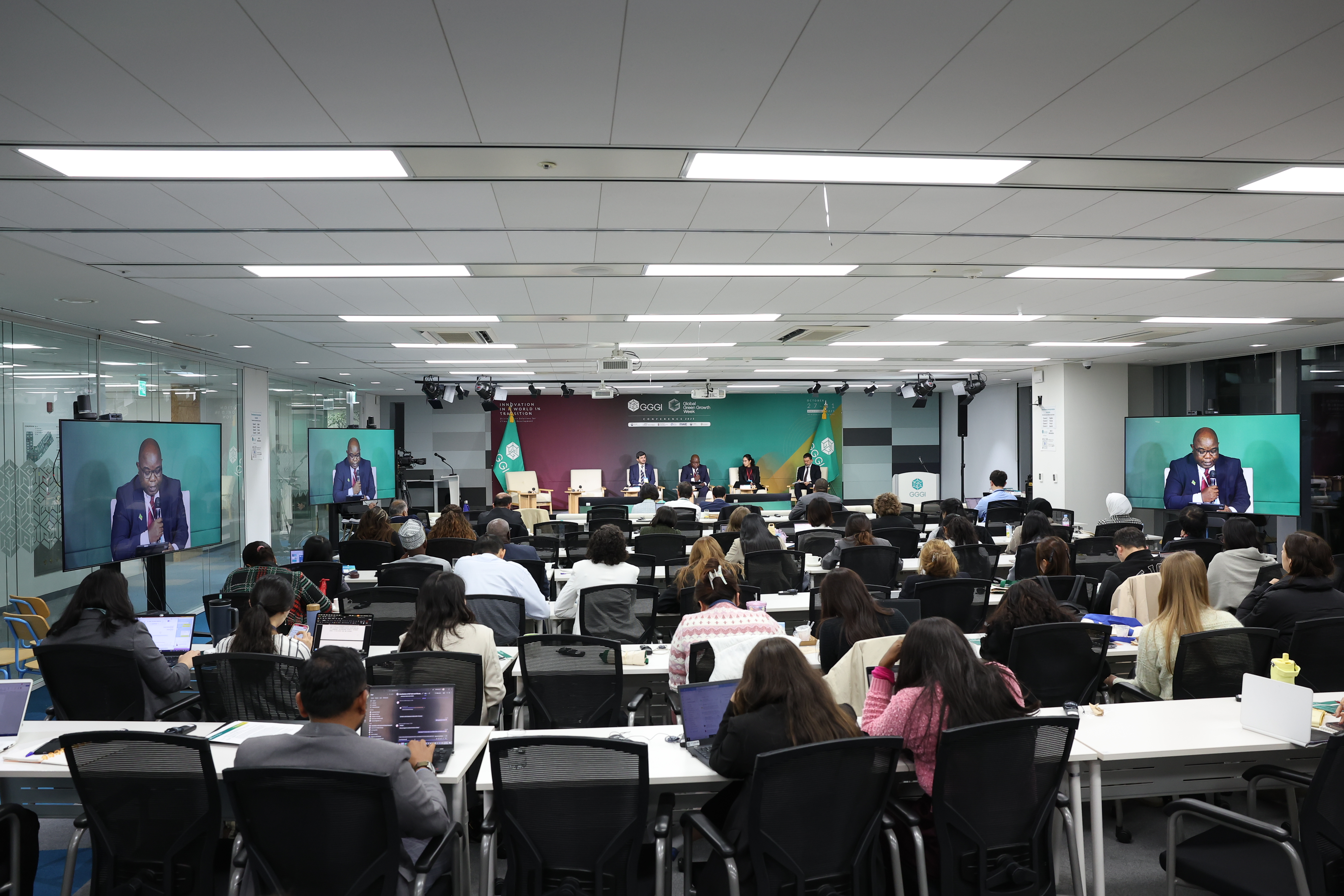


Inspired by the session “Moving from Climate Action Planning to Financing” at GGGWeek 2025
Seoul, 27 October — GGGI Headquarters
As the latest cycle of Nationally Determined Contributions (NDCs) nears completion ahead of COP30, many countries now have stronger climate plans than ever before. Their NDCs, Long-Term Low-Emission Development Strategies (LT-LEDS), and National Adaptation Plans (NAPs) have become more detailed, better coordinated across ministries, and more aligned with social and economic priorities. The Global Green Growth Institute (GGGI) has accompanied this work closely, supporting around thirty Member and partner countries on NDC enhancement, seventeen countries on NAP development, and several long-term strategies.
These plans have helped clarify national ambition. Yet their value depends on whether they translate into real, sustained action. Opening the session, Dr. Stelios Grafakos, Principal Economist at GGGI’s Center for Thought Leadership (CTL), emphasised that the next phase is not about preparing more plans, but about financing and implementing the ones already in place. “Our discussion moves beyond submissions,” he said. “The question is how ambition becomes finance, and how finance becomes results.”
GGGWeek 2025
A Decade After Paris Agreement: Finance as the Foundation of Implementation
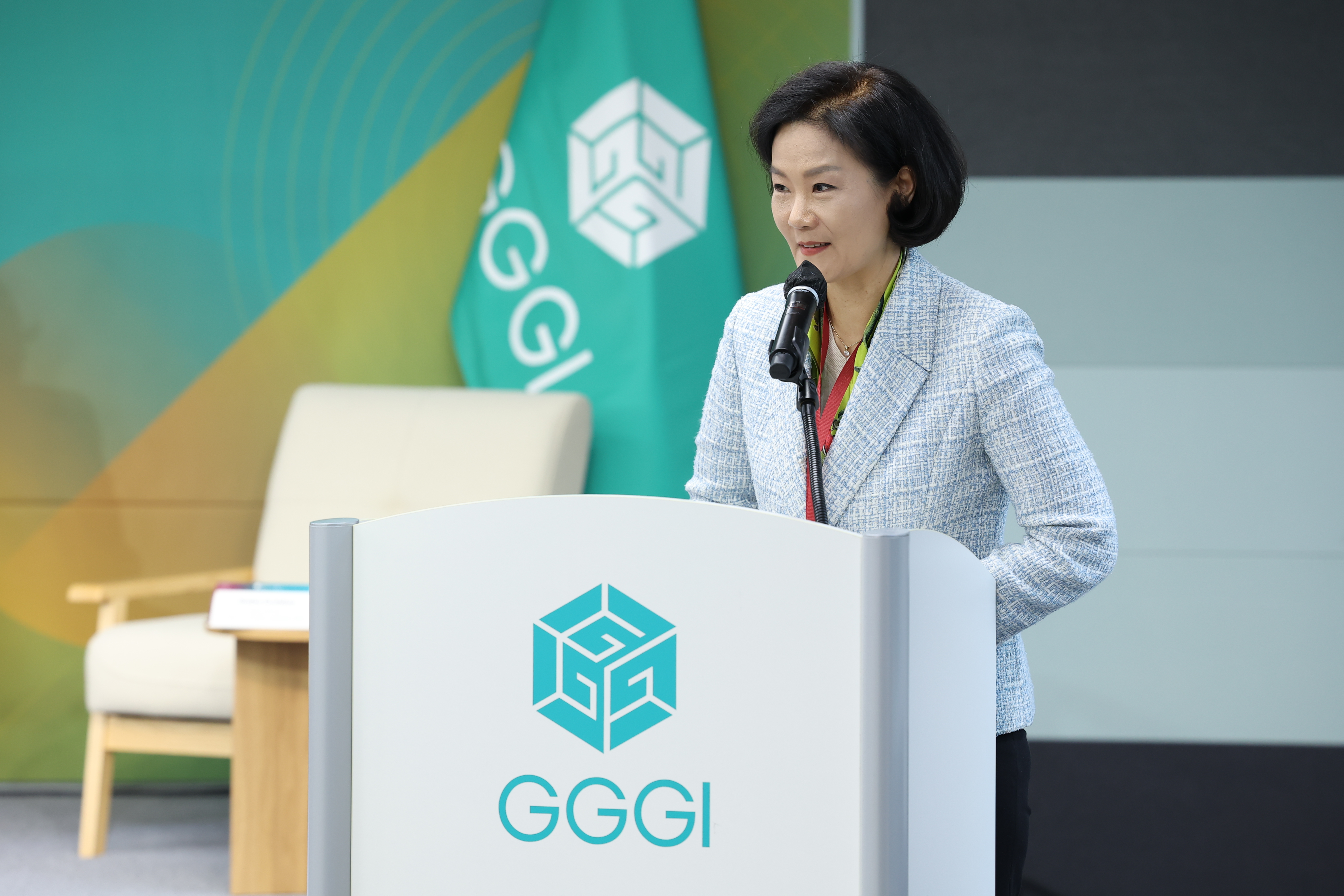
The strategic context was set by Hyoeun Jenny Kim, CEO of the Global Industry Hub (GIH) and former Ambassador and Deputy Minister for Climate Change of the Republic of Korea. Speaking in the year that marks ten years since the Paris Agreement, she reflected on how NDCs have become the backbone of collective climate efforts. But she reminded the audience that “a plan is only as powerful as its implementation,” and implementation hinges on finance. Ambassador Kim recalled the decision taken at COP29 in Baku, where countries agreed to mobilise at least USD 1.3 trillion per year in climate finance by 2035. Public budgets and bilateral funding remain essential, she noted, but cannot meet this scale alone. Multilateral development banks (MDBs) must take greater risks. Philanthropy can move first and help test new approaches. And private finance will ultimately determine whether solutions can grow at the pace required. For her, the common thread is trust—trust among governments, investors, communities, and institutions. “Finance,” she said, “is a matter of trust.”
GGGWeek 2025
What It Takes to Make Climate Plans Investable
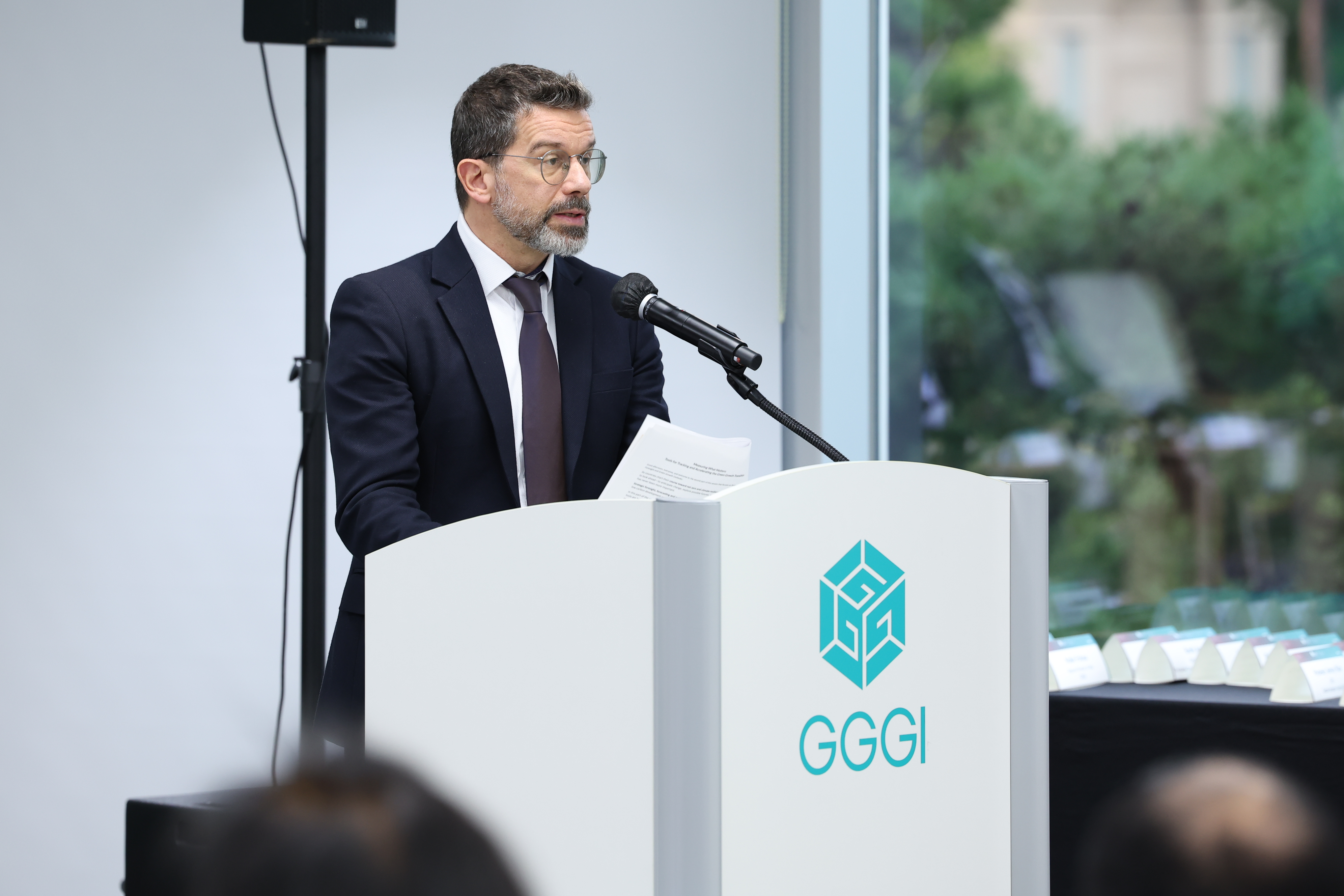
Bringing in the latest evidence, Ventura Silva from the United Nations Framework Convention on Climate Change (UNFCCC) explained what the 2025 NDC submissions mean for global finance needs. Early estimates suggest that implementation of current NDCs could require between USD 5.1 and 6.8 trillion up to 2030, though this is likely an underestimate since it only reflects a portion of all NDCs submitted. He noted that sixty-three countries had shared their updated NDCs by this session, covering roughly thirty percent of Parties, population and global emissions, and that many more are expected by COP30.
Mr. Silva explained that these financial requirements are directly linked to the New Collective Quantified Goal (NCQG), adopted in Baku. Under this goal, developed countries are expected to lead in mobilising at least USD 300 billion per year by 2035, scaling up to a minimum of USD 1.3 trillion annually from all sources. He highlighted that the enabling environment inside countries—such as transparent MRV (measurement, reporting and verification) systems, whole-of-government coordination, and clear long-term signals—strongly influences how quickly and confidently finance can flow.
From an economic perspective, Chiara Falduto, Policy Analyst at the Organisation for Economic Co-operation and Development (OECD), shared results from a recent joint OECD–UNDP analysis, Investing in Climate for Growth and Development. Through economic modelling, the report found that enhanced NDCs can raise global GDP by around 0.21 percent by 2040—equivalent to adding the size of Sweden’s economy. When avoided climate damages are included, long-term benefits increase significantly, with projections showing a potential 13 percent gain in global GDP by 2100 compared to weaker action.
Ms. Falduto explained that climate action improves not just economic output, but also the quality of development. Modelling with the United Nations Development Programme (UNDP) shows that integrating climate action with the Sustainable Development Goals (SDGs) could lift one in five people out of extreme poverty by 2050. Yet she stressed that many NDCs still lack what investors and development banks need the most: clear long-term policy signals, detailed implementation and financing plans, and strong institutional arrangements. Only a small group of countries currently publish financing strategies. Without them, it becomes difficult to turn climate ambitions into investable proposals.
The OECD report outlines three complementary approaches for financing NDCs. The first is using public finance more strategically aligning budgets with climate priorities, reducing fossil fuel subsidies, and expanding tools such as carbon pricing. The second is mobilising private finance by using public funds to reduce risk and by strengthening regulations such as climate-risk disclosure. The third is improving international support, especially by making climate funds easier to access and by building platforms that connect country needs with investors.
Embedding Finance in Planning
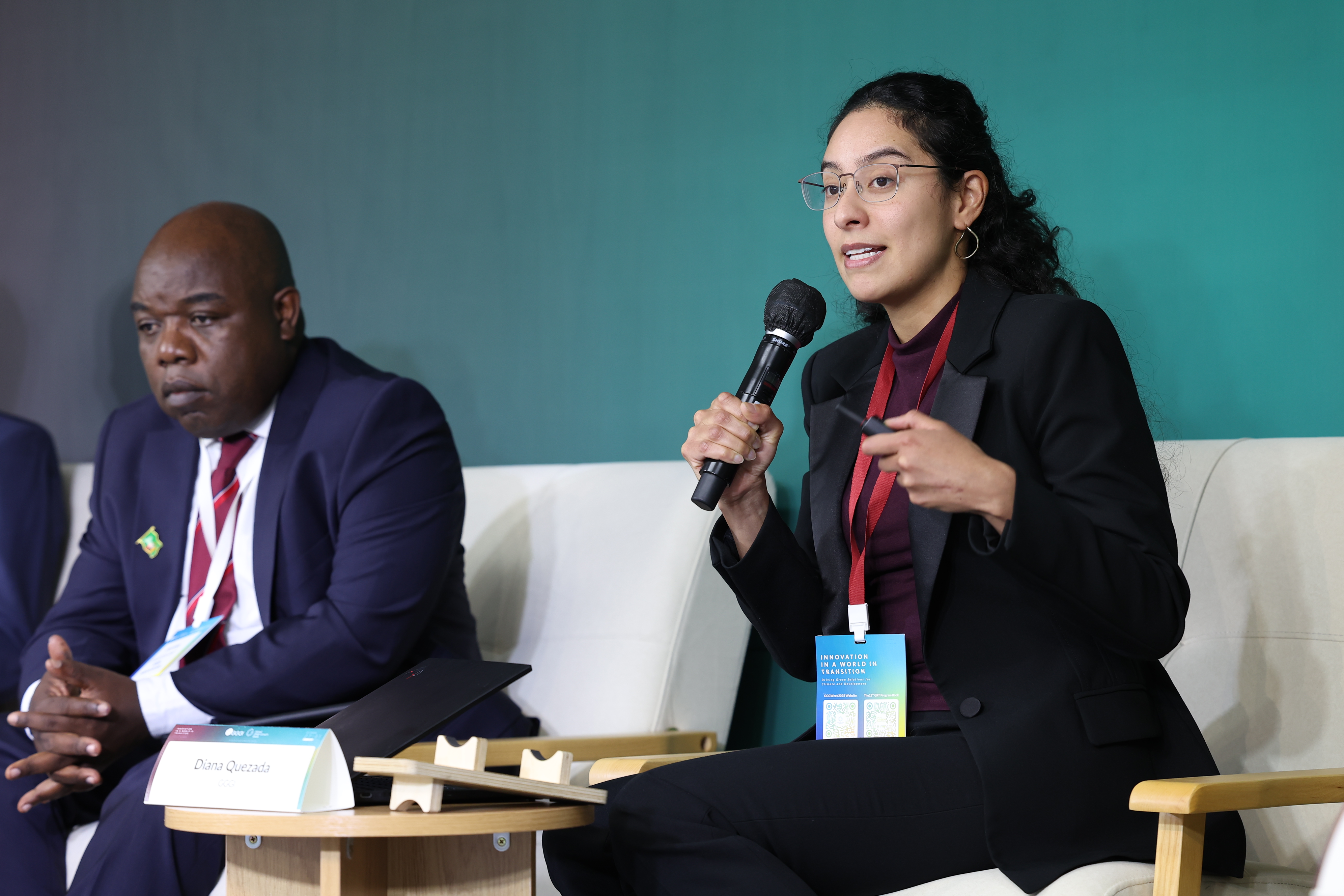
Turning to GGGI’s country experiences, Senior Policy Analyst Diana Quezada explained the common challenges that countries face when moving from planning to action. She described four issues that repeatedly emerge: the gap between global targets and actual needs, the slow pace of disbursement compared to pledges, the limited availability of private investment in many markets, and weak tracking of climate spending and impacts.
GGGWeek 2025
To address these issues, GGGI supports countries through an approach that begins with government leadership, brings in partners from the outset, integrates climate work with broader development plans, carries out detailed cost and finance analysis, and strengthens public institutions so that they can access funds and prepare bankable projects. She explained how this approach has been applied in mitigation, adaptation, loss and damage, and just transition strategies this year while supporting countries to enhance their NDCs, often resulting in costed plans, investment project pipeline, and improved MRV systems.
Dr. Basil Oberholzer, Senior Economic Officer at GGGI, introduced an upcoming publication of the Guide, Aligning Economic and Climate Planning, which will be soft launched at the COP30. The Guide supports policymakers, donors, and researchers in understanding how climate, the economy and finance interact and can be integrated into a coherent planning framework. It provides a practical, step-by-step process, beginning with governance arrangements and the policy landscape, followed by integrated macroeconomic analysis for mitigation, adaptation, and loss and damage, to financial analysis and planning, and to implementation and monitoring, and provides good country examples.
Dr. Oberholzer explained that tools in a parallel technical report will help countries select suitable models. The goal is to make climate planning more economically consistent and more directly linked to financing, rather than treating finance as a separate stage that follows after plans are finalized.
Country Perspectives: Making Climate Investments Work on the Ground
The session then moved to country experiences from Zambia, Fiji and Qatar, showing how governments are putting these principles into practice.
Billy Katontoka, National Coordinator at Zambia’s Ministry for Green Economy and Environment and National Designated Authority for the Green Climate Fund (GCF) and Adaptation Fund, described how Zambia has begun treating de-risking “as a design function, not a donor function.” He explained that Zambia is developing a green securitisation facility with a local bank to bundle renewable energy and agricultural projects into asset-backed securities that investors already understand. Projects are being tied to concrete revenue streams, such as power purchase agreements. Verified carbon credits are being used as a second source of income. And community mini bonds are helping build local ownership while keeping social risks low.
Katontoka shared how early community financing—supported by a USD 500,000 allocation from the national treasury—has generated real-time data used to attract larger partners. He also recounted how launching a national electric vehicle (EV) initiative with a single vehicle led a development partner to contribute an additional USD 100,000. “Trust is the real currency,” he said, showing how confidence can unlock resources.
From Fiji, Reeha Sharma, Mitigation officer, Ministry of Environment, Climate Change Division explained how the Climate Change Act provides a legal basis for climate action and climate financing. Fiji has established several trust funds to support climate-related projects, including community relocation. A National Climate Finance Strategy for 2022–2030, covering twelve sectors, and an NDC Investment Plan with thirty-one project opportunities help guide investment decisions. Incentives, such as zero import duty for electric vehicles and progressively reduced requirements for installing charging stations, have encouraged companies to invest in electric mobility, including tour operators who have shifted entirely to EV fleets.
Ms. Sharma also highlighted the need for blended finance in areas such as rural electrification, where thousands of households still rely on limited solar systems or small diesel generators. Public budgets alone cannot bridge these gaps, she said, making strong partnerships with development banks and private investors essential.
Speaking from Qatar, Mahmoud Al-Marwani, Assistant Director in the Climate Change Department, pointed to governance as the decisive factor. Aligning the NDC with Qatar’s National Vision 2030 helped the country set coherent targets. Project-level working groups and regular capacity-building activities support implementation. One key challenge remains with data reliability and analytical capability. To address this, Qatar is developing a web-based MRV system with GGGI to improve transparency and support evidence-based policymaking. Mr. Al-Marwani noted that strong domestic cooperation, along with continued international technical support, will be important for further progress.
Signals, Systems and the Trust Gap
Across all presentations, two global lessons emerged. First, investors respond not only to targets but to functioning systems. Clear NDC and LT-LEDS signals matter, but so do strong MRV frameworks, coherent institutions, and financing strategies that turn plans into project pipelines. Second, trust is central. Many countries experience delays between funds pledged and funds disbursed, and many investors face uncertainty about project readiness. Strengthening MRV, improving transparency, and adopting de-risking approaches—such as those used in Zambia—can help close this trust gap.
Conclusion: Making Finance the Backbone of Climate Action
Closing the session, Dr. Grafakos reflected on the insights shared. The economic case for ambitious climate action is strong. The political commitments from Paris, COP29 and the NCQG set a clear direction. Tools and analytical models are available. Country experiences show what is possible when systems, policies, and partnerships align.
He noted that the path from planning to implementation works best when finance is integrated from the beginning—when NDCs and LT-LEDS send clear signals, when countries prepare detailed financing pathways, when institutions coordinate effectively, when MRV systems track both climate and financial results, and when trust is built through transparent and timely delivery.
As the global community moves toward COP30, the task is no longer designing climate plans but making them finance-ready and implementation-ready. The session made clear that this is achievable—through evidence, long-term signals, partnerships, and systems that convert climate ambition into real, climate-resilient development
Photos @2025 Global Green Growth Institute
Watch the session recording: