

Inspired by the session “Powering Justice: Digital Innovation for an Inclusive Energy Future” at GGGWeek 2025
Seoul, 27 October — Global Green Growth Week, GGGI Headquarters, Seoul
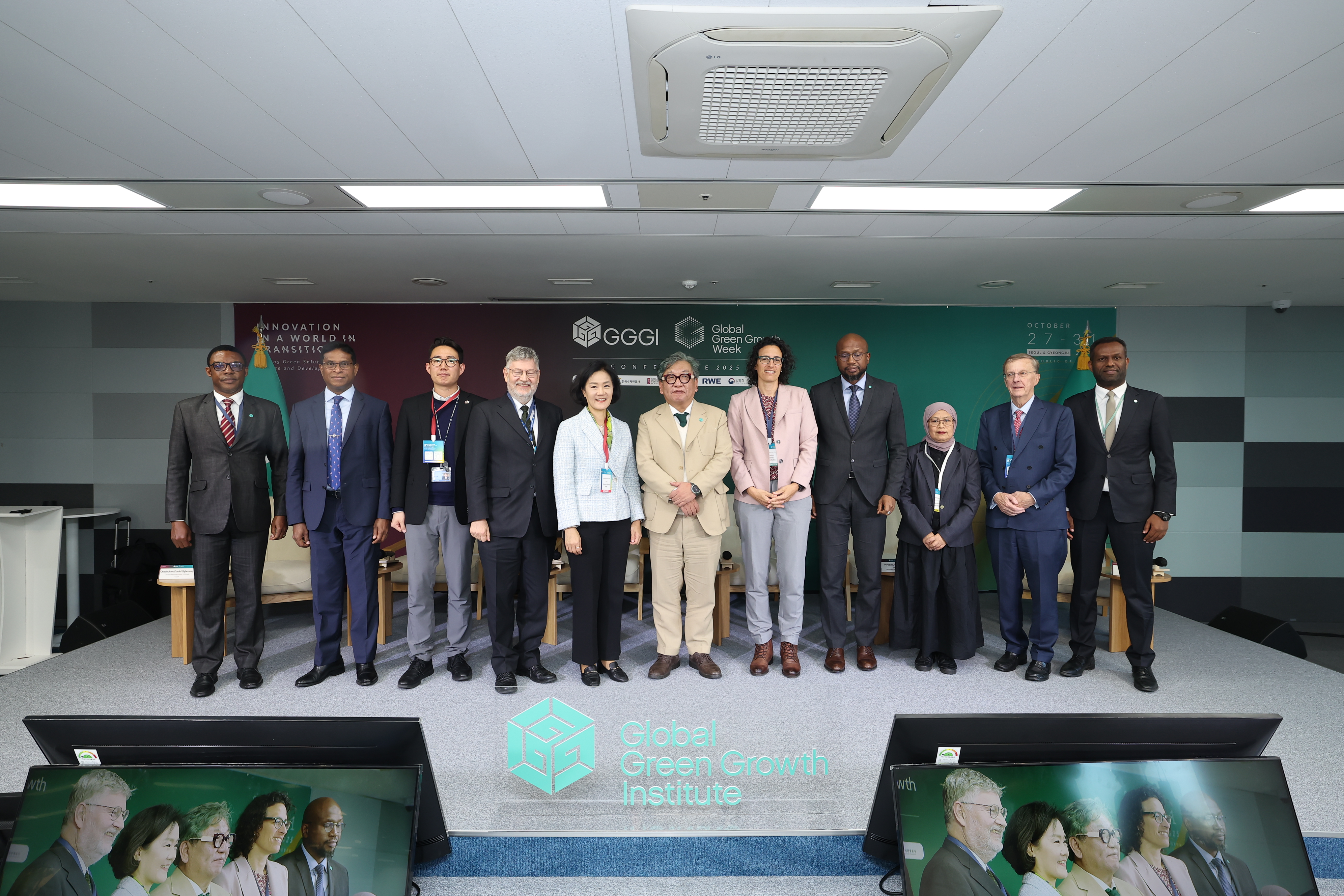
Delegates began to filter back into the room, carrying either quiet conversations or thoughtful pauses from the last session. Participants including delegates, development partyers, private sectors, GGGI’s Country representatives from Africa, Asia, the Pacific, and Latin America took their seats alongside private-sector partners and research institutions, each arriving with different energy landscapes but a shared sense of urgency. The screens glowed softly with the title slide, and the air held that attentive stillness that comes just before a difficult question is asked not of technology, but of governance, responsibility, and fairness.
The Energy Transition Only Works If It Works for Everyone
This session carried a double ambition: to test whether digitalization and Artificial Intelligence (AI) can accelerate decarbonization, and to insist that acceleration without equity is not a transition—it is drift. Sang-Hyup Kim, Executive Director (E.D.), Global Green Growth Institute (GGGI), framed the moment with clarity. Clean-energy investment is rising about USD 2.2 trillion out of USD 3.3 trillion in total energy investment this year1 but the geography of that investment remains uneven, concentrated in advanced economies and China. Meanwhile, AI capacity and benefits are similarly consolidating among a few dominant actors. Yet the picture is not an inevitable imbalance. If it governed well, E.D. Kim emphasized that digital tools could stabilize power systems, integrate renewables more effectively, and expand access rather than restrict it. The tone was not celebratory, but directive: technology will not deliver justice on its own; it must be steered, shared, and shaped through policy and partnership.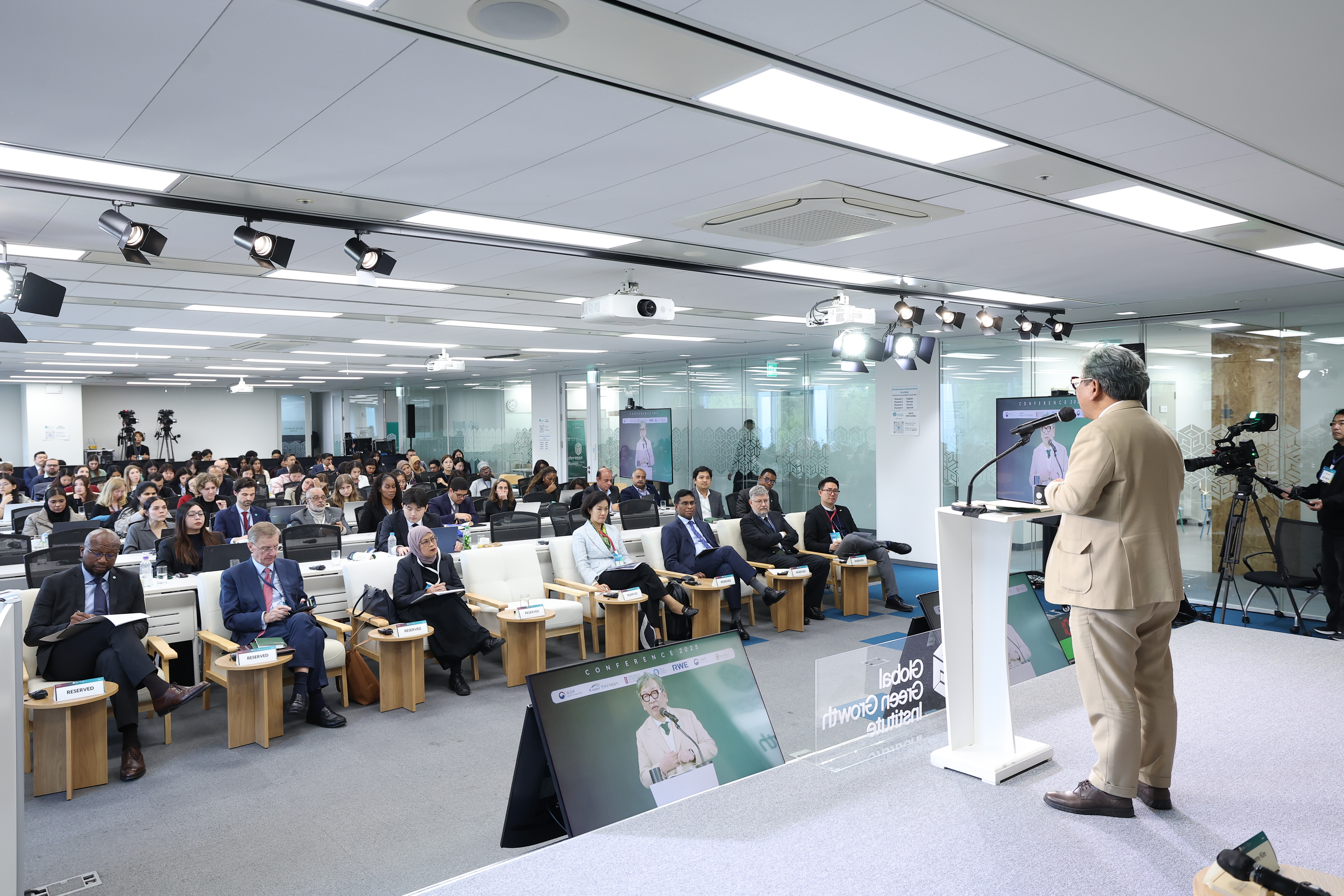
GGGWeek 2025
From Digital Speed to Energy Justice
With the scene set, the session moved from diagnosis to purpose. Speakers aligned around a shared understanding that the value of digital and AI tools lies not simply in efficiency, but in the type of transition they make possible. A just energy transition (JET) is not only about increasing renewable capacity, it is about ensuring that people, regions, and sectors historically excluded from energy decision-making are not excluded again under the digital banner. This meant reframing digitalization as an enabling infrastructure: one that can support transparent pricing, decentralized systems, responsive grids, rural electrification, and new local industries. However, these benefits materialize only where policy frameworks, training systems, and financing models are ready to receive them.
Keynotes in Practice: What Justice Looks Like When It Is Designed Upfront
This principle took concrete form when H.E. Fitsum Assefa Adela, Minister of Planning and Development, Ethiopia, described Ethiopia’s integrated electrification strategy. The country’s approach, she explained, is being guided by both scale and equity: expanding grid infrastructure while deploying off-grid solar solutions for rural regions, supported by GIS-based electrification planning and mobile payment platforms and pay-as-you-go solar system. These programs have enabled 3 million households to access clean energy. Yet the Minister was clear technology alone is insufficient if underlying affordability and inclusion are not addressed. “We must use technology not just to power machines, but to power opportunity, power equality, and power thought,” she concluded.
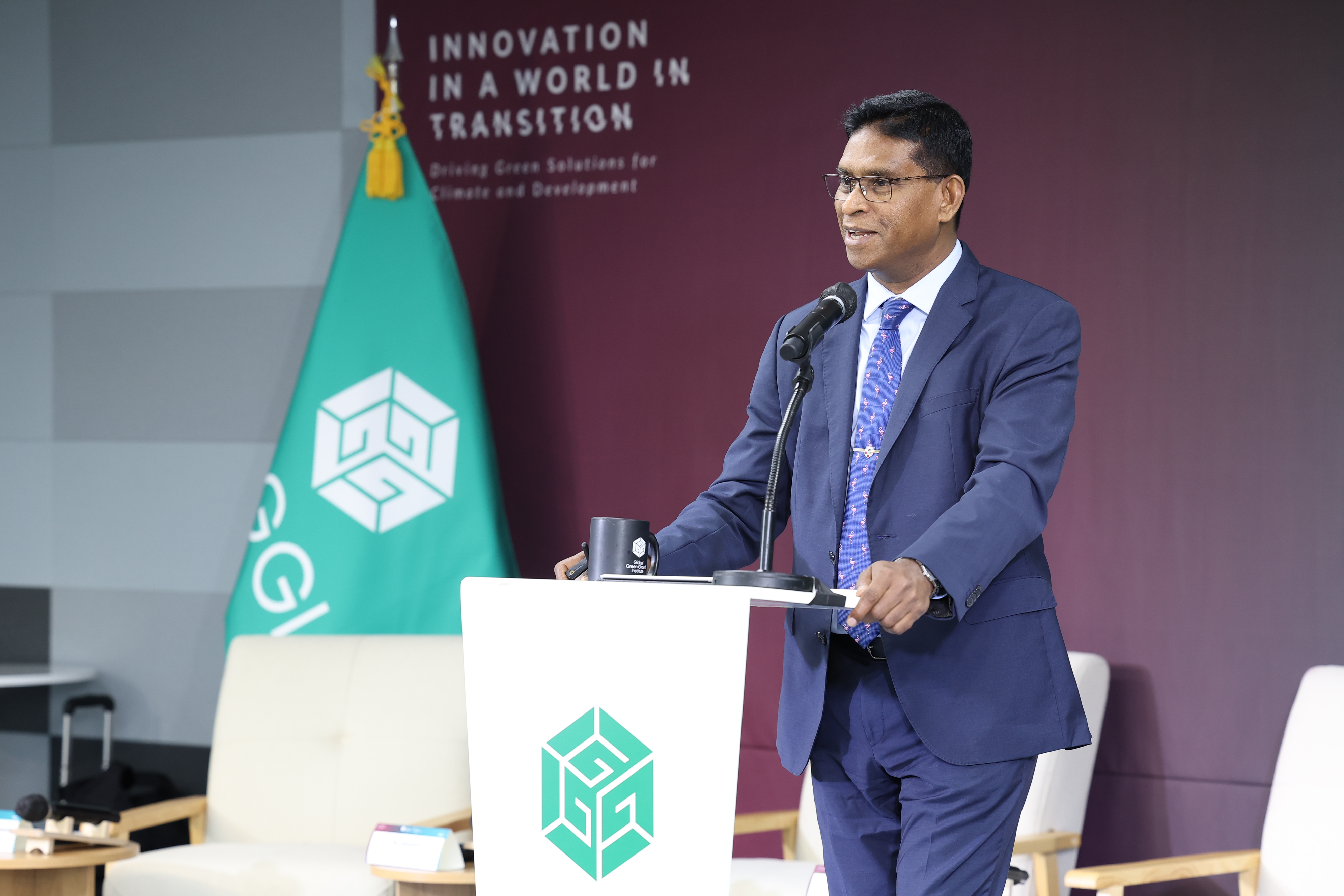
The second keynote, delivered by Professor Priyantha Wijayatunga, Senior Director, Energy Sector Office, Sectors Group, Asian Development Bank (ADB), built on this logic by grounding it in regional realities. Despite advances, hundreds of millions across Asia still lack reliable energy or clean cooking. Digital technology, he noted, helps countries integrate variable renewables minimizing the cost of supplies, which supports consumer engagement and energy efficiency as seen in cross-border Lao monsoon wind power project, Maharashtra power distribution enhancement program and Sri Lanka solar panels project with AgriVoltaics systems. He underlined to keep in mind energy access, energy security, sector governance and environment when finding solutions for the society and develop financing strategies alongside them.
GGGWeek 2025
In the third keynote, Mr. Joern Beissert, Deputy Chief of Mission, Embassy of the Federal Republic of Germany, demonstrated how open data can accelerate JET. Through Germany’s support to GGGI’s Asia Low-Carbon Buildings Transition (ALCBT) project, two free digital platforms are enabling policy makers, architects, project developers, municipalities, and financial institutions and energy service companies to align decisions around emissions reduction and attract green investment to improve livelihoods. “When innovation is shared, we can build capacity together and promote a fair distribution of the benefits,” he emphasized.
The three keynotes formed a progression: why technology matters for JET, what regional systems require, and how open digital infrastructure can enable fair participation in innovation.
Who Benefits, Who Decides, and Who Pays
With this foundation, the panel moved toward the practical tensions that shape implementation. Ambassador Hyoeun Jenny Kim, Chief Executive Officer, Global Industry Hub, cautioned that AI is reshaping energy demand itself. Data centers in particular are becoming major electricity consumers, raising difficult questions about prioritization and access. “AI and digital technology are enablers,” she stressed. “The task is to ensure they enable human-centered decarbonization, rather than accelerate disparity.”
A grounded illustration followed from Ms. Rd Siliwanti, Expert Staff to the Minister for Development Funding Innovation, Ministry of National Development Planning of Indonesia. Indonesia’s approach integrates digital mapping of coal-dependent regions, targeted electricity subsidies based on welfare data and community-led energy transition in remote islands. These are not pilots on paper: they are already shaping access to 24-hour power in Maluku and retaining programs in South Sumatra and East Kalimantan. “Justice is not an afterthought,” she said. “It is part of the design.”
Mr. Victor Lee, Counsellor and Alberta Government Representative, Embassy of Canada to the Republic of Korea, expanded the conversation to include the challenge of powering the AI itself. Alberta is integrating AI for pipeline safety, greenhouse gas emissions reduction and operational efficiency, while supporting Indigenous-led microgrids. Yet the province is also planning to power large-scale data centers using blue hydrogen, hydrogen fuel cells and small modular reactor technologies. Canada is focusing on energy for AI as well as AI for energy, optimizing the energy costs of data centers with new technologies while reducing emissions using digital technologies.
Ms. Katerina Syngellakis, Africa Regional Director, GGGI, reinforced that the success of any digital or AI-enabled transition depends on local capacity, ownership and data systems. National measurement, reporting and verification (MRV) systems, small and medium-sized enterprises (SMEs) and startup ecosystems all require sustained investment in people, not just software. “All the way down to the SMEs that are working in each of the communities, that's where these innovations need to be reached. And to reach that level, we need capacity building the workforce,” she said. “The backbone of all of this is to be able to access funding and finance.”
The discussion was moderated by Dr. Mallé Fofana, Regional Director for Asia, GGGI, with additional implementation insights from Okechukwu Daniel Ogbonnaya, Country Representative, GGGI Ethiopia, emphasizing that national systems change only when designed with the institutions that will maintain them.
Make Acceleration Fair—By Design
The session ended with a clear conclusion: digitalization and AI can support the energy transition, but they must be structured to do so. Without policies that expand access, finance that reaches beyond capital-rich markets and governance that ensures transparency, digital technologies will reinforce imbalance rather than redress it. The consensus was not that the transition must slow down but that it must broaden as it accelerates.
Where planning is data-driven and public, where women and youth participate not only as users but as builders and decision-makers, and where financial risk is shared rather than shifted, digital tools can translate ambition into access, opportunity and resilience.
Or in the words of Minister Fitsum Assefa Adela: “Technology must not only power systems. It must power opportunity.”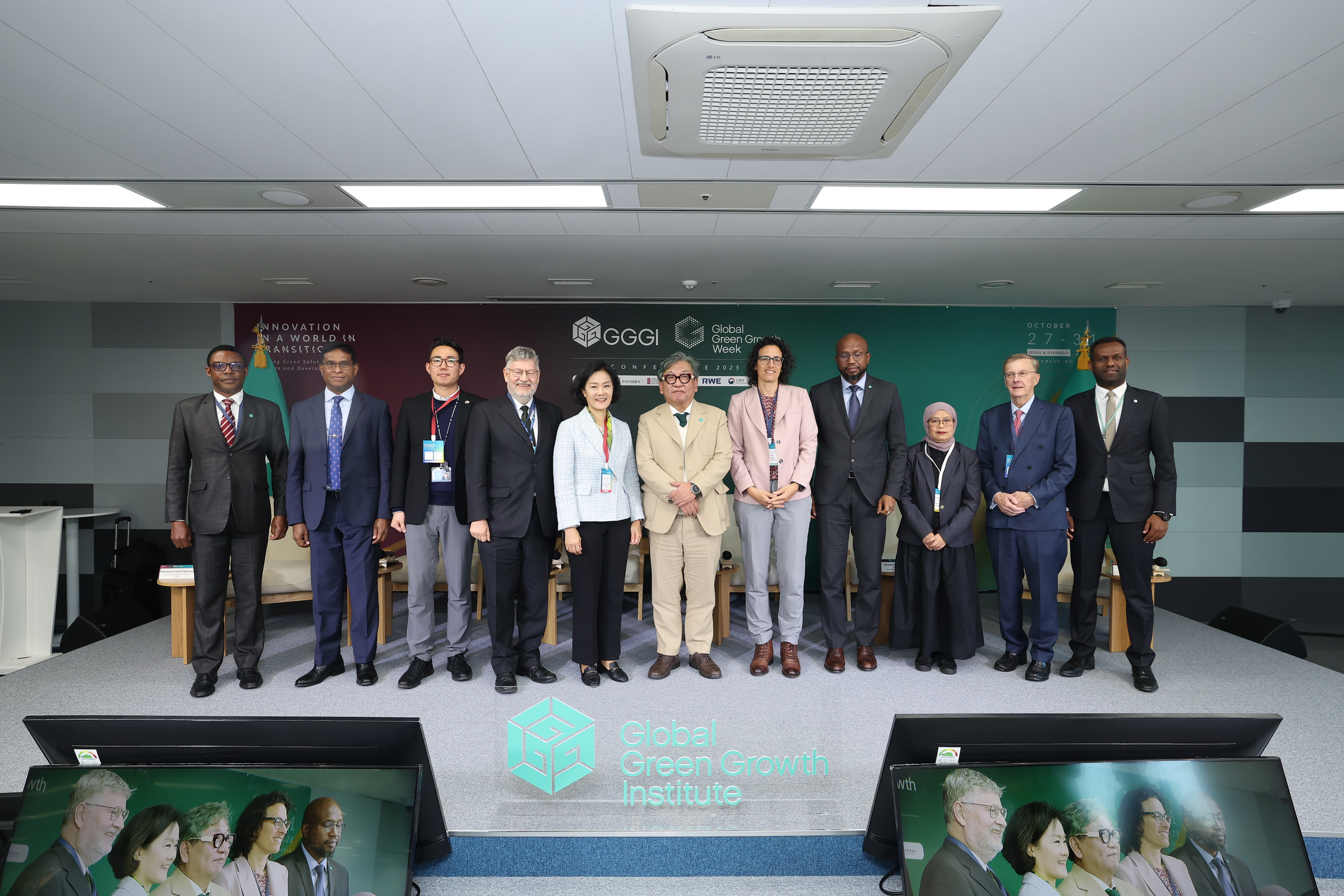
GGGWeek 2025
Photos @ 2025 Global Green Growth Institute
Watch the session recording: