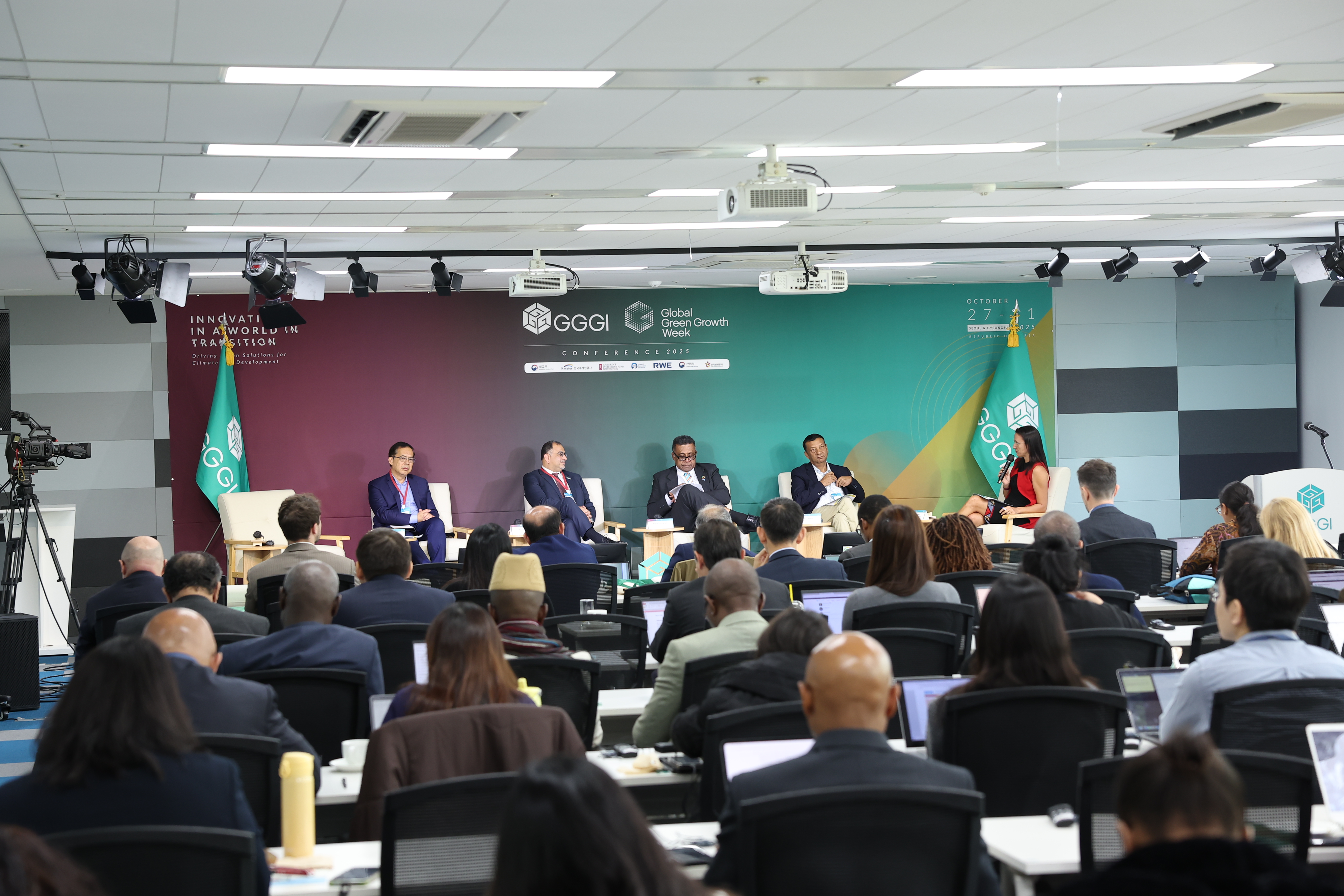


Inspired by the session “Scaling Nature-based Solutions and Climate Change Adaptation from Planning to Financing” at GGGWeek 2025
Seoul, 28 October — GGGI Headquarters, Global Green Growth Week
As climate risks intensify, adaptation and resilience are becoming central pillars of national climate strategies. Day 2 of GGGWeek 2025 reflected this shift, dedicating an afternoon to exploring how nature-based solutions (NBS), climate-smart agriculture, landscape restoration and digital tools can help countries move from planning to implementation.
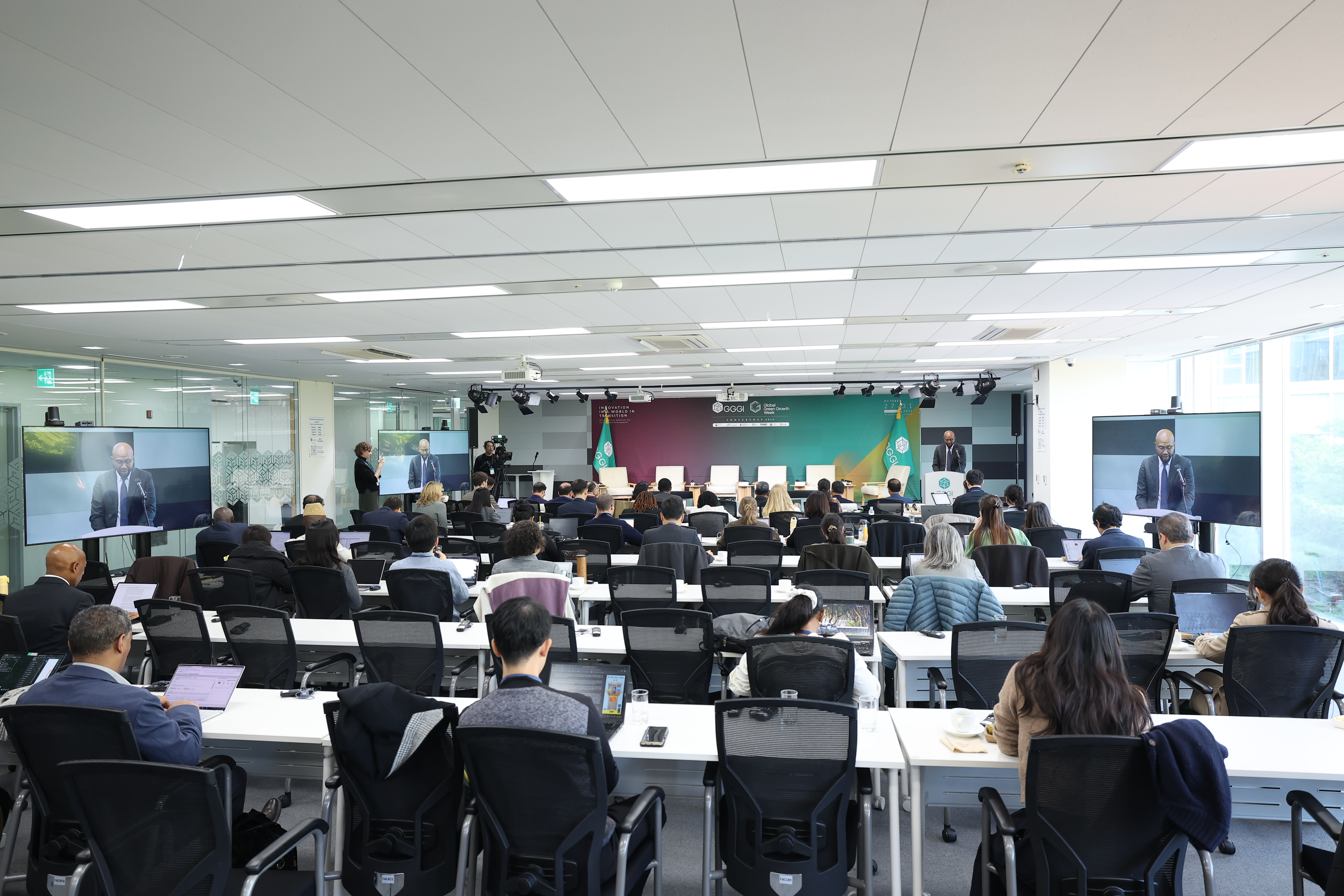
Opening the session, Nicholas Taylor, GGGI’s Adaptation and Resilience Lead, framed the discussions as the most comprehensive adaptation-focused programme yet at GGGWeek, bringing together four linked themes: nature-based solutions, food systems and the Africa SAFE programme, land restoration, and adaptation planning and finance, including the launch of the SAFA Facility.
Adaptation as a Development Imperative
The conversation began with a clear message: adaptation delivers strong long-term returns and must be treated as a development priority. Mallé Fofana, GGGI’s Regional Director for Asia and Head of Programmes, noted that every dollar invested in adaptation can generate more than ten dollars in benefits over a decade. Yet recent extreme weather in the Republic of Korea—record snowfall, fires, heatwaves and floods—demonstrated how climate risk continues to deepen even where institutional resilience is strong. Least developed countries and small island developing States experience similar events with far fewer resources to absorb the shocks.
Despite the need, adaptation finance continues to fall short, as highlighted in the UN Adaptation Gap Report, and the IPCC warns that the window for effective action is narrowing. Some impacts, such as sea-level rise and land degradation, already exceed the limits of adaptation and require attention to loss and damage.
Reflecting the urgency, adaptation now represents forty-one percent of GGGI’s portfolio. Between 2020 and 2024, the organization supported the National Adaptation Plan processes across multiple regions, with fourteen NAPs under delivery or finalization. Since 2015, GGGI has mobilized USD 4.3 billion in investment commitments, including the USD 250 million Infrastructure Climate Resilience Fund.
GGGWeek 2025
Defining Adaptation and Resilience
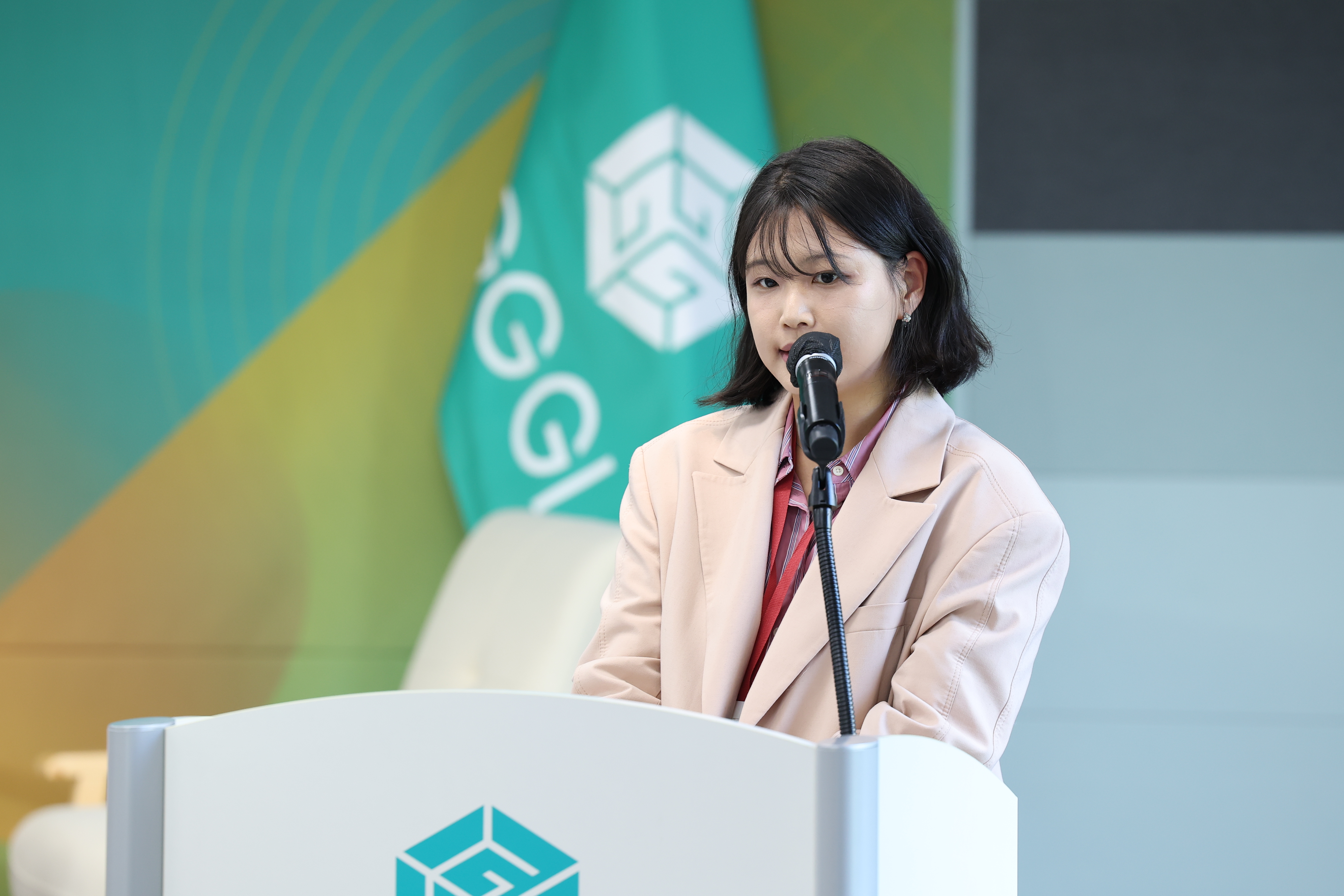
A shared conceptual grounding came from Dr. Hayon Choi of KAIST. She distinguished adaptation—adjusting to actual or expected impacts—from resilience, the ability to absorb and recover from disruptions. The wildfire in North Gyeongsang Province showed how resilience is shaped by social as well as physical systems; many older residents did not receive alerts simply because they did not own smartphones.
Her analysis of 442 cities reinforces the health and climate value of nature-based options: expanded urban green space is consistently associated with reductions in heat-related mortality. For island and coastal communities already facing land loss, she noted that adaptation sometimes requires transformational approaches, raising critical issues of equity and climate justice.
GGGWeek 2025
Nature-Based Solutions Across Landscapes
The discussion then shifted to how NBS are being applied in practice. Moderating the segment, Dagmar Zwebe, GGGI Country Representative in Lao PDR, recalled that studies frequently find nature-based solutions to be two to five times more cost-effective than engineered alternatives. She restated the accepted definition of NBS: ecosystem-based actions that address societal challenges while delivering benefits to biodiversity and human well-being. Moderating the segment, Dagmar Zwebe, GGGI Country Representative in Lao PDR, opened by echoing a key insight shared moments earlier by Dr. Hayon. She drew attention to one of the presentation’s central findings: that nature-based solutions can be two to five times more cost-effective than engineered alternatives, illustrating that NBS offer not only environmental value but also a compelling economic case. She reaffirmed the widely recognized definition of NBS as actions rooted in natural or modified ecosystems that address societal challenges while generating co-benefits for biodiversity and human well-being.
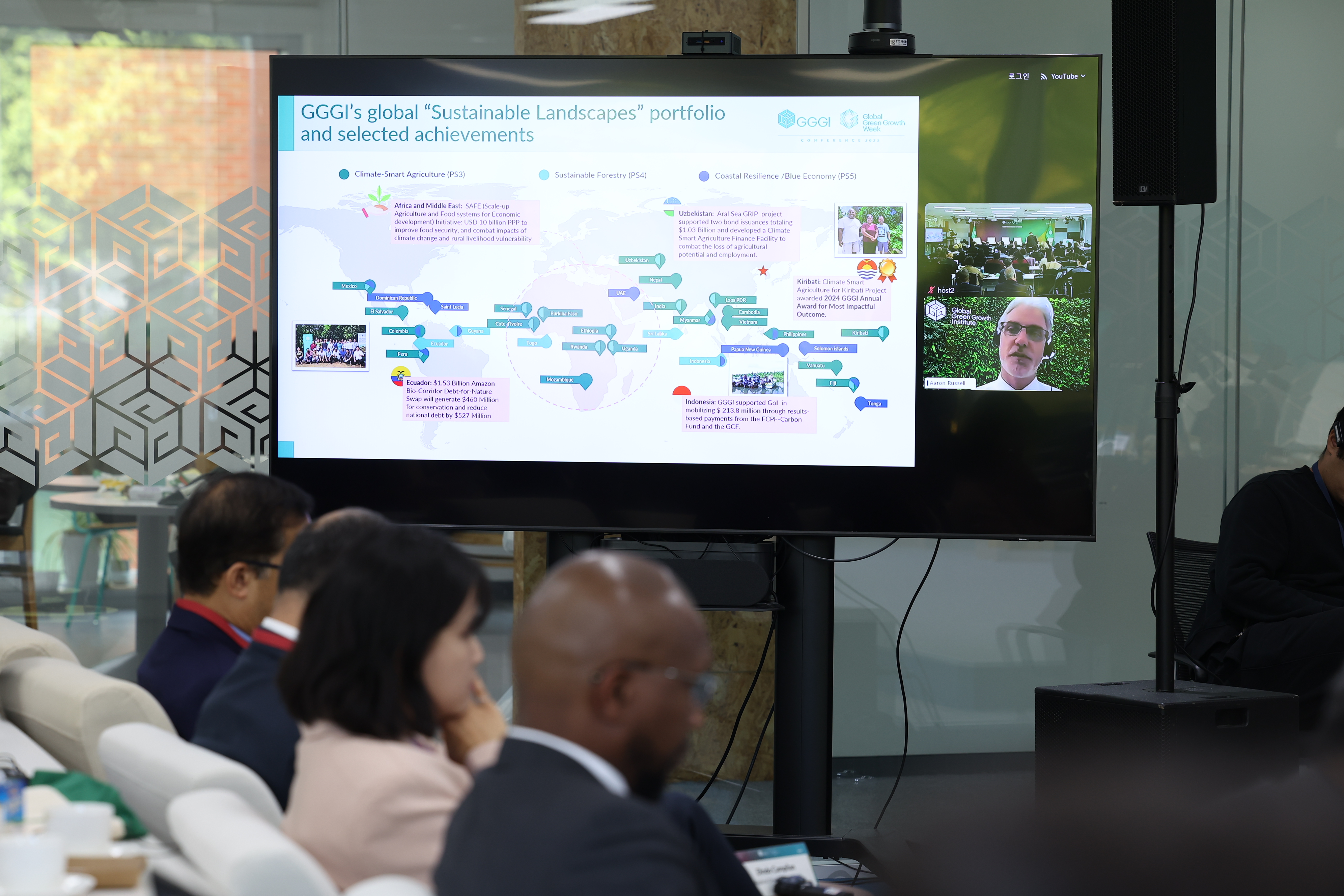
A broader lens on GGGI’s work came from Aaron Russell, Sustainable Landscapes Lead for Asia, who outlined programme clusters stretching from climate-resilient cities and watershed restoration to blue economy approaches, climate-smart agriculture and circular initiatives that convert agricultural waste into productive resources.
Aaron’s tour began with peatland forestry in Indonesia, where GGGI helped establish the country’s first results-based REDD+ payment system—over USD 200 million initially, and a pathway for continued tranches. In Ecuador, a USD 1.5 billion debt-for-nature swap generated USD 460 million for conservation while easing sovereign debt. Across Africa and the Middle East, the USD 10 billion “Scale-Up Agriculture and Food Systems for Economic Development” initiative is financing climate-smart agriculture—from efficient irrigation to value-chain upgrades—aimed at reducing rural vulnerability. He added work in Central Asia on thematic green and sustainable bonds exceeding USD 1 billion and a climate-smart agriculture finance facility. Finally, he underscored that investment mobilized will only achieve its intended objective if we enable entrepreneurs and MSMEs to develop and succeed in attracting investment for their the NbS-based and green business models, demonstrated by GGGI’s award-winning program for Agri-food business incubation in Vanuatu The through-line was unambiguous: turn a USD 7 trillion tide of nature-negative investment toward nature-positive systems, in protected areas, forests, wetlands, sustainable agricultural landscapes and private sector engagement as the main lever for scaling.
Even with these advances, global capital flows still favour nature-negative activities, underscoring the challenge of shifting investment toward nature-positive landscapes.
GGGWeek 2025
Restoring Urban Wetlands in Kigali
Urban restoration provided another window into the benefits of NBS. The Nyandungu Urban Wetland in Kigali—once degraded by encroachment and unsustainable land use—has been transformed into a 120-hectare eco-park through strong government leadership and partner support, including GGGI. The restored wetland has strengthened flood attenuation, improved water quality , and enabled the return of more than 200 bird species. Nearly 4,000 green jobs have been created across restoration and operations, and the site has gained international recognition.
This momentum continues as Rwanda restores five additional wetlands in Kigali with support from the World Bank, Danish cooperation and the Global Environment Facility. GGGI is assisting authorities in safeguarding ecological gains, scaling restoration across the country, supporting green entrepreneurship in buffer zones, and exploring digital monitoring tools for ecosystem services.
Climate-Smart Agriculture in Nepal
Transitioning to rural systems, the session examined how NBS and climate-smart agriculture can strengthen both resilience and gender equity. In Nepal’s Tharu floodplain, a KOICA-funded initiative implemented by GGGI, Good Neighbors and national partners supports farmers through training on seeds, irrigation, fertilizer use and post-harvest practices, alongside demonstration farms comparing climate-smart and traditional techniques.
With male out-migration shifting agricultural responsibilities onto women, the project promotes women-friendly tools and gender-sensitive extension services. Mid-term results show higher uptake of climate-smart technologies, reduced agrochemical use, greater involvement of women in farm-based economic activity and growing demand for digital advisory services. National and local prioritization of gender-responsive agriculture creates opportunities for wider scaling.
Digital Solutions for Smallholder Farmers
Digital innovation also emerged as a key enabler of adaptation. In the Republic of Karakalpakstan, strong demand for expert agronomic advice led GGGI and Consort Group to codify local knowledge into crop-specific algorithms and develop GROWZ, an AI-supported digital advisory tool. Farmers upload photos of crops and receive diagnoses and step-by-step guidance.
The application now covers more than 100 crops and has over 30,000 installs and 21,000 registered users, placing it among Uzbekistan’s top business applications. Participants noted that delivering simple, actionable messages—supported by advanced analytics running quietly in the background—helps close last-mile information gaps for farmers.
Forests, Watersheds and Energy Security in Nepal
The discussion then turned to policy-level approaches linking ecosystems to national development. Nepal’s integrated model connects forests, watershed health and energy security through policies such as the National Forest Policy (2019), Agroforestry Policy (2019) and Non-Timber Forest Product Policy (2004). More than 22,000 community forest user groups manage nearly 2.9 million hectares of forest.
Protected areas cover around 23 percent of the country, with 30–50 percent of revenues reinvested in buffer zones for conservation and community development. Landscape investments in the Churia and Gandaki basins support watershed restoration, reduce siltation, and stabilize river flows crucial for hydropower. Payment for ecosystem services schemes reward upstream stewardship and help maintain low-carbon development pathways. As highlighted in the discussion, the principles underpinning NBS have long been embedded in Nepal’s resource governance systems.
Science, Innovation and Scalable Models
Scientific institutions echoed the need for practical, scalable models. Representing ICARDA and CGIAR, Dr. Vinay Nangia noted that CGIAR produces open-access research and global datasets aligned with FAIR principles. However, scientific innovation becomes meaningful only when paired with the guidance needed for adoption, such as planting instructions, irrigation needs, and risk considerations.
CGIAR supports business model development, capacity-building and technology transfer, including an agriculture-focused language model to enhance digital advisory services. Across all applications, clarity and usability remain central for farmers.
GGGWeek 2025
Integrity and Standards for NBS
The session closed with a focus on quality and integrity. Dr. Dindo Campilan, Regional Director for Asia and Hub Director for Oceania at IUCN, recalled the multilaterally agreed definition of NBS endorsed by IUCN and the UN Environment Assembly: interventions must be ecosystem-based, address societal challenges and deliver co-benefits for biodiversity and human well-being.
He emphasized the importance of distinguishing NBS from related approaches such as ecosystem-based adaptation and climate-smart agriculture. Some interventions evolve toward full NBS status, while others combine green and grey infrastructure. Scaling high-integrity NBS relies on enabling policies, effective use of available finance and stronger technical capacity, including through national guidelines and application of the IUCN Global Standard.
Looking Ahead to COP
As the discussions concluded, government representatives shared messages for the upcoming Conference of Parties in Brazil. From Nepal, the call centered on strengthening finance and cooperation to expand restoration across forests, watersheds and biodiversity-rich landscapes. From Fiji, Assistant Minister Esrom Immanuel stressed that for Pacific small island developing States, adaptation “is not a choice,” and urged that climate finance become more accessible, predictable and prioritized for high-integrity NBS.
Across the afternoon, a shared understanding emerged: nature-based solutions can play a critical role in strengthening adaptation and resilience when rooted in local priorities, supported by coherent policies and institutions and backed by sustained finance. Examples from Kigali, Nepal and Central Asia show that practical solutions are already available. The task now is to scale them in ways that align ecological restoration, community well-being and national development as countries prepare for the Conference of the Parties.
Photos @ 2025 Global Green Growth Institute
Watch the session recording: