About this Discussion

With alarming speed, COVID-19 has infected tens of millions of people worldwide and killed more than one million. It has impacted economies and changed people's lives, particularly the poor and vulnerable who are already disproportionately impacted by climate change and other environmental, social, and economic risks.

The virus has also become central to national policy and has halted business operations in ways that were unimaginable. The economic impacts of these efforts are likely to be felt for years to come.

In addition to responses from government leaders, who are calling for support to cope with the twin crises of public health and rebuilding economies in sustainable and resource-efficient ways, industry and finance stakeholders also have important roles. This includes generating innovative solutions for diversifying production portfolios, building business capacities for sustaining growth, and aligning institutional investors’ fiduciary duties and stewardship practices with long-term decision-making and sustainable value creation.

Upcoming Events

Green Recovery from COVID-19

A post is already pinned to this stream. Would you like to replace it?

World Bank approves First Amazon Fiscal and Environmental Sustainability Program — The project will support fiscal reforms aimed at promoting fiscal sustainability while integrating forest conservation and development, as part of the state’s post-COVID-19 economic recovery plan.

Read More

https://www.worldbank.org/en/news/press-release/2020/12/11/world-bank-approves-first-amazon-fiscal-e...

This 'NDC Update Report December 2020' features perspectives on how COVID-19 is impacting climate action from the NDC Partnership, Climate Analytics, SouthSouthNorth, FAO, BUND, and WRI

Read More

https://newclimate.org/2020/12/07/ndc-update-report-december-2020/

GGKP has a knowledge library for COVID-19 resources. Check it out, and let us know if you have any resources that we should add to it!

Read More

https://greengrowthknowledge.org/knowledge/browse/theme/covid-19-8469
Geneva Environment Network

This briefing, organized within the framework of the Geneva Environment Network, will review the outcomes of the negotiations related to chemicals and waste in 2020, with the constraints of the COVID-19 pandemic and present the important conferences scheduled in 2021. Read More

Only the U.S. and China Can Stave Off Debt Disaster

Relations between the United States and China promise to be fraught even under President-elect Joe Biden’s administration. There’s one area where the two rivals can and should cooperate immediately, however: to head off a looming debt crisis that threatens to hurl millions into poverty across Africa, Latin America and Asia.

Read More

https://www.bloomberg.com/amp/opinion/articles/2020-12-07/u-s-and-china-need-to-prevent-emerging-mar...
Stephani Widorini commented on Maria Dumpert's Post in Climate Change, Green Recovery from COVID-19
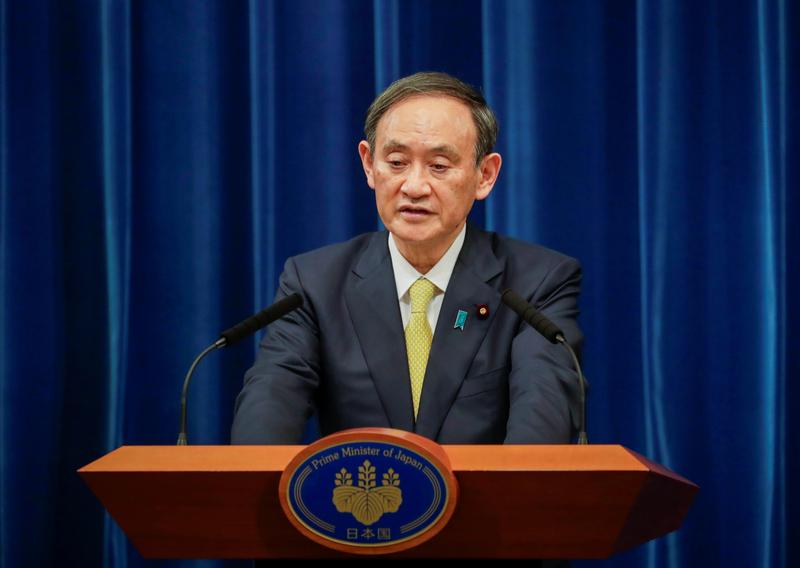
Japan unveils $708 billion in fresh stimulus with eye on post-COVID growth. This includes US$19 billion to promote investment that helps achieve carbon neutrality by 2050.

Read More

https://www.reuters.com/article/us-japan-economy-stimulus/japan-unveils-708-billion-in-fresh-stimulu...
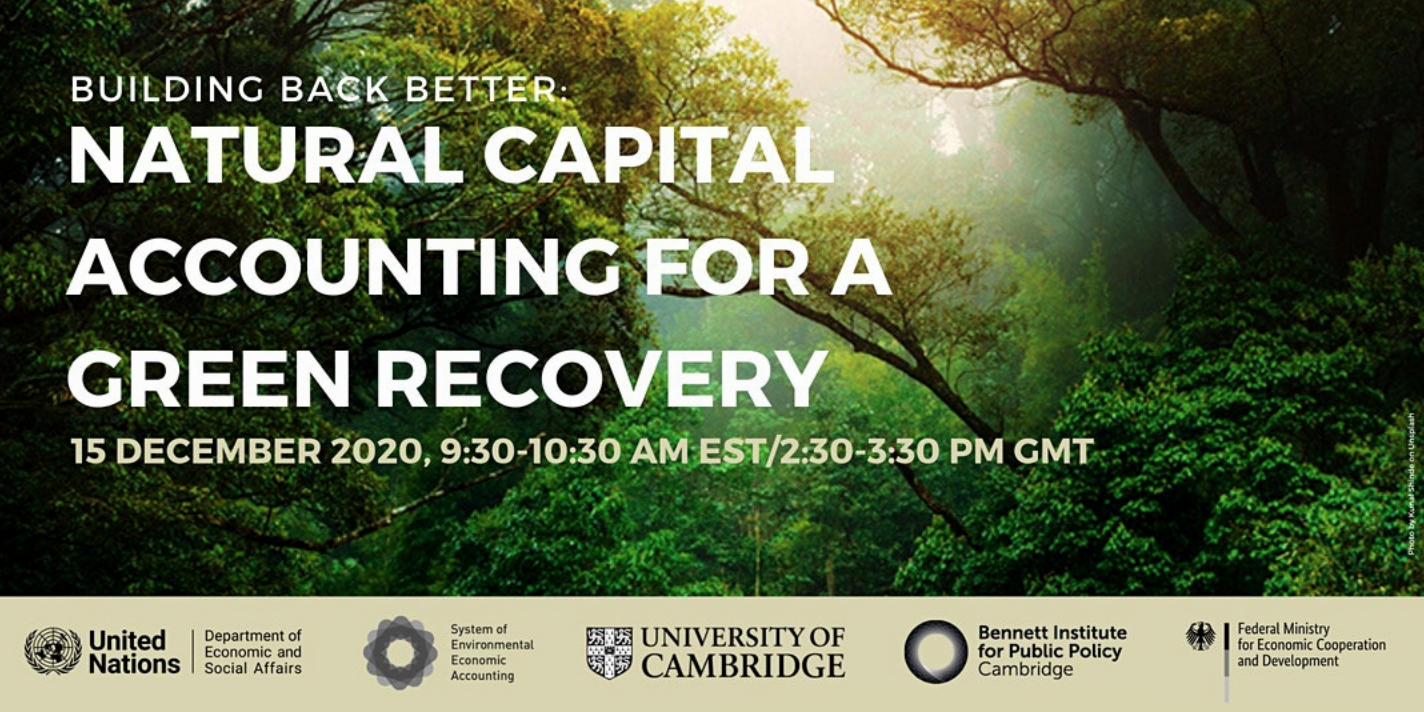
United Nations Department of Economic and Social Affairs(UNDESA), BMZ Federal Ministry for Economic Cooperation and Development, University of Cambridge Bennett Institute for Public Policy

On 15 December 2020 at 15:30 (CET), the United Nations Department of Economic and Social Affairs (UNDESA), the Bennett Institute for Public Policy at the University of Cambridge, and the Federal Ministry for Economic Cooperation and Development of Germany are hosting a webinar on 'Building Back Better: Natural Capital Accounting for a Green Recovery'. Read More

Organisation for Economic Co-operation and Development(OECD)

Buildings are the key component of the low-carbon transition, accounting for nearly a third of energy-related greenhouse gas emissions globally. Energy efficient buildings generate a variety of co-benefits, such as job creation, health improvements, and reduced household energy expenditure – key… Read More

Five years after the signing of the Paris Agreement, the gap between pledges and implementation remains large. This Production Gap Report highlights the discrepancy between countries’ planned fossil fuel production levels and the global levels necessary to limit warming to 1.5°C or 2°C, with the COVID-19 recovery marks a potential turning point.

Read More

https://www.unep.org/resources/report/production-gap-2020