About this Discussion

According to the IPCC, the concentration of greenhouse gases in the earth’s atmosphere is directly linked to the average global temperature on Earth, and the concentration has been rising steadily. The most abundant greenhouse gas, accounting for about two-thirds of greenhouse gases, carbon dioxide, is largely the product of burning fossil fuels. 

There is alarming evidence that important tipping points, leading to irreversible changes in major ecosystems and the planetary climate system, may already have been reached or passed. One of the most urgent challenges facing countries across the world today is how to achieve economic prosperity and development while also combating climate change.

The Paris climate change agreement commits nations to limit global temperature rise to no more than 2°C above pre-industrial levels, with countries pledging to cut or curb their greenhouse gas emissions – through a combination of mitigation and adaptation measures – by 2030. 

Upcoming Events

Climate Change

A post is already pinned to this stream. Would you like to replace it?
Green Growth Knowledge Partnership(GGKP)

How can we ensure that COVID-19 recovery processes are sustainable and equitable?  How do we ensure that developing countries are not left behind when it comes to green recovery, ensuring a just, sustainable and equitable recovery?  How can we ensure recovery processes are aligned with… Read More

Emma Thomson commented on Emma Thomson's Post in Climate Change, Forestry, Sustainable Finance

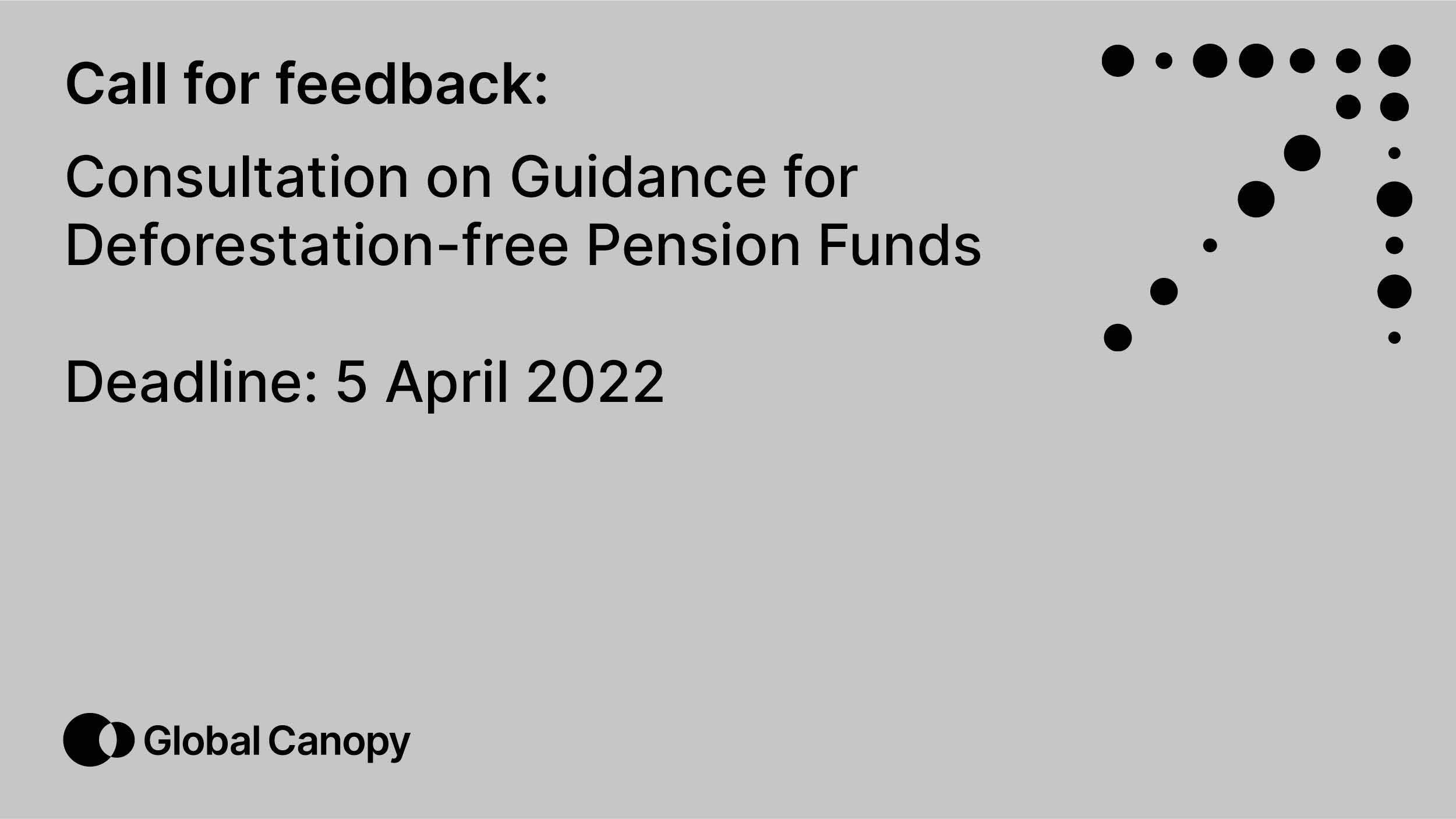
Hi everyone! Feedback request | Global Canopy invites all pension fund managers, asset managers, or representatives from financial institutions, non-governmental organisations, and Indigenous peoples and local communities for feedback on guidance for Deforestation-free Pension Funds.

Pension funds have a powerful influence over sectors and industries that are strongly connected to deforestation, conversion, and associated human rights abuses. Pension funds have the ability to help drive change not just within their own investments but across the finance sector more broadly.

To enable pension funds to address their exposure to these issues effectively, and in line with best practice, Global Canopy, alongside partners Make My Money Matter and SYSTEMIQ Ltd., are developing guidance to enable pension funds to identify, address, and eliminate deforestation, conversion, and associated human rights abuses from their investments.

The consultation document linked below is a detailed outline for guidance that is being developed; it is not comprehensive or complete but has been produced to gain feedback from stakeholders on the topics and actions included.

We are asking representatives from pension funds, asset managers, financial institutions, rightsholders, Indigenous peoples, local communities and NGOs for feedback. Please click the link below, follow the instructions and complete the survey by 5th April 2022.

If you do not feel you fit into one of the above groups and would like to review the document, or if you have any questions on this document or the associated surveys please contact the Global Canopy team at [email protected].

Read More

http://ow.ly/7CE650I5Kjv
Default profile image

Created a Post in Climate Change

For the people who are still wondering “How did we get here?”, I can tell you how

We marginalized the people who dedicate their lives to understanding the complexity of our world. We chose to read 360 characters instead of 360 pages. We cancelled before we tried to understand. We made (and lost) a quick buck instead of investing in long-term change.

Read More

https://thecurrency.news/articles/76158/for-the-people-who-are-still-wondering-how-did-we-get-here-i...

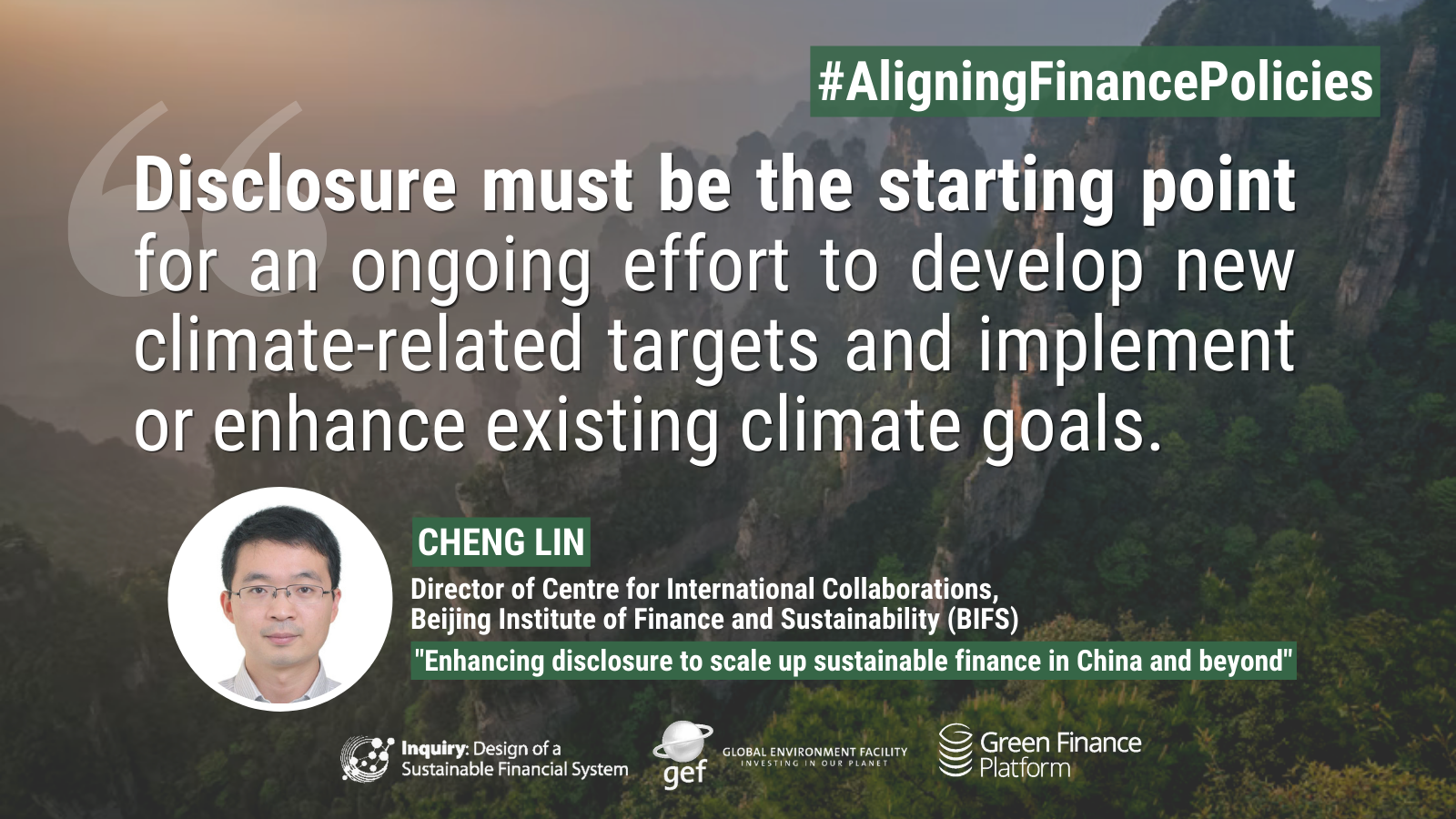
Enhancing disclosure to scale up sustainable finance in China and beyond

In the latest contribution to the GEF Aligning Finance Policies project, Cheng Lin of the Beijing Institute of Finance and Sustainability provides updates on China's green finance landscape.

Mainstreaming disclosure is an essential step towards aligning financial systems with sustainability, both in China and worldwide - but disclosure alone is far from sufficient to guarantee a sustainable financial future.

? What are examples of green finance measures that can support or build upon climate-related disclosure?

Read More

http://ggkp.org/afp-china-blog

Yesterday, the United States Securities and Exchange Commission (SEC) proposed "The Enhancement and Standardization of Climate-Related Disclosures for Investors," a regulatory measure that would require certain climate-related disclosures from companies.

Under the proposed rule, SEC registrants would have to report on climate-related risks that are reasonably likely to have a material impact on their business, results of operations, or financial condition."

Companies would also be required to disclose their GHG emissions. This would include Scope 1 (direct emissions) and Scope 2 (indirect emissions from purchased energy); disclosing on Scope 3 emissions would also be required when material or the company has set a GHG emissions target or goal that includes Scope 3 emissions.

TCFD Chariman Mike Bloomberg, the TNFD, and others have applauded the proposed rule for aligning with TCFD recommendations. Several other jurisdictions worldwide have also already mandated climate reporting or announced moves towards it, including France, the UK, New Zealand, Brazil, Canada, Japan, Mexico and South Africa.

The rule will provide phase-in periods between FY2023-2027, depending on the registrant's filer status; an additional phase-in period will be provided for Scope 3 emissions.

What are your thoughts on the proposed rule?

Press release: https://www.sec.gov/news/press-release/2022-46
Proposed rule: https://www.sec.gov/rules/proposed/2022/33-11042.pdf
Fact sheet: https://www.sec.gov/files/33-11042-fact-sheet.pdf

Read More

https://www.sec.gov/news/press-release/2022-46

Announcing the UN Decade of Family Farming...

The UN Decade of Family Farming 2019-2028 (UNDFF) aims to shed new light on what it means to be a family farmer in a rapidly changing world and highlights more than ever before the important role they play in eradicating hunger and shaping our future of food. Family farming offers a unique opportunity to ensure food security, improve livelihoods, better manage natural resources, protect the environment and achieve sustainable development, particularly in rural areas. Thanks to their wisdom and care for the earth, family farmers are the agents of change we need to achieve Zero Hunger, a more balanced and resilient planet, and the UN Sustainable Development Goals (FAO, 2022).

Through their Global Action Plan UNDFF provides detailed guidance for the international community on collective, coherent and comprehensive actions that can be taken to support family farmers. The Plan is designed around seven mutually reinforcing pillars of work and recommends a series of interconnected actions from the local to the global level (UNDFF, 2022).

UNDFF needs your help to collecting stories that showcase the contributions of family farmers and/or highlight the challenges they face. The stories can come from farmers themselves, but also from the people or institutions that work with farmers. Participants can use the template provided as a basis for stories. Please consider submitting your story with photos to [email protected] to have it featured on the UNDFF’s website!

Long live Family Farms and their Supporters!
___
https://www.fao.org/family-farming-decade/home/en/
https://www.fao.org/3/ca4672en/ca4672en.pdf
https://www.fao.org/family-farming/home/en/
https://www.fao.org/3/cb7496en/cb7496en.pdf

Read More

https://www.linkedin.com/feed/update/urn:li:activity:6912000538515537921/

"The global labor force participation rate for women is just over 50% compared to 80% for men [...]. Emerging evidence from recent household survey data suggests that these gender gaps are heightened due to the Covid-19 pandemic."

The gender gap is narrowing in some regions, but not necessarily from increased female participation, but falling male participation. Of all the income groups surveyed, the gender gap in labor force participation is largest in lower middle-income countries:

Read More

https://genderdata.worldbank.org/data-stories/flfp-data-story/
Steve with male brown trout

Created a Post in Climate Change

Global Climate Change Update...

Scientific evidence for warming of the climate system is unequivocal (IPCC, 2022).

Earth's climate has changed throughout history. In the last 650,000 years there have been seven cycles of glacial advance and retreat, with the abrupt end of the last ice age about 11,700 years ago marking the beginning of the modern climate era — and of human civilization. Most of these climate changes are attributed to very small variations in Earth’s orbit that change the amount of solar energy our planet receives (NASA, 2022).

The current warming trend is of particular significance because it is unequivocally the result of human activity since the mid-20th century and proceeding at a rate that is unprecedented over millennia. It is undeniable that human activities have warmed the atmosphere, ocean, and land and that widespread and rapid changes in the atmosphere, ocean, cryosphere, and biosphere have occurred. Earth-orbiting satellites and other technological advances have enabled scientists to see the big picture, collecting many different types of information about our planet and its climate on a global scale. This body of data, collected over many years, reveals the signals of a changing climate (NASA, 2022).

Human-induced climate change is causing dangerous and widespread disruption in nature and affecting the lives of billions of people around the world, despite efforts to reduce the risks. People and ecosystems least able to cope are being hardest hit, according to the latest Intergovernmental Panel on Climate Change (IPCC) report, released February 28 (IPCC, 2022).

The IPCC is the UN body for assessing the science related to climate change. It was established by the United Nations Environment Programme (UNEP) and the World Meteorological Organization (WMO) in 1988 to provide political leaders with periodic scientific assessments concerning climate change, its implications and risks, as well as to put forward adaptation and mitigation strategies. Their 2022 report has a strong focus on the interactions among the coupled systems climate, ecosystems (including their biodiversity) and human society. These interactions are the basis of emerging risks from climate change, ecosystem degradation and biodiversity loss and, at the same time, offer opportunities for the future (IPCC, 2022).
____
https://climate.nasa.gov/
https://climate.nasa.gov/evidence/
https://www.unep.org/resources/report/ipcc-sixth-assessment-report-clim…
https://www.ipcc.ch/report/ar6/wg2/
https://www.ipcc.ch/report/sixth-assessment-report-working-group-ii/

Read More

https://www.linkedin.com/feed/update/urn:li:activity:6905876247533240320/