About this Discussion

According to the IPCC, the concentration of greenhouse gases in the earth’s atmosphere is directly linked to the average global temperature on Earth, and the concentration has been rising steadily. The most abundant greenhouse gas, accounting for about two-thirds of greenhouse gases, carbon dioxide, is largely the product of burning fossil fuels. 

There is alarming evidence that important tipping points, leading to irreversible changes in major ecosystems and the planetary climate system, may already have been reached or passed. One of the most urgent challenges facing countries across the world today is how to achieve economic prosperity and development while also combating climate change.

The Paris climate change agreement commits nations to limit global temperature rise to no more than 2°C above pre-industrial levels, with countries pledging to cut or curb their greenhouse gas emissions – through a combination of mitigation and adaptation measures – by 2030. 

Upcoming Events

Climate Change

A post is already pinned to this stream. Would you like to replace it?
Clara Mottura commented on Colm Hastings's Post in Climate Change, Green Recovery from COVID-19, Sustainable Finance
COP26 was described as "our last chance saloon" to save the planet. More than 35,000 delegates from 197 countries descended on host-city Glasgow over two weeks last November, and at the end we had a new climate agreement – the Glasgow Climate Pact, which will set the global climate agenda to 2030 ?

But in the months that have passed since, the response to COP26 and the Pact has been predictably cool. So what did all the talks and meetings mean? Post-Glasgow, are we really better placed to tackle the climate crisis? And is it time to give young people more of a say in their own climate futures? ✊

In this final episode of #TheGreenRenaissance podcast, we ask what the real legacy of Glasgow will be. Featuring interviews with Angus Mackay (United Nations Institute for Training and Research (UNITAR), Jayati Ghosh (University of Massachusetts), Marie-Claire Graf and Heeta Lakhani (both YOUNGO).

? bit.ly/3oLCCbS
? bit.ly/3JowUV8 (with captions)
? Or search for The Green Renaissance wherever you get your podcasts.

Read More

https://www.uncclearn.org/podcasts/the-green-renaissance-podcast/pacts-protests-and-the-real-legacy-...
https://youtu.be/FyvLGzb41hc

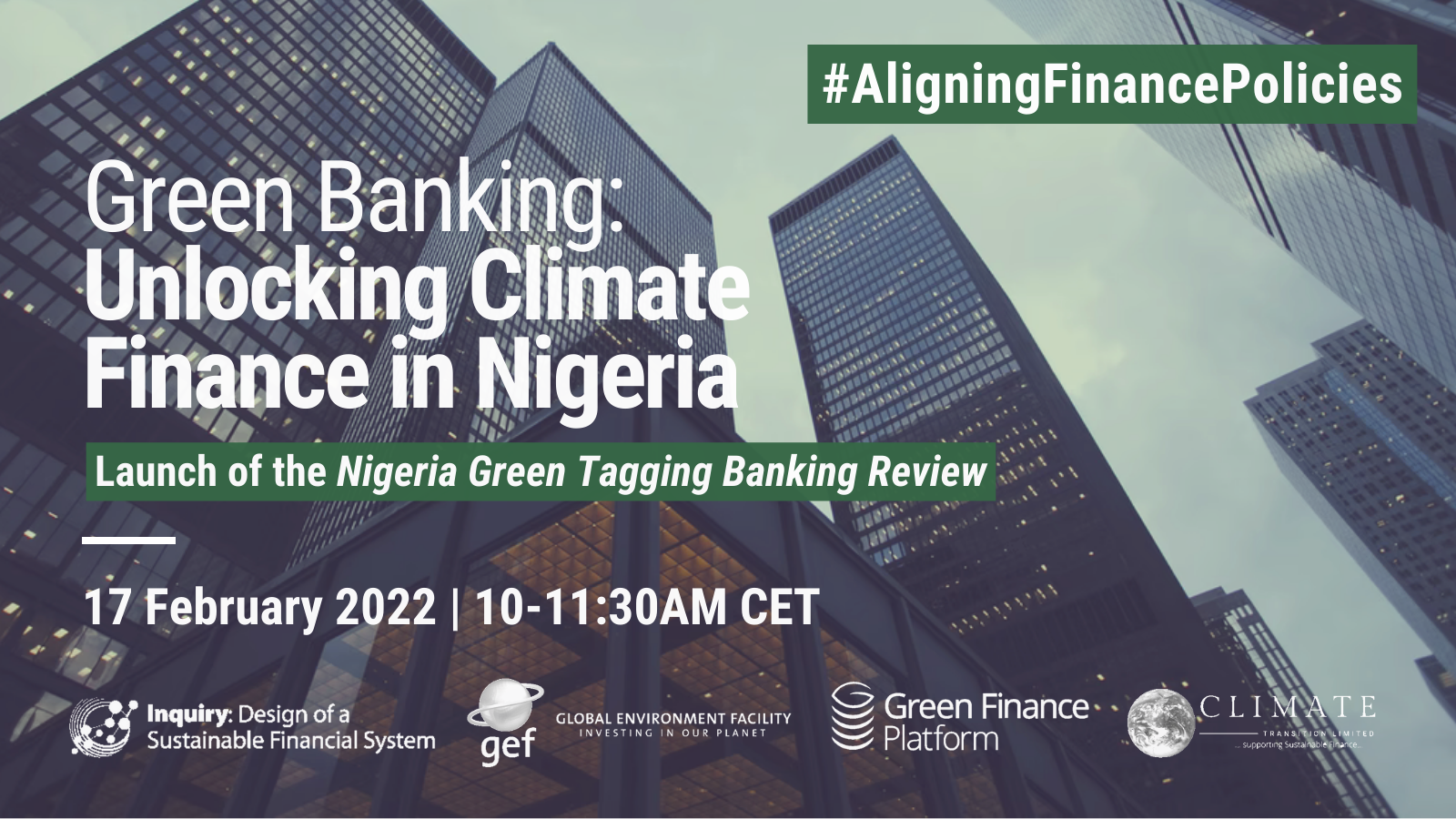
TOMORROW - Green Banking: Unlocking Climate Finance in Nigeria

How can climate-related risk reporting enable an orderly climate finance transition? Join us tomorrow (17 Feb) at 10am CET for Green Banking: Unlocking Climate Finance in Nigeria.

Co-organized by the GGKP Green Finance Platform and Climate Transition Limited, we will be hosting speakers from:
• UNDP Financial Centres for Sustainability (FC4S)
• Nigeria Economic Advisory Council
• Central Bank of Nigeria
• Development Bank of Nigeria Plc
• Stanbic IBTC
• Sterling Bank Plc
• Wema Bank Plc.
• FC4S Lagos

During the event, the Nigeria Green Tagging Banking Review will be launched. Based on climate risk exposure analyses conducted with three major Nigerian banks, this groundbreaking report provides strategic recommendations for the development of the country's climate reporting framework.

This is the first event in the #AligningFinancePolicies webinar series, focused on the development of national Sustainable Finance Roadmaps in six countries - China, India, Kazakhstan, Mexico, Mongolia, and Nigeria - and building international consensus on best practices to green the financial system.

Learn more + register ?

Read More

https://www.greenfinanceplatform.org/webinar/nigeria-sustainable-finance-roadmap-launch
https://www.youtube.com/watch?v=-EkjHHsgTXE

Read my new article about 5 ways AI is used in the fashion industry to make it more sustainable, including virtual models, AI pricing, rental fashion and more.

Read More

https://towardsdatascience.com/5-ways-ai-is-transforming-the-fashion-industry-for-sustainability-bfd...

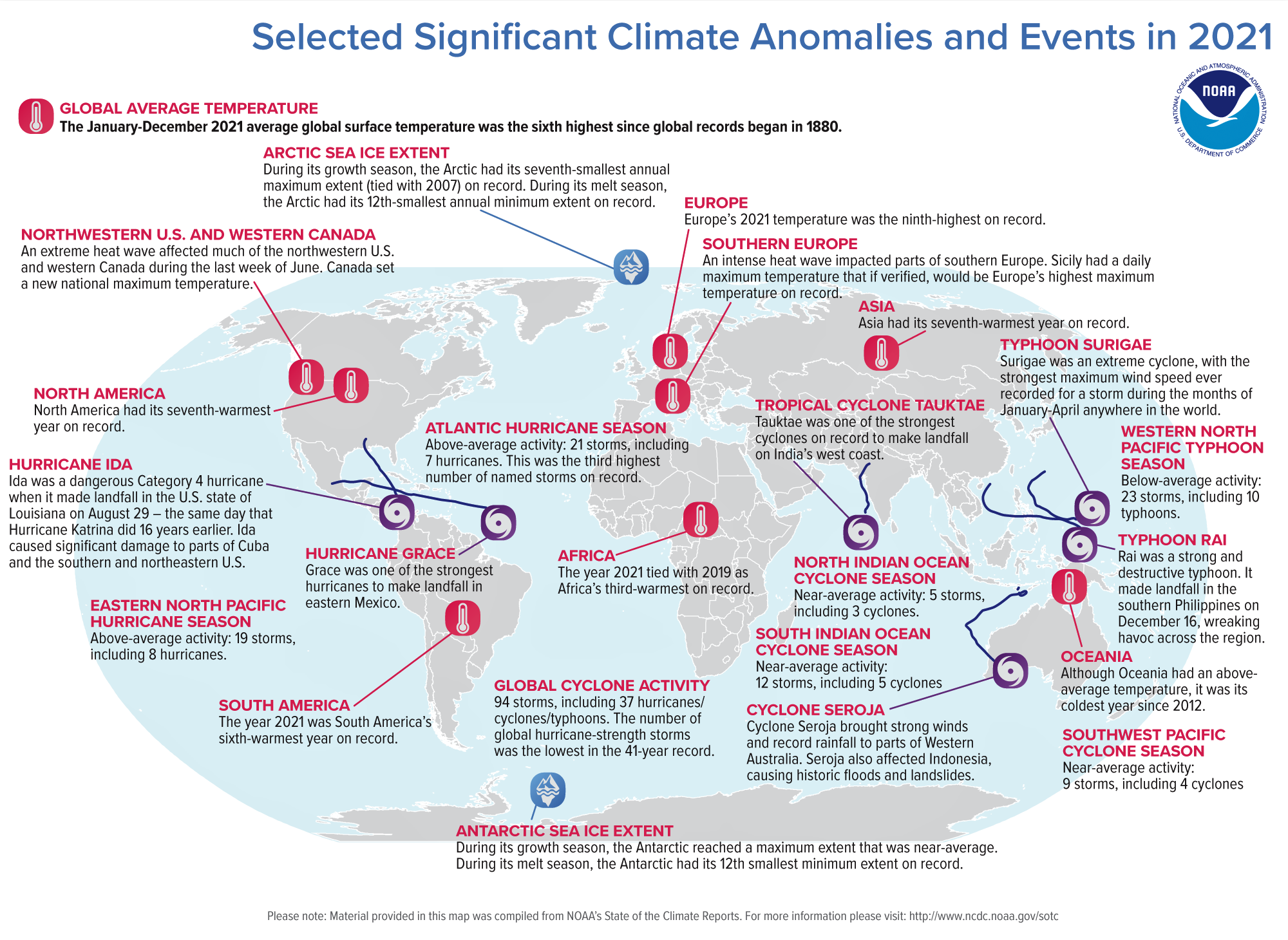
Global Climate 2021...

The global surface temperature for 2021 was the sixth highest since record keeping began in 1880, according to NOAA scientists. A separate analysis of global temperature data reveals that 2021 tied with 2018 as the sixth-warmest year on record (NOAA, 2022).

Most recently, the globe heated through a November that ranked as the fourth warmest in 142 years and the Northern Hemisphere saw its warmest land temperatures on record for meteorological autumn, according to scientists at NOAA’s National Centers for Environmental Information (NCEI). December’s global surface temperature tied with 2016 as the fifth highest in the 142-year record (NOAA, 2022).

The year 2021 began with an episode of cold phase, also known as La Niña, across the central and eastern tropical Pacific Ocean, which had developed in August 2020. Although the monthly global temperatures were above average throughout the year, February 2021 was the coldest month of 2021. Global temperature departure for February 2021 was +0.64°C — the coolest February since 2014. However, after the month of February, temperatures were at 0.80°C or higher for the remaining months of 2021 (NOAA, 2022).

2021 culminated as the sixth warmest year on record for the globe with a temperature that was 0.84°C above the 20th century average. The years 2013–2021 all rank among the ten warmest years on record. 2021 was also the 45th consecutive year (since 1977) with global temperatures, at least nominally, above the 20th century average. Overall, the global annual temperature has increased at an average rate of 0.08°C per decade since 1880 and over twice that rate (0.18°C) since 1981 (NOAA, 2022).
____
https://www.ncei.noaa.gov/news/global-climate-202112
https://www.ncdc.noaa.gov/sotc/global/202113
https://www.noaa.gov/news/2021-was-worlds-6th-warmest-year-on-record
https://www.noaa.gov/news/november-2021-was-earths-4th-warmest-on-record

Read More

https://www.linkedin.com/feed/update/urn:li:activity:6888892975569526784/
Steve Oberle commented on Steve Oberle's Post in Agriculture and Food System, Climate Change
Agriculture, Ecology, and a New Path Forward*

The science of agroecology is rooted in our collective consideration and
comprehension of agriculture and natural history. Agroecology can be defined as
the study of complex interactions between the components, reactions, and
processes of the global (natural) environment, and human (anthropogenic)
activities associated with agriculture and food systems. It offers a useful context
in which to characterize the complex relations and adaptations among natural
resources and agriculture, and provides the ecological basis for development of
more efficient and sustainable farming systems.

Agriculture productivity gains since the 1950s have resulted from the
development of farming systems that rely heavily on external inputs of energy
and chemicals to replace management and on-farm resources. The intensity and
extent to which the natural environment has been modified to attain this
productive capacity has directly resulted in degradation of natural resources,
notably land and water, that sustain these systems.

Agroecology provides the ecological basis for more sustainable farming, as well
as the opportunity to characterize or refine the cumulative effects of agriculture
activities at watershed, ecoregion, national, and global scales. Regional and
national scale efforts are needed for determining sustainable options based on
such factors as projected population trends, consumption patterns, resource
availability and integrity, and long-term productive capacity, among others.

Agriculture’s role in complex issues including environmental quality and
ecosystems degradation, food insecurity/safety, rural economic well-being,
biodiversity, climate change/resilience, habitat loss and disruption, among
others, must be critically assessed in developing more sustainable communities
and countries. Transition to a more sustainable, global ecology and economy
ultimately requires a gradual shift away from research and technologies that
promote large-scale, highly-specialized operations; and toward on-farm
resources and information and technology requirements of more diverse,
management-intensive systems.
____
* Adapted from abstract presented for the joint annual meetings of the
Association for the Study of Food and Society (ASFS) and the Agriculture, Food,
and Human Values Society (AFHVS), San Francisco, CA. June 4-7, 1998; under
the original title Agriculture, Ecology and a New Millennium.

Read More

Steve with male brown trout

Created a Post in Climate Change

Melting Permafrost, the Carbon Cycle, and Climate Change...

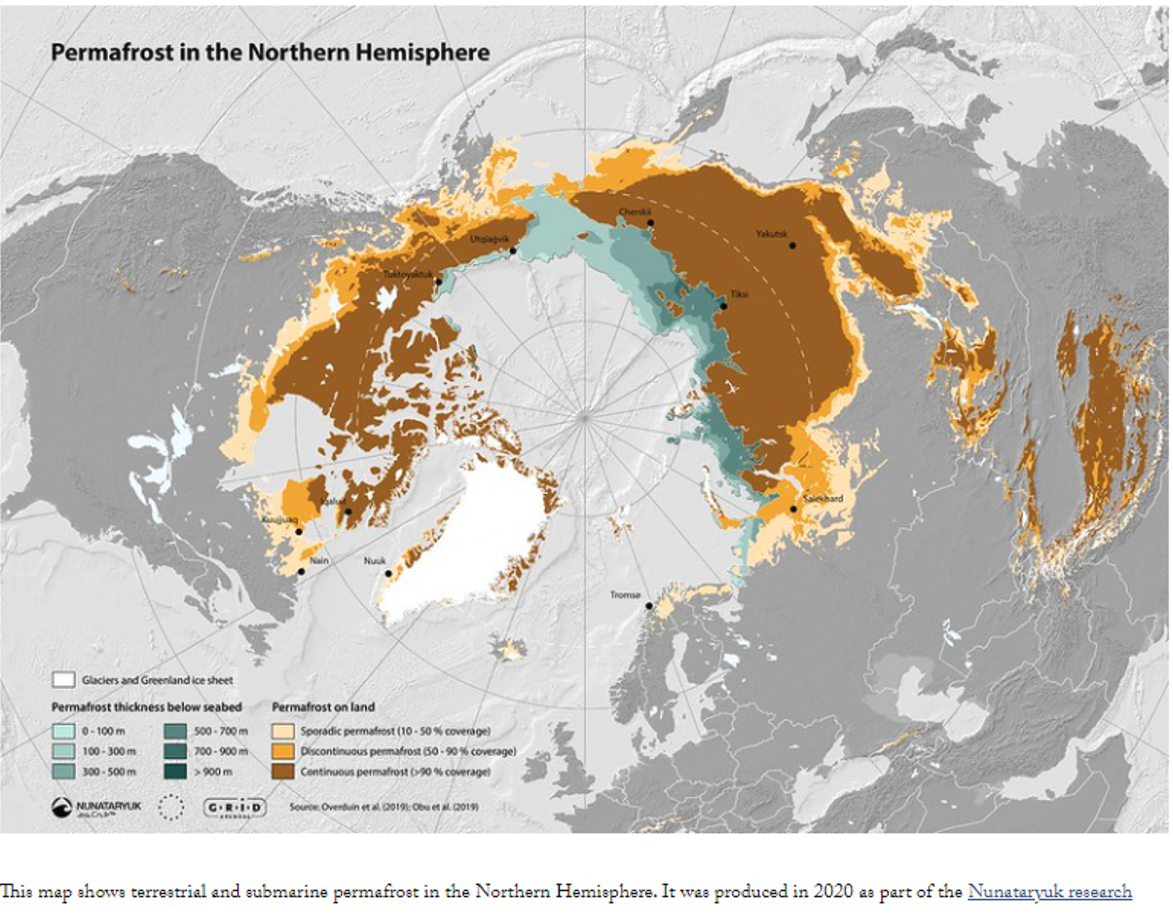
According to the National Snow & Ice Data Center, permafrost is defined as a layer of soil or rock, at some depth beneath the surface, in which the temperature has been continuously below 0°C for at least several years (NSIDC, 2022). It has been known among climate scientists for some time that as permafrost thaws, it can contribute significantly to global warming by releasing greenhouse gases into the atmosphere.

Dr. Kevin Schaefer is a permafrost scientist at NSIDC studying the carbon cycle and the processes by which the Earth's carbon moves and changes in the environment from the air into plants, from plants into the ground, and then back into the air (note graphics). He studies the carbon frozen deep in Arctic permafrost and has found that, as the Earth warms, some of the carbon in permafrost is escaping into the atmosphere as carbon dioxide or methane, increasing the amount of these gases in the atmosphere, which could make Earth's climate warm up even more (NSIDC, 2022).

The Arctic region is undergoing rapid change compared to other parts of the globe and the effect have potential serious consequences at a global scale due to the important role the Arctic plays in the global climate. As the Arctic warms faster than any region on Earth, major changes are taking place on land, and one of the most striking is the thawing of vast regions of permafrost that have underlain these polar regions for millennia.

Massive explosions have shaken a remote corner of the Siberian permafrost region, leaving behind huge craters. In Alaska, a huge lake erupts with bubbles of gas. Scientists are discovering that these phenomena likely add up to a potential ticking time bomb, as long-frozen permafrost melts and releases vast amounts of methane and other greenhouse gases (PBS, 2022).
__
https://ipa.arcticportal.org/products/gtn-p/ipa-permafrost-map
https://nsidc.org/cryosphere/frozenground/whereis_fg.html
https://nsidc.org/cryosphere/frozenground/climate.html
https://nsidc.org/cryosphere/frozenground/methane.html
https://gtnp.arcticportal.org/resources/maps
https://neo.gsfc.nasa.gov/view.php?datasetId=PermafrostNSIDC
https://earthobservatory.nasa.gov/features/CarbonCycle
https://www.noaa.gov/education/resource-collections/climate/carbon-cycle
https://www.eea.europa.eu/data-and-maps/figures/permafrost-in-the-north…
https://www.sciencedirect.com/science/article/pii/S0012825218305907#f00…
https://nunataryuk.org/news/139-new-map-shows-extent-of-permafrost-in-n…
https://earthobservatory.nasa.gov/images/87794/picturing-arctic-permafr…
https://earthobservatory.nasa.gov/images/77868/methane-emissions-from-t…
https://www.esa.int/Applications/Observing_the_Earth/Space_for_our_clim…
https://www.nationalgeographic.org/encyclopedia/permafrost/
https://ipa.arcticportal.org/publications/occasional-publications/what-…
https://www.pbs.org/video/arctic-sinkholes-9jwenj/
https://www.usgs.gov/news/state-news-release/atlantic-methane-seeps-sur…
https://www.ecowatch.com/siberia-sea-boiling-methane-2640900862.html
https://nsidc.org/cryosphere/icelights/2012/07/what-does-seeping-methan…
https://www.smithsonianmag.com/smart-news/ticking-timebomb-siberia-thaw…
https://e360.yale.edu/features/how-melting-permafrost-is-beginning-to-t…

Read More

the United Nations Environment Programme(UNEP)

Work Location: Remote Expected duration: 1 April 2022 - 15 June 2022 The objective of this assignment is to ensure that the implementation of the GEF ISLANDS Programme is informed by guidance on e-waste recycling activities, circular economy approaches and opportunities to improve e-… Read More

United Nations Environment Programme(UNEP)

Work Location: Remote Expected duration: 1 April 2022 to 15 June 2022 (2.5 months) The objective of this assignment is to ensure that the execution of the GEF ISLANDS Programme is informed by guidance on existing best practice on end-of-life vehicle management, circular economy… Read More

United Nations Environment Programme(UNEP)

Work Location: Remote Expected duration: 1 April 2022 - 15 June 2022 Thirty (30) days of work over a 2.5 month period The objective of this assignment is to ensure that the execution of the GEF ISLANDS Programme is informed by guidance on existing used oil management activities,… Read More