About this Discussion

The financial system can play a major role in contributing to a transition towards a low-carbon, resilient and inclusive economy. However, for this to happen, three key deficiencies must be addressed:  the misallocation of available capital for long-term development; externalities and systemic risk, including climate change; and environmental stress, notably natural disasters. Critical to aligning financial and capital markets will be measures within the financial system to green private finance through adjustments to key policies, regulations, standards and norms, and through market innovations.

In 2018, the Global Environment Facility (GEF) launched the GEF Aligning Finance Policies project to build international consensus to align financial systems with the UN Sustainable Development Goals (SDGs) and develop national regulatory actions. The project focuses on the development of national Sustainable Finance Roadmaps in six countries – China, India, Kazakhstan, Mexico, Mongolia and Nigeria – and building international consensus on best practices – from policies and regulations to standards and norms – to green the financial system.

This Green Forum discussion is for professionals to share their knowledge and experience on sustainable finance, particularly best practices to help align the financial system with sustainable development and climate change mitigation needs, as well as ways to incorporate sustainability factors into the rules that govern banking, insurance, institutional investment and capital markets.


Supported by
GEF Brand

Upcoming Events

Sustainable Finance

A post is already pinned to this stream. Would you like to replace it?

The EU raised €12 billion ($13.8 billion) from its first green bonds, of an expected €250bn of the European Commission green bonds by the end of 2026. The 15-year green bond received more than 135 billion euros of demand, making it the largest green bond launch and the highest level of demand for a green bond sale to date. The bloc will use the funds to finance its pandemic recovery.

Read More

https://www.ft.com/content/18039150-3048-4f67-9ece-9243fac969d1

Carbon pricing shows serious promise as a tool in the fight against climate change.

Deterring the use of fossil fuels, such as coal, fuel oil, and gasoline, is crucial to reducing the buildup of heat-trapping greenhouse gases in the atmosphere. Carbon pricing provides across-the-board incentives to reduce energy use and shift to cleaner fuels and is an essential price signal for redirecting new investment to clean technologies.

Read More

https://www.imf.org/external/pubs/ft/fandd/2021/09/five-things-to-know-about-carbon-pricing-parry.ht...
Green Growth Knowledge Partnership(GGKP), Deutsche Gesellschaft für Internationale Zusammenarbeit(GIZ) GmbH, United Nations Development Programme(UNDP), UNDP-UNEP Poverty-Environment Initiative

On 30 September (2pm CEST) join us for the webinar How Green Bonds Are Financing Sustainable Development. We will hear from municipal and national leaders from Argentina, Indonesia and South Africa on how green are being accessed and utilized; the purpose and function of green finance taxonomies; why tailor-made sustainability frameworks are key to success; and the importance of South-South Cooperation for exchange of best practice and lessons learned. Read More

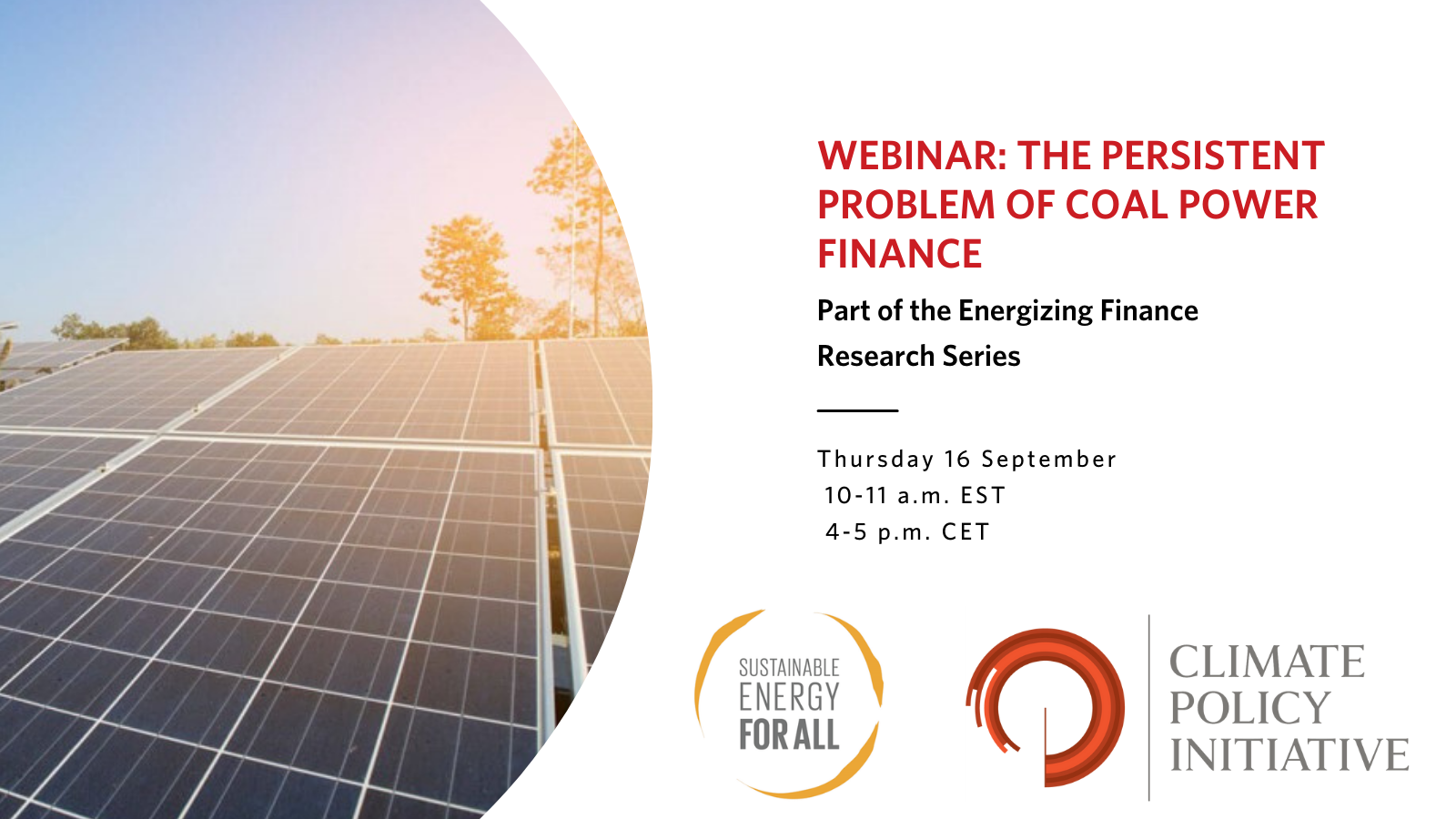
A new research by Sustainable Energy for All (SEforALL) and Climate Policy Initiative identifies which high-impact countries are receiving finance for coal fired power, the sources of this investment, its key drivers and the risks attached. The research also offers a series of recommendations to accelerate coal phase-out in favor of more cost-effective renewable energy solutions that support both increased energy access and the transition.

Join us for this webinar where SEforALL and CPI will present findings and recommendations from the Coal Power Finance in High-Impact Countries knowledge brief.

Read More

https://www.climatepolicyinitiative.org/event/the-persistent-problem-of-coal-power-finance/
| Online (Zoom)
Climate Bonds Initiative(CBI), LEDS Global Partnership, Africa LEDS Partnership, Asia LEDS Partnership

The Climate Bonds Initiative, in collaboration with Asia LEDS Partnership, Africa LEDS Partnership, and LEDS Global Partnership would like to invite you to the "Green Bonds Basics" presentation. This training was created for those who would like to start their journey in climate… Read More

Closing:
|
Germany
Climate Disclosure Standards Board

The Climate Disclosure Standards Board (CDSB) is looking to hire a full-time highly-motivated individual for up to three months, who is passionate about driving change to join our busy global secretariat to coordinate and support the delivery of our ambitious global strategy and work program. CDSB… Read More

Dear all,

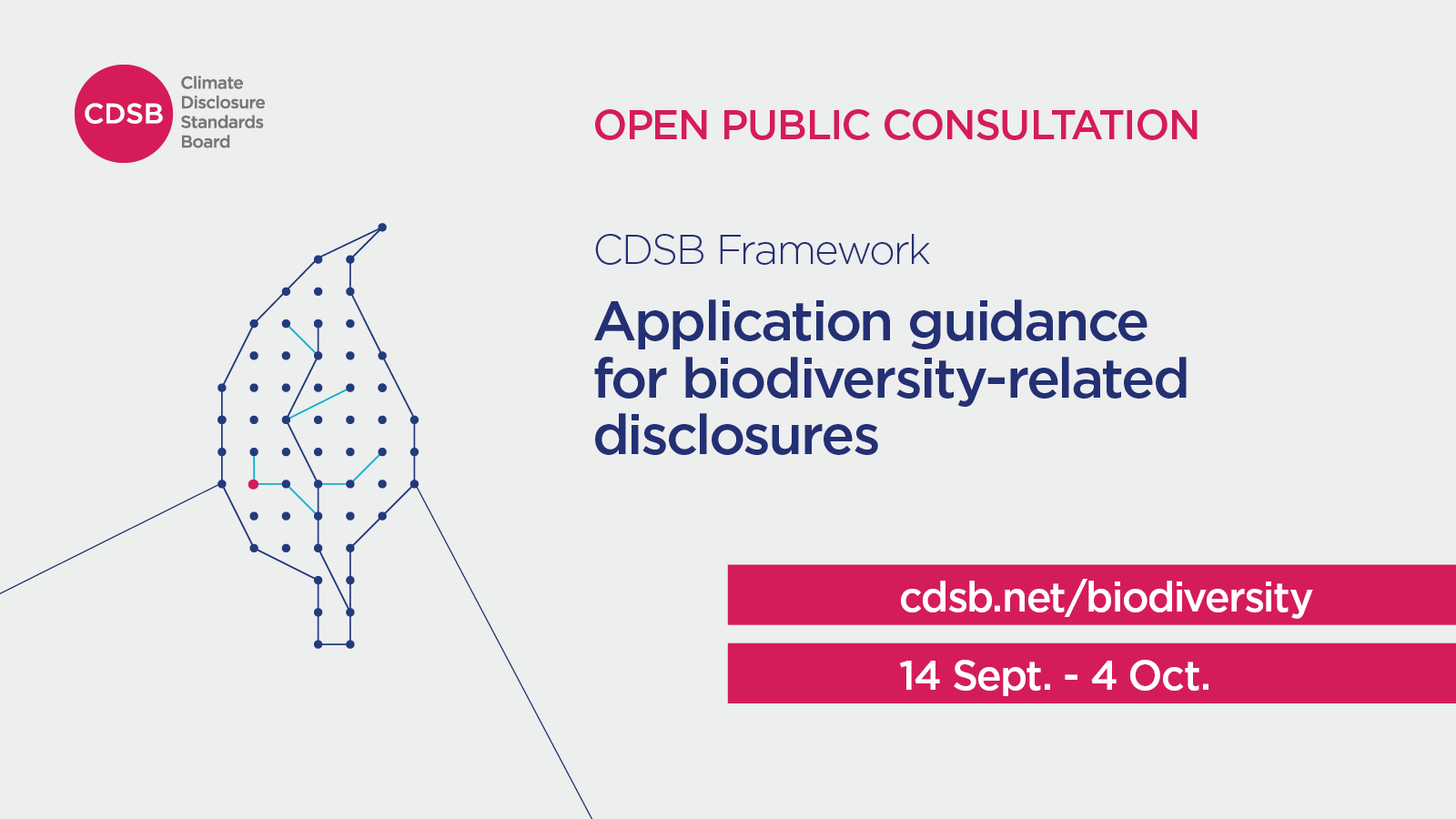
CDSB launched a consultation on the Biodiversity Guidance.

The objective of the Biodiversity Guidance is to support organisations in preparing high-quality disclosures that enable users of mainstream reports to assess material biodiversity-related financial information.

We welcome your feedback!

Read More

https://www.cdsb.net/biodiversity

On 16 Sept 2021 16:00 - 17:00 CET, SEforALL and CPI will launch a new knowledge brief on Coal Power Finance in High-Impact Countries.

Although the overall trend is to diminish the global investment in coal fired power plants, high-impact countries in South Asia or Sub-Saharan Africa still receive funding for additional coal capacity.

This new research identifies which high-impact countries are receiving finance for coal fired power, the sources of this investment, its key drivers and the risks attached. The research also offers a series of recommendations to accelerate coal phase-out in favor of more cost-effective renewable energy solutions that support both increased energy access and the transition.

Read More

https://www.climatepolicyinitiative.org/event/the-persistent-problem-of-coal-power-finance/

Created a Post in Sustainable Finance
Voluntary carbon markets are once again on the rise. We need to support the process of building integrity across the entire voluntary carbon market supply and use chain. Read more to learn why this could be just as satisfying as ice cream.

Read More

https://www.f4b-initiative.net/post/reshape-global-finance-to-support-inevitable-transition-to-susta...
Green Growth Knowledge Partnership(GGKP), African Development Bank(AfDB), World Wide Fund for Nature(WWF), German Federal Ministry for Economic Cooperation and Development(BMZ), Deutsche Gesellschaft für Internationale Zusammenarbeit(GIZ) GmbH, MAVA Foundation, International Institute for Sustainable Development(IISD), the United Nations Environment Programme(UNEP), Economics for Nature(E4N)

Join the African Development Bank and partners for the launch of the Program on Natural Capital for African Development Finance (NC4-ADF). Dr. Rabah Arezki, Chief Economist and Vice President of the African Development Bank Group in charge of Economic Governance and Knowledge Management, will… Read More