The United Nations (UN): Unity and Community
General Background
The United Nations (UN) is an international organization founded in 1945; its Membership has grown from the original 51 Member States in 1945 to the current 193 Member States. All UN Member States are members of the General Assembly.
The UN has evolved over the years to keep pace with a rapidly changing world, and the work of the UN is guided by its basic purposes and principles contained in its founding Charter. But one thing has stayed the same: it remains the one place on Earth where all the world’s nations can gather together, discuss common problems, and find shared solutions that benefit all of humanity.
The UN serves as a global forum where countries can raise and discuss the most difficult issues, including problems of war and peace. In addition to maintaining international peace and security, the UN protects human rights, delivers humanitarian aid, promotes sustainable development and upholds international law.
The idea of the UN was born during World War II (1939-1945). The name "United Nations", coined by United States President Franklin D. Roosevelt, was first used in the Declaration by UN of 1 January 1942, during the Second World War, when representatives of 26 nations pledged their Governments to continue fighting together against the Axis Powers. World leaders who had collaborated to end the war felt a strong need for a mechanism that would help bring peace and stop future wars. They realized that this was possible only if all nations worked together through a global organization. The UN was to be that Organization (UN, 2022).
States are admitted to membership in the UN by decision of the General Assembly upon the recommendation of the Security Council. The recognition of a new State or Government is an act that only other States and Governments may grant or withhold. Members of the UN pay for everything that the Organization does, according to a scale of assessments agreed upon by all. This scale is based on a country’s ability to pay, national income and population.
The Secretary-General is Chief Administrative Officer of the UN – and is also a symbol of the Organization's ideals and an advocate for all the world's peoples, especially the poor and vulnerable. The Secretary-General is appointed by the General Assembly on the recommendation of the Security Council for a 5-year, renewable term. The current Secretary-General, and the 9th occupant of the post, is António Guterres of Portugal, who took office on 1 January 2017. On the 18th of June, 2021, Guterres was re-appointed to a second term, pledging as his priority to continue helping the world chart a course out of the COVID-19 pandemic.
The UN is part of the UN system, which, in addition to the UN itself, comprises many funds, programs and specialized agencies, each of which have their own area of work, leadership and budget. The programs and funds are financed through voluntary rather than assessed contributions. The Specialized Agencies are independent international organizations funded by both voluntary and assessed contributions. The UN coordinates its work with these separate UN system entities, which cooperate with the Organization to help it achieve its goals.
Under the chairmanship of the UN Secretary-General, the UN System Chief Executives Board for Coordination (CEB) provides broad guidance, coordination and strategic direction for the UN system in the areas under the responsibility of Executive Heads. Focus is placed on inter-agency priorities and initiatives while ensuring that the independent mandates of organizations are maintained.
The Executive Heads meet twice a year to consider policy and management issues impacting organizations of the UN system. The work of the Board is supported by two high-level committees: The High-level Committee on Programs (HLCP) and the High-level Committee on Management (HLCM). Under each Committee there are inter-agency mechanisms and networks to coordinate specific topics.
UN Charter
The Charter of the UN is its founding document. The Charter was signed on 26 June 1945, in San Francisco, at the conclusion of the UN Conference on International Organization, and came into force on 24 October 1945. The UN Charter codifies the major principles of international relations, from sovereign equality of States to the prohibition of the use of force in international relations. Since the UN's founding in 1945, the mission and work of the Organization have been guided by the purposes and principles contained in its founding Charter, which has been amended three times in 1963, 1965, and 1973.
The UN can take action on a wide variety of issues due to its unique international character and the powers vested in its Charter, which is considered an international treaty. As such, the UN Charter is an instrument of international law, and UN Member States are bound by it.
17 Goals to Transform Our World
The Sustainable Development Goals are a UN call for action by all countries – poor, rich and middle-income – to promote prosperity while protecting the planet. They recognize that ending poverty must go hand-in-hand with strategies that build economic growth and address a range of social needs including education, health, social protection, and job opportunities, while tackling climate change and environmental protection. More important than ever, the goals provide a critical framework for COVID-19 recovery (UN, 2022).
UN Sustainable Development Goals (SDGs) are a universal call to action to end poverty, protect the planet, and improve the lives and prospects of everyone, everywhere. Seventeen SDGs were adopted by all UN Member States in 2015, as part of the 2030 Agenda for Sustainable Development; embarking on a 15-year plan to achieve these Goals.
_____
We are different; we are always have been and always will be. However, different shouldn't divide us, but unify us because different is an asset. Elizabeth Margo
In union there is strength. Aesop
Unity to be real must stand the severest strain without breaking. Mahatma Gandhi
Even the weak become strong when they are united. Friedrich von Schiller
The significance which is in unity is an eternal wonder. R. Tagore
So powerful is the light of unity that it can illuminate the whole earth. Baha'U'Llah
There is beauty and power in unity. We must be united in heart and mind. One world, one people. Lailah Gifty Akita
We were born to unite with our fellow men, and to join in community with the human race. Cicero
No part of the human community can live entirely on its own planet, with its own laws of motion and cut off from the rest of humanity. Hugo Chavez
Alone we can do so little; together we can do so much. Helen Keller
We have all known the long loneliness and we have learned that the only solution is love and that love comes with community. Dorothy Day
With community, comes friendship. Nikhil Parekh
As our planet grows smaller each and every day / Everyone affecting everyone in every way / We're all citizens of the world community / All here together and we're searching for unity. Adam Horovitz
We must attempt to bring people back to the warmth of community, to the worth of individual effort and responsibility...to better their lives and their children's future. Robert Kennedy
In the end, it comes down to values [...] We want the world our children inherit to be defined by the values enshrined in the UN Charter: peace, justice, respect, human rights, tolerance and solidarity. António Guterres, United Nations Secretary-General
_____
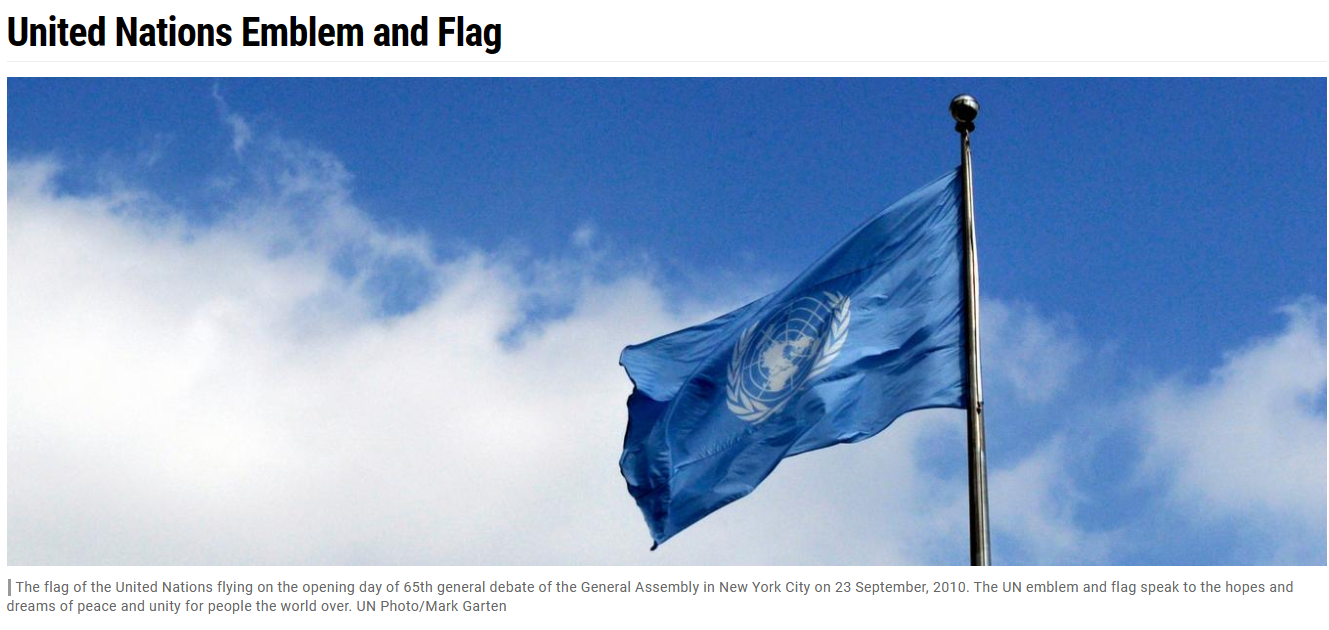
https://www.un.org/en/about-us/un-emblem-and-flag
https://www.un.org/sites/un2.un.org/files/18-00151_visitorcentre_fact_s…
https://www.un.org/en/our-work/official-languages
https://www.un.org/en/about-us/
https://www.un.org/en/
https://www.un.org/en/essential-un/
https://www.un.org/en/about-us/member-states
https://www.un.org/en/about-us/un-charter
https://www.un.org/en/about-us/un-system
https://unic.un.org/
https://unsceb.org/structure
https://www.un.org/sites/un2.un.org/files/2021/09/un_system_chart.pdf
https://www.un.org/geospatial/
https://www.un.org/geospatialnetwork/
https://www.un.org/sustainabledevelopment/
https://www.un.org/sustainabledevelopment/sdgs-framework-for-covid-19-r…
https://www.un.org/sustainabledevelopment/sdg-moment/
https://sdgs.un.org/
https://www.un.org/sustainabledevelopment/sustainable-development-goals/
https://www.un.org/sustainabledevelopment/development-agenda/
https://www.un.org/sustainabledevelopment/sdg-planning-calendar/
https://www.un.org/sustainabledevelopment/student-resources/
https://unstats.un.org/wiki/display/sdgehandbook
https://www.un.org/regularprocess/woa2launch
https://www.un.org/en/transforming-education-summit
https://www.un.org/en/sdgmediazone
https://sdgs.un.org/conferences/water2023
https://www.unwater.org/news/un-2023-water-conference
https://careers.un.org/lbw/home.aspx?viewtype=SJ&exp=INT&level=0&locati…
https://careers.un.org/lbw/home.aspx?viewtype=ip
https://www.un.org/development/desa/youth/opportunities-within-the-un/i…
https://unjobs.org/themes/internship
https://www.un.org/en/coronavirus
https://www.un.org/development/desa/youth/what-we-do/what-can-you-do/li…
https://careers.un.org/lbw/home.aspx
Read More