About this Discussion

According to the IPCC, the concentration of greenhouse gases in the earth’s atmosphere is directly linked to the average global temperature on Earth, and the concentration has been rising steadily. The most abundant greenhouse gas, accounting for about two-thirds of greenhouse gases, carbon dioxide, is largely the product of burning fossil fuels. 

There is alarming evidence that important tipping points, leading to irreversible changes in major ecosystems and the planetary climate system, may already have been reached or passed. One of the most urgent challenges facing countries across the world today is how to achieve economic prosperity and development while also combating climate change.

The Paris climate change agreement commits nations to limit global temperature rise to no more than 2°C above pre-industrial levels, with countries pledging to cut or curb their greenhouse gas emissions – through a combination of mitigation and adaptation measures – by 2030. 

Upcoming Events

Climate Change

A post is already pinned to this stream. Would you like to replace it?

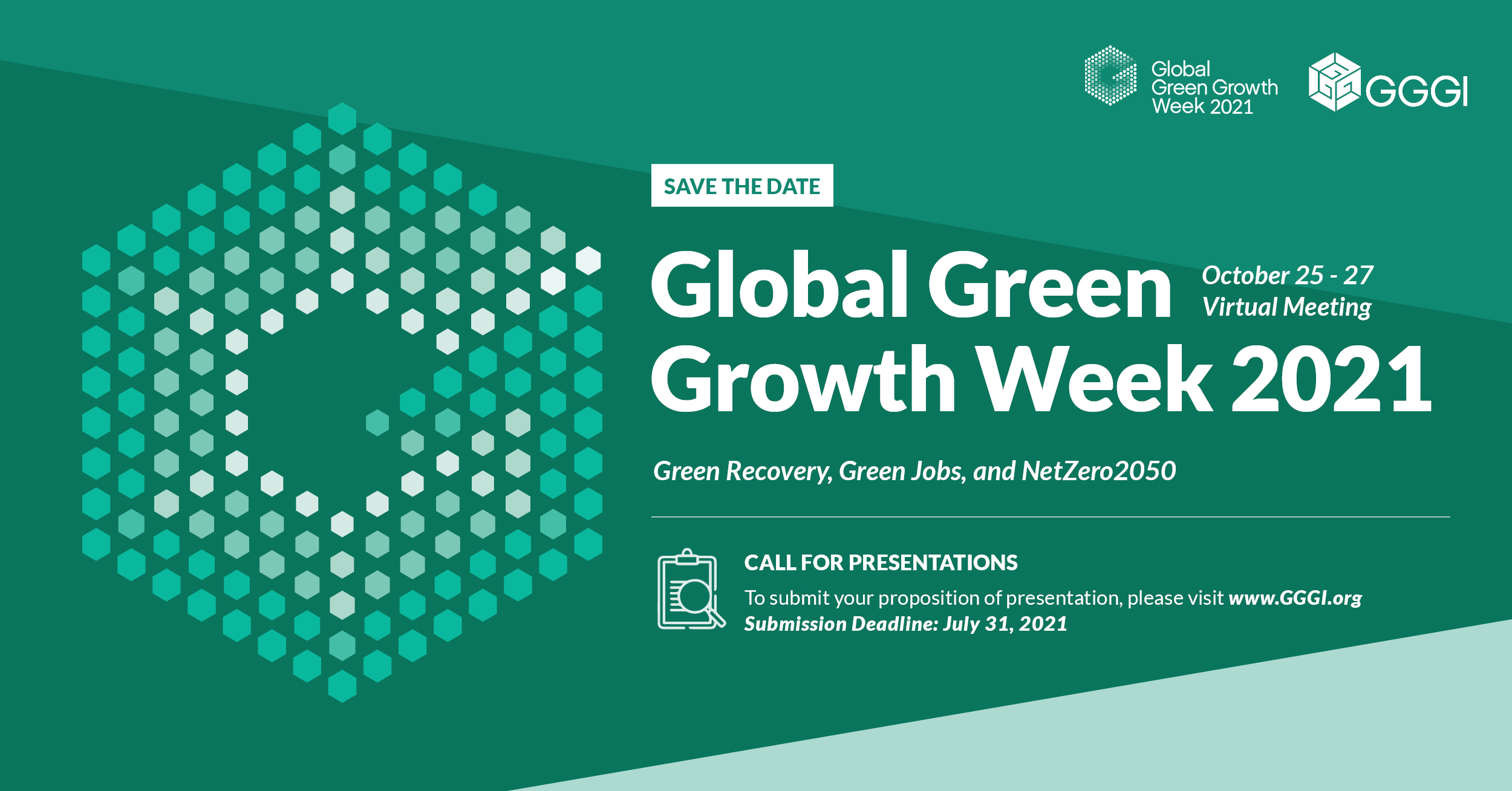
The Global Green Growth Institute(GGGI) will be hosting a GGGWeek 2021 on 25-27 October. GGGWeek2021 will feature the special theme of “Green Recovery, Green Jobs, and NetZero2050”.

Any interested parties, who would like to present their ideas, showcase progress, and share commitment on the above topics, can submit your propositions by July 31st, 2021.

Read More

https://forms.office.com/pages/responsepage.aspx?id=STVf7oDk90yVr1EFUo_HhjdFqO4UgF9Bt9mygr0qNbdURU8w...

The European Union (EU) carbon border adjustment mechanism (CBAM) announced on 14 July could change trade patterns in favour of countries where production is relatively carbon efficient but do little to mitigate climate change. The mechanism could help avoid carbon leakage, but its impact on climate change would be limited – only a 0.1% drop in global CO2 emissions – with higher trade costs for developing countries. At the same time, several of the EU’s trading partners exporting goods in carbon-intensive sectors – including cement, steel, aluminium, oil refinery, paper, glass, chemical and fertilizers – have raised concerns that the CBAM could substantially curtail their exports.

Read More

https://unctad.org/news/eu-should-consider-trade-impacts-new-climate-change-mechanism

Carbon “sinks”, such as forests or the ocean, play a crucial role in absorbing atmospheric CO2 and thereby reducing the damages caused by climate change and the emissions that drive it.

Dr. Wilfried Rickels and Prof. Martin Quaas's findings show that Australia, Indonesia and Cuba contribute the largest blue-carbon net “wealth” to the rest of the world. However, only a handful of countries have enough blue carbon potential to offset their entire carbon footprint.

Read More

https://www.carbonbrief.org/guest-post-mapping-blue-carbon-wealth-around-the-world

Created a Post in Climate Change

EURACTIV looks at Europe’s upcoming forest strategy and how it intends to plant “at least 3 billion additional trees in the EU by 2030.

The capacity of forests to act as a “carbon sink” – absorbing more CO2 than they emit – is decreasing and needs to be reversed, the European Commission said in September 2020 when it presented its 2030 climate target plan.

Read More

https://www.euractiv.com/section/climate-environment/news/eu-draft-puts-spotlight-on-improving-carbo...
joseph connelly commented on Emmanuel F. C. Chimamkpam's Post in Circular Economy, Climate Change, Industry and Social Innovation
Turning Negatives of Climate Change into Positives

Greenhouse gases are globally agreed as the main causes of climate change. But is it possible to be consuming instead of just emitting nightmarish greenhouse gases? YES IT IS !

Oh, do you know that some products we use can actually be produced from greenhouse gases? And do you know that some products we use can be produced without emitting greenhouse gases?

Let us start giving affirmation to new production pathways that can be created with Circularity in Mind, just like we are aiming to create e-fuels and diamonds from consuming greenhouse gases and emitting no waste.

So much greenhouse gases are generated annually from mining and production of new aluminium but yet everywhere is aluminium waste. Quantitatively, the global aluminium waste per annum is more than the amount of aluminium mined annually.

If we recycle aluminium waste instead of producing new aluminium, then we delete emissions from aluminium mining industry. If we use a process that consumes greenhouse gases to recycle aluminium waste, then we reset the negatives of climate change to positives. Voila!

Read More

The treaty is structured around a fundamental right and a fundamental duty. The first article proposes the first ever binding formulation, at a global level, of the right of “every person […] to live in an ecologically sound environment”.

The Pact is a compass defining a direction by means of converging binding principles. Such principles should be used first and foremost as legal parameters to design policies, both domestic and international, that prevent further environmental harm.

Read More

https://www.graduateinstitute.ch/communications/news/right-sound-environment

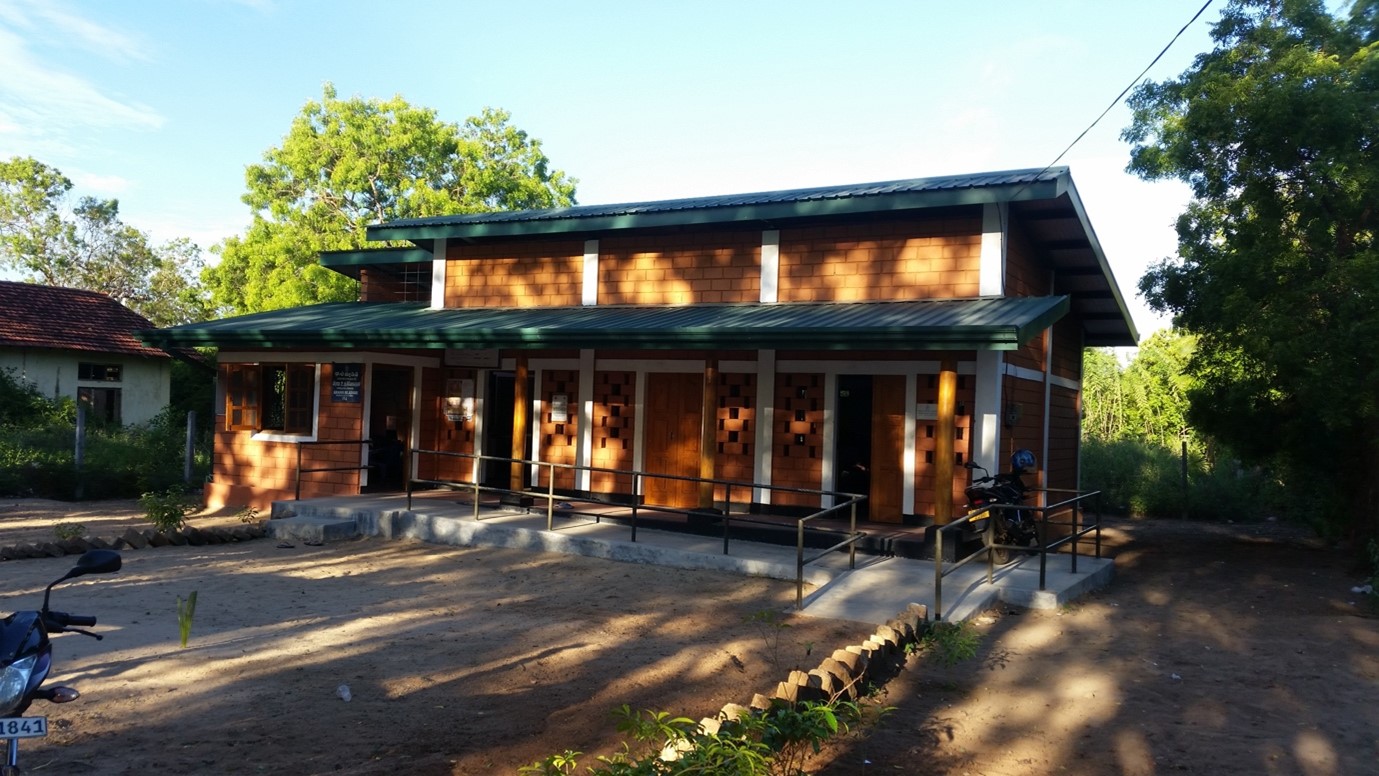
Resource Efficient Housing programme is being piloted with Burkina Faso and Sri Lanka as the first 2 selected countries. The programme responds to the urgent need to reduce global greenhouse emissions with a focus on material resource efficiency, given the fact that 50% of the building stock is yet to be built, with most of it to occur in developing countries. The main objective is to support countries building their roadmap towards a resource efficient, low carbon and climate resilient buildings strategy.

Read More

https://www.oneplanetnetwork.org/sdg12-resource-efficient-housing
Hannes Mac Nulty - Photo

Created a Post in Climate Change

Dramatic steps have just been laid out by the EU in the new Fit for 55 package of proposals to achieve 55% reduction of emissions by 2030

Read More

https://ec.europa.eu/commission/presscorner/detail/en/ip_21_3541