In the About page, click on "Communities" and join one or more of the following areas:
1) Student Recruitment

2) Research Alignment

3) Green Skills & Curricular Improvements

4) Student and Employee Retention

5) Career Guidance, Job Placement and Employee Hiring

6) Policies for the Green Economy Workforce and Education

After joining these communities, you can learn about and share resources, including successful precedents and guides, and build new solutions for local and large-scale systemic improvements. Through these efforts, researchers, employers, educators and practitioners will be equipped with the knowledge and skills they need to advance green economy policies and action. We will more quickly achieve the critical mass of knowledge and skills to advance green economy policies and actions.

Upcoming Events

Green Learning Network

A post is already pinned to this stream. Would you like to replace it?

Two Green Career Guides for All -- One showcases an inclusive approach to 'green jobs' and explains that these go much beyond windfarms and wellies. The other provides support for staff within institutions - careers advisors, curriculum coordinators, tutors, student support staff, placement supervisors, lecturers, and anyone else who supports students on progression and employment. It takes an inclusive and accessible approach to green jobs to help staff understand what a green job can look like, and some of the best ways to guide students to find a role that’s good for them and the planet. https://www.eauc.org.uk/green_careers_guide

Read More

https://www.eauc.org.uk/green_careers_guide_fhe_staff

The Anticipatory Social Protection Index for Resilience (ASPIRE) diagnostic tool is designed to assess the readiness of a country's existing social protection programmes to deliver climate resilience. Working at two levels, the tool assesses a country's overarching social protection policies and systems, guided by 36 indicators that cover policy objectives, innovation, risk definitions, target specifications, planning and budgeting process, and types of assistance. At the second level, ASPIRE examines specific programmes being implemented, evaluating their design features and functions using a combined set of 33 indicators. These indicators cover aspects such as cash transfers, public works, food assistance and their efficacy in delivering resilience outcomes such as prevention, protection and promotion.

Read More

https://www.iied.org/21901iied

Have you used this toolkit yet? - Integrated Policymaking and Empowering Communications for the Clean Energy Economy and Workforce . Produced by the Clean Energy Ministerial Empowering People Initiative and focused on workforce development for an inclusive clean energy transition, it is filled with practical tools, samples of good policies, strategies to build effective coalitions for change, building a green economy and more!

Read More

https://drive.google.com/file/d/1KI1hmOI8gwLzAB5R5LciJsSIQ1SXxREt/view

The IRENA-led session discussed how governments can successfully align Long-Term Energy Scenarios (LTES) and Long-Term Low-Emission Development Strategies (LT-LEDS). After a short presentation on IRENA's findings on LT-LEDS by Dr Asami Miketa (IRENA), Dr Melisande Liu from the CEM Secretariat moderated a panel discussion with two experts Dr Stelios Pesmajoglou, Manager Mitigation Division, UNFCCC Secretariat, and Dr Marius Oosthuizen, Director for Scenarios at the World Energy Council, who shared their thoughts on how governments can ensure that LTEDS reflect the interest and expertise of a wider range of stakeholders, making the planning process more robust and transparent, and thereby building trust and acceptance among the wider public. Following the event, LTES and the UNFCCC Secretariat agreed to explore further opportunities for collaboration, particularly in the area of training countries in the skills needed for LT-LEDS development.

Read More

https://www.cleanenergyministerial.org/initiatives-campaigns/long-term-scenarios/

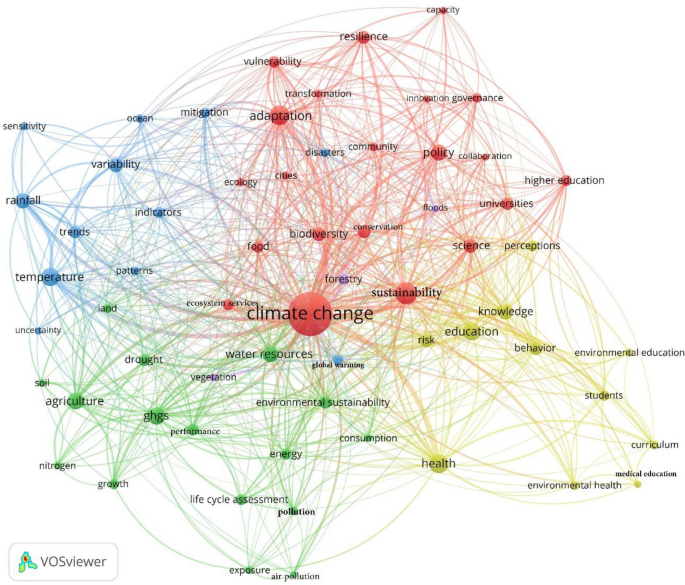
"Towards a greater engagement of universities in addressing climate change challenges", published as an open-access paper in the journal "Scientific Reports", details the work of a team of researchers from the European School of Sustainability Science and Research (ESSSR), Inter-University Sustainable Development Research Programme (IUSDRP), and International Climate Change Information and Research Programme (ICCIRP). They completed an investigation on the factors that may lead to a greater commitment of universities towards tackling climate change.

Read More

https://www.nature.com/articles/s41598-023-45866-x

As the adoption of clean energy technologies increases across the world, it will be essential to reduce financial barriers for lower-to-median-income households, making clean energy accessible to all and ensuring all people and communities benefits from clean energy transitions. Targeted programmes can play an important role in providing low-income households with clean energy access and paving the way for an inclusive transition. This webinar, organised as part of the IEA’s people-centred clean energy transitions work programme, will draw on lessons learned from innovative and effective clean energy programmes from around the world, including Mexico, Canada, Ireland, and New Jersey.

Read More

https://www.iea.org/events/bridging-the-gap-for-inclusive-transitions-clean-energy-programmes-for-lo...

This policy paper provides an overview and a discussion of the roles and responsibilities for climate adaptation across levels of government. It argues that co-operation across levels of government is needed to strengthen adaptation at the local level. This policy paper was prepared as part of the Organisation for Economic Cooperation and Development (OECD) Territorial Approach to Climate Action and Resilience programme, which supports subnational authorities in their efforts to accelerate the net zero transition and build systemic resilience.

Read More

https://www.oecd.org/environment/climate-adaptation-why-local-governments-cannot-do-it-alone-be90ac3...

TCI provides young climate champions education and engagement tools to steward our planet and catalyze the transition to climate-resilient communities. Through community-based education and empowerment initiatives, youth learn about local climate problems and possible solutions, giving them hope and the inspiration to become change agents in their communities and beyond. While the Ambassador Program and Educator Retreats are exclusive to the U.S., the education and engagement tools offered on the website are applicable outside of the U.S. as well.

Read More

https://www.theclimateinitiative.org/

In the podcast, "How to close the finance gap for women entrepreneurs in India" Renana Jhabvala, the President of SEWA, the Self-Employed Women’s Association, explains the policy tool that the Indian government has been implementing to formalize women’s economic participation and her experience with SEWA in utilizing bridge institutions to connect women entrepreneurs and formal banking sector. While this is specific to India, it is applicable across countries outside of India as well since women were historically excluded from economic participation no matter where they lived. This is an equity issue that must be addressed during the clean energy transition. How will you comit to addressing equity in your work?

Read More

https://soundcloud.com/adbinstitute/how-to-close-the-finance-gap-for-women-entrepreneurs-in-india

weADAPT has now been upgraded - with a fresh new look, new technological capabilities and an eco-conscious design! Since weADAPT launched in 2007, users have made it into what it today: a vibrant and active community of over 7,000 users and 5,000 organisations involved with climate change adaptation research, policy and practice. See how research, policy and practice community members use the platform

Read More

https://weadapt.org/