In the About page, click on "Communities" and join one or more of the following areas:
1) Student Recruitment

2) Research Alignment

3) Green Skills & Curricular Improvements

4) Student and Employee Retention

5) Career Guidance, Job Placement and Employee Hiring

6) Policies for the Green Economy Workforce and Education

After joining these communities, you can learn about and share resources, including successful precedents and guides, and build new solutions for local and large-scale systemic improvements. Through these efforts, researchers, employers, educators and practitioners will be equipped with the knowledge and skills they need to advance green economy policies and action. We will more quickly achieve the critical mass of knowledge and skills to advance green economy policies and actions.

Upcoming Events

Green Learning Network

A post is already pinned to this stream. Would you like to replace it?

On September 24th Committed to Climate and Energy Education (CLEAN) will host a webinar with a virtual tour of the CLEAN portal. Attendees will learn about the CLEAN collection of almost 1000 climate and energy educational resources and the range of other supporting materials to help you effectively and accurately teach about climate and energy topics. Register to watch on zoom!

“This post is from the U.S. Partnership for Education for Sustainable Development”

Read More

https://cleanet.org/clean/community/webinars/event/Introduction_to_CLEAN.html

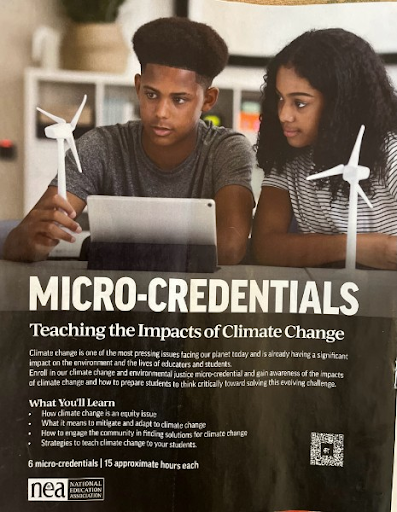
One of the two largest unions for teachers in the United States is offering NEA micro credentials on climate education and shows they are commited to professional development around climate education. This is what we need! What do you think?

Read More

The International Renewable Energy Agency (IRENA) has launched a National Energy Transition Planning Dashboard. This dashboard presents a global repository of energy planning documents and modelling tools developed and/or used by governmental institutions for official planning purposes (a section on the features of scenarios is forthcoming). It aims to provide information for planners in the government sector, which can be used to benchmark their national planning practices and/or learn about relevant approaches used by global peers. Information in the dashboard is being consistently updated as more data becomes available through IRENA's engagements under the “Addressing Variable Renewables in Long-Term Modelling” project (AVRIL) and Long-term Energy Scenarios Network (LTES Network). The dashboard has two pages, Planning Documents (page 1) and Modeling Tools (page 2),

*This post is by the U.S. Partnership for Education for Sustainable Development*

Read More

https://www.irena.org/Energy-Transition/Planning/Long-term-energy-planning-support/National-Energy-T...

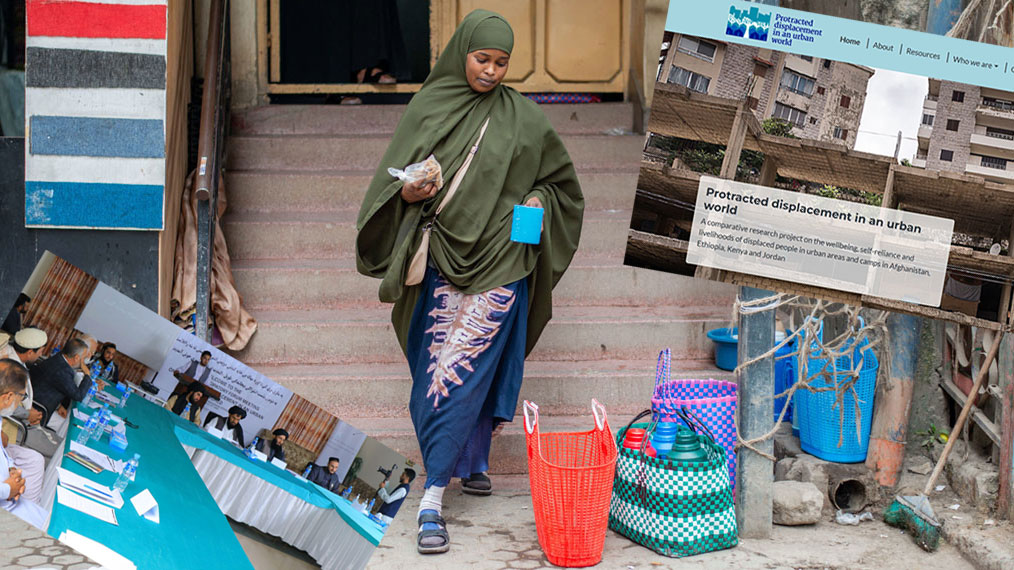
The International Institute for Environment and Development generated evidence on the unmet needs and potential contributions of refugees and displaced people in cities. They used this data to start conversations between displaced people and city officials about how to make cities places where displaced people can lead safe and productive lives. This is significant for climate change work because climate change displaces tens of millions of people each year.

Read More

https://www.iied.org/using-evidence-improve-support-for-refugees-cities

Created a Post in Green Learning Network

LEED: Paving the Way for Sustainable Buildings

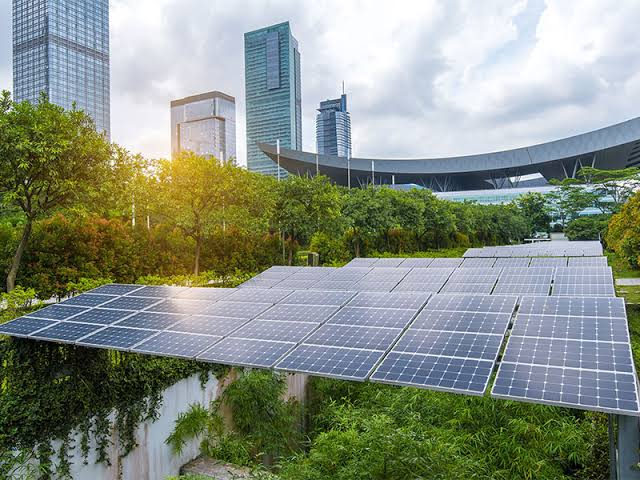
LEED, or Leadership in Energy and Environmental Design, is a globally recognized green building certification system developed by the U.S. Green Building Council (USGBC). This voluntary program provides building owners and operators a framework for designing, constructing, and operating high-performance green buildings. LEED certification signifies that a building was designed and built using strategies aimed at improving energy efficiency, reducing water usage, generating renewable energy, conserving materials, and improving indoor environmental quality.
Key features and benefits of LEED certification include:
* Environmental performance: LEED buildings are designed to minimize their environmental impact by reducing greenhouse gas emissions, conserving resources, and protecting ecosystems.
* Health and well-being: LEED certification promotes healthier indoor environments for occupants through improved air quality, lighting, and acoustics.
* Economic benefits: LEED buildings often have lower operating costs due to increased energy efficiency and reduced water usage.
* Market recognition: LEED certification enhances a building's marketability and can increase property values.
* Innovation: LEED encourages innovative design solutions and promotes the adoption of sustainable building practices.
To achieve LEED certification, buildings must meet a set of prerequisites and earn points in various categories, such as:
* Sustainable sites: Addresses site selection, water efficiency, and stormwater management.
* Water efficiency: Reduces potable water use.
* Energy and atmosphere: Improves energy performance and promotes the use of renewable energy.
* Materials and resources: Encourages the use of sustainable materials and reduces waste.
* Indoor environmental quality: Provides healthy and productive indoor environments.
* Innovation in design: Recognizes innovative strategies beyond the base requirements.
By promoting sustainable building practices, LEED is helping to create a more sustainable built environment and address pressing global challenges such as climate change.
.........................
Amr Ghazy
Environmental Consultant
[email protected]

Read More

A newsletter you should check out!
The June newsletter of the Monitoring and Evaluating Climate Communication and Education Project, in partnership with the Sustainability and Policy Network contains multiple resources on educating on climate change, including a Policy Paper, Report, Global Indicators, and a Digital Library.

Read More

https://mailchi.mp/40cdc664ccc5/mecce-project-march2023-16180894?e=fa10010414
ESG Flo logo

Created a Post in Green Learning Network

Sustainable Transformation: La-Z-Boy Leading the Way

In our latest client spotlight, we delve into the remarkable journey of La-Z-Boy, a name synonymous with comfort and quality in the furniture industry. La-Z-Boy's commitment to sustainability and environmental stewardship, under the guidance of its dedicated team, sets a benchmark in corporate responsibility.

Today, we're thrilled to share an insightful conversation with Amy Vernon, La-Z-Boy’s Director of Sustainability, ESG and Global Product Compliance, who has played a pivotal role in steering the company’s sustainability initiatives.

Amy's insights highlight the transformative power of a focused ESG strategy. La-Z-Boy's journey showcases how targeted solutions can lead to impactful changes while aligning with business goals.

Read More

https://www.esgflo.com/blog-articles/sustainable-transformation-la-z-boy-leading-the-way

Dear colleagues,
I'm glad to share the paper attached also available online by the weblink provided. This is about Life Cycle Thinking implementation into SMEs based on a set of simple management tools that can be easily replicated by stakeholders and interested audiences from this group. Please feel free to spread out the message and share the paper with your partners. I'm also open to discussing it if you have any queries.

Read More

https://www.scielo.br/j/gp/a/G7QKXRWFwb6ycNL48kV7gbn/?lang=en
pdfG7QKXRWFwb6ycNL48kV7gbn.pdf896.95 KB

UNESCO Greening Education Partnership is a global initiative that takes a whole-of-system approach to support countries to tackle climate crisis by harnessing the critical role of education. As a collaborative platform for governments and other stakeholders including inter-governmental organizations, civil society, youth, academia, and private sector, Greening Education Partnership aims to deliver strong, coordinated and comprehensive action that will prepare every learner to acquire the knowledge, skills, values, and attitudes to tackle climate change and to promote sustainable development.. They have a newsletter that can be subscribed to and you can join the partnership from this site.

Read More

https://www.unesco.org/en/sustainable-development/education/greening-future

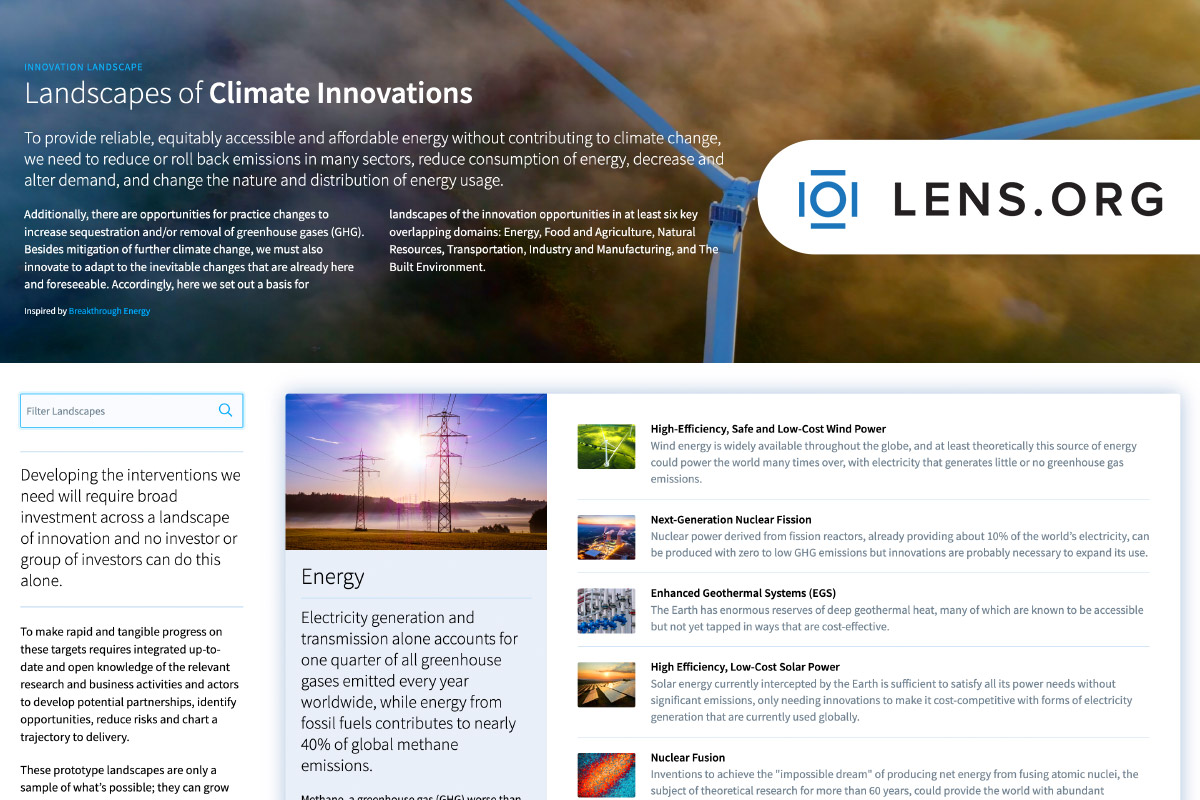
Landscapes of Climate Innovations details numerous climate solutions with a goal to provide reliable, equally accessible, and affordable energy without contributing to climate change, that will reduce emissions in many sectors, reduce energy consumption, decrease and alter demand, and change the nature and distribution of energy usage. Check out this valuable resource!

*This post is from the U.S. Partnership for Education for Sustainable Development*

Read More

https://www.lens.org/lens/landscape