In the About page, click on "Communities" and join one or more of the following areas:
1) Student Recruitment

2) Research Alignment

3) Green Skills & Curricular Improvements

4) Student and Employee Retention

5) Career Guidance, Job Placement and Employee Hiring

6) Policies for the Green Economy Workforce and Education

After joining these communities, you can learn about and share resources, including successful precedents and guides, and build new solutions for local and large-scale systemic improvements. Through these efforts, researchers, employers, educators and practitioners will be equipped with the knowledge and skills they need to advance green economy policies and action. We will more quickly achieve the critical mass of knowledge and skills to advance green economy policies and actions.

Upcoming Events

Green Learning Network

A post is already pinned to this stream. Would you like to replace it?

The UN Sustainable Development Solutions Network released the 9th edition of the Sustainable Development Report in June 2024. It includes not only the SDG Index and Dashboards, but also a new index of countries' support for UN-based multilateralism covering all 193 UN Member States and new pathways for how to achieve sustainable food and land systems by mid-century. Perhaps most importantly, five strategies to address the chronic shortfalls in SDG financing are identified and discussed, along with other priorities to meet the challenges of the 21st century and achieve sustainable development.

Read More

https://mailchi.mp/unsdsn.org/your-feedback-requested-2022-global-commons-stewardship-index-524360?e...

The Global Cities on the Frontline Speaker Series began in March 2020 and each session was driven by audience demand and oriented to equip city practitioners with best practices to save lives. Since its inception, the speaker series has hosted sessions at least once per month, covering various topics from refugees to water, from schools to leadership, and from housing to food systems.

Read More

https://resilientcitiesnetwork.org/category/cities-on-the-frontline/

Dear colleagues,
I'm glad to share this paper we published last week reporting on using the I-GO Assistant tool powered by the GGKP to promote the Circular Economy in SMEs in Brazil. The text is in Portuguese, but you can easily translate it.
The idea was put into practice with the I-GO Assistant tool used by a small group of industrial engineering students that I supervise, and the resource efficiency results showed a potential for increasing up to 10% of the circularity of an SME company in the short term with almost no additional investments. Hope this approach can be valuable to replicate abroad among your institutions and countries too.

Read More

https://seer.ufrgs.br/index.php/ProdutoProducao/article/view/138311

This April 2024 newsletter published by the International Energy Agency reviews the clean energy technology growing on the market, including batteries , clean cooking in Africa, and electric cars

Read More

https://sg-mktg.com/MTcxNDM2NDE0OXxjTVFfWjg4Y3l2QVQ0RTlvM1hEdmxuaGE3VXBJMklYQklHMEcxelduOTRXUWIyY0pa...

This article, published in Nature Africa in February 2024, details the many uncertainties in Africa over grid stability, finances, and political will in the move to clean energy. Howeverm it can also be the source of solutions, such as in the case of a hybrid network of solar and wind mini-grids has been funded by the French Development Agency (AFD) and the UK’s Foreign Commonwealth and Development Office, in a remote area north-east of Africa’s Lake Victoria.

Read More

https://www.nature.com/articles/d44148-024-00054-5?utm_medium=paid_social&utm_source=faceboo...

Help to advance the participation of women and marginalized communities. Explore the Equal by 30 Campaign, joint Clean Energy Ministerial (CEM) and International Energy Agency (IEA) initiative which works to accelerate gender equality and diversity in clean energy transitions and close the gender gap by 2030.

Read More

https://www.equalby30.org/

This 2023 report by C40 Cities details how cities are investing in a sustainable and fossil-free future, lists those 19 cities that have started this process around the world, as well as what barriers stand in the way to achieving their commitments.

*This post is from the US Partnership for Education for Sustainable Development*

Read More

https://www.c40.org/wp-content/uploads/2024/03/C40_Divest_Invest_Accelerator_Report_2023.pdf

This ADVANCING EQUITY marketing toolkit provides green jobs training programs within community colleges with proactive marketing strategies to recruit BIPOC individuals and women. At its core, this toolkit is designed to empower colleges to invest in marketing strategies that will increase awareness and student enrollment in green, skilled crafts/trade, and STEM sector training programs while preparing a more representative workforce.

Read More

https://cdn.ymaws.com/www.ncwe.org/resource/resmgr/projects_and_initiatives/lumina_grant/2023_NGJAC_...

This IEA Commentary was written in August 2023 and covers how enhancing energy efficiency and community benefits through local generation and sharing, digital tools boost the potential of local energy communities, community initiatives are empowering citizens, energy communities add to local value-chains gain, and citizen engagement is key to accelerating clean energy transitions.

Read More

https://www.iea.org/commentaries/empowering-people-the-role-of-local-energy-communities-in-clean-ene...

For many countries but not all:

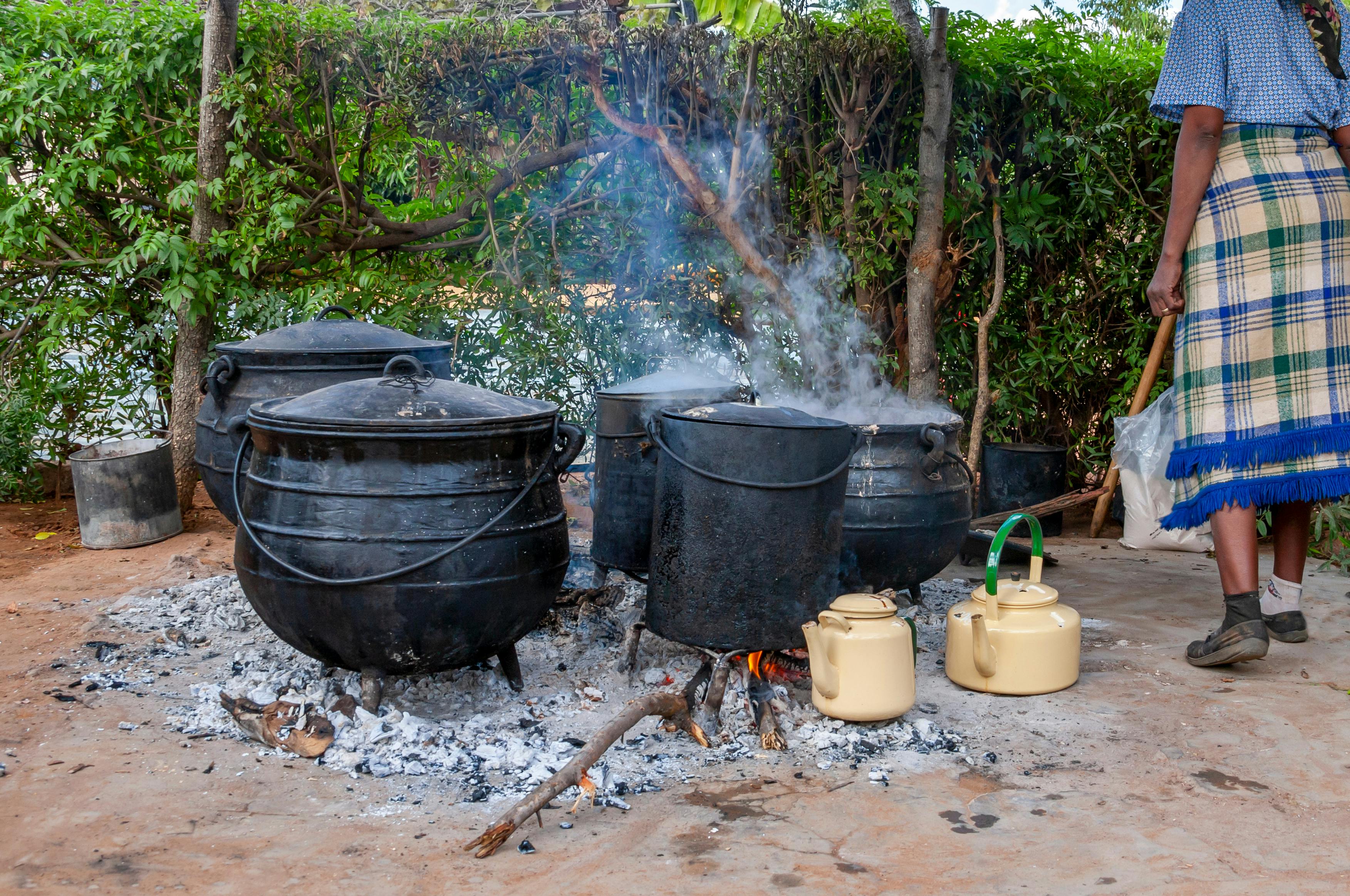
Nearly one in three people, most of them in the poorest regions of the world, still lack access to clean cooking facilities. And women bear the brunt of the consequences of not having electricity or clean cooking fuel. The task of collecting firewood or other dirty fuels falls predominantly on them, wasting scarce time and effort. Household air pollution, mostly from cooking smoke, is linked to around 2.5 million premature deaths a year, with women and children being the most exposed. This problem is particularly acute in Sub-Saharan Africa and the needs of African women, be they economic, social, or health-related, cannot be ignored in our path to ensuring inclusive energy transitions across the world. IEA's analysis shows that achieving universal access to clean cooking would require investment of USD 8 billion annually in stoves and infrastructure between now and 2030. This is less than 1% of what governments spent in 2022 globally on measures to keep energy affordable for their citizens. Building up on this policy priority, the Agency will soon convene global leaders for a Summit on Clean Cooking in Africa and lay the foundation for ensuring clean cooking access for all. Held on 14 May in Paris.

Read More

https://www.iea.org/reports/a-vision-for-clean-cooking-access-for-all?utm_campaign=IEA+newsletters&a...