This the virtual space for the Global Development, Review and Update of National Implementation Plans (NIPs) under the Stockholm Convention (SC) on Persistent Organic Pollutants (POPs) Project. 

Group members are welcome to share their experiences and expertise on the NIPs update process.

Upcoming Events

Development, review and update of National Implementation Plans (NIPs) on Persistent Organic Pollutants (POPs)

A post is already pinned to this stream. Would you like to replace it?

? Kicking off the NIP Dialogue Series: Voices from the Countries

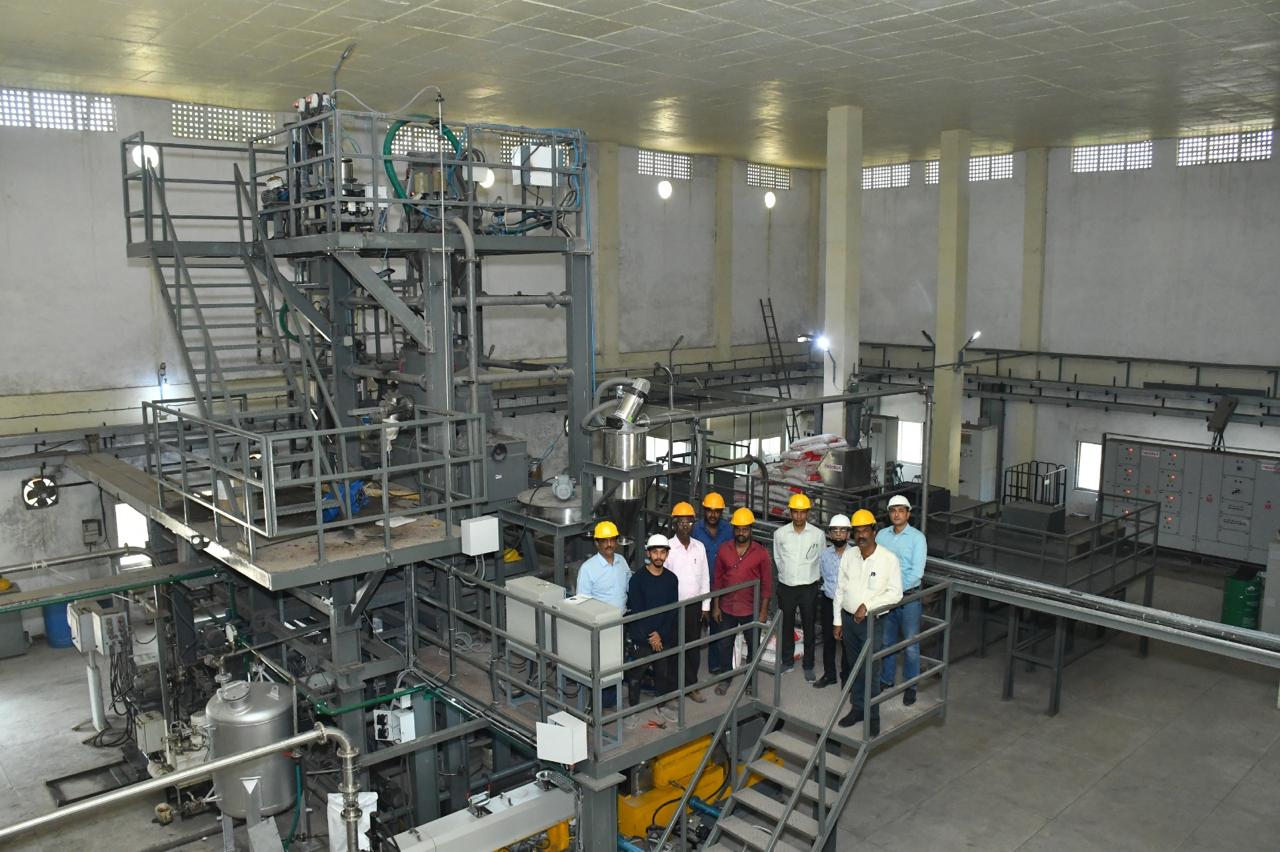
We’re excited to launch the series with a powerful first story from India—the world’s last remaining manufacturer of DDT. In this opening piece, we explore how the country is charting a bold and strategic path away from Persistent Organic Pollutants (POPs), while maintaining strong public health outcomes.

Through innovation, regulatory leadership, inclusive community engagement, and public-private collaboration, India offers a compelling example of how POPs can be phased out in practice—not just in policy.

✨ This series will continue to spotlight real-world experiences from countries actively working to develop, review, and update their National Implementation Plans (NIPs) under the Stockholm Convention—bringing country voices, lessons learned, and practical solutions to the forefront.

? Read the full blog here – and stay tuned for more stories from the ground!

Read More

https://thegreenforum.org/blog/shifting-safer-alternatives-how-india-demonstrating-path-beyond-ddt

fgh f

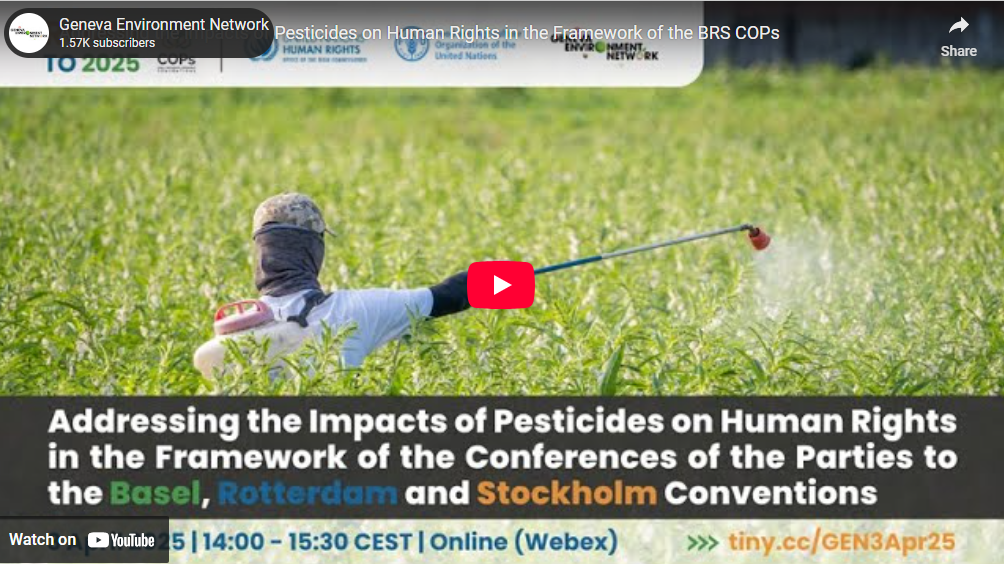
What is your view on the intersection between sustainable pesticide management and fulfilment of human rights? Explore their close linkages in this webinar, co-organized by OHCHR, FAO, the Special Procedures of the UN Human Rights Council and GEN.

Read More

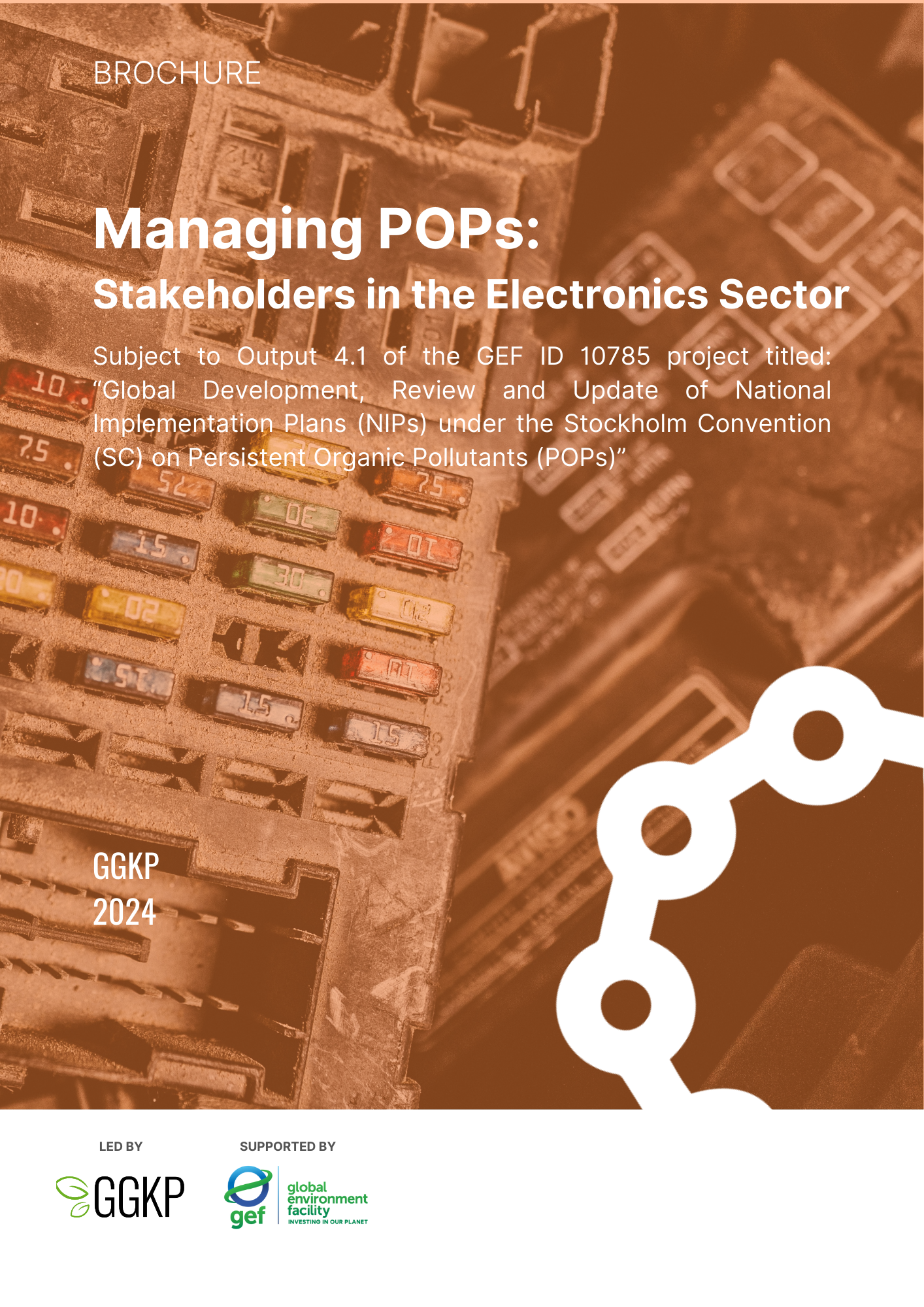
The growing volume of e-waste presents a major challenge for managing persistent organic pollutants (POPs), such as PBDEs and HBCD, commonly found in plastics and components of electronic products. Despite the high value of e-waste plastics, low recycling rates persist due to contamination and… Read More

When developing and updating National Implementation Plans (NIPs) under the Stockholm Convention, countries focus on a wide range of Persistent Organic Pollutants (POPs) and their sources. However, when considering the gender dimension in NIP implementation, it is important to recognize that exposure pathways differ between men and women. While men are often more exposed to POPs in occupational settings, such as industrial work, agriculture, or waste management, women are also at high risk—particularly through cosmetics and personal care products that may contain harmful chemicals like PFASs, parabens, and UV stabilizers. These exposures, though less visible, are just as significant and should be integrated into awareness-raising efforts, risk assessments, and policy actions within NIPs. By incorporating a gender-responsive approach, countries can ensure that chemical safety strategies address all exposure risks and protect the health of both men and women effectively.

As you are working diligently on your NIPs, please do not forget to revisit UNEP guidance on Incorporating Gender Dimensions into National Strategy Setting in Chemicals Management

Read More

https://www.greenpolicyplatform.org/guidance/incorporating-gender-dimensions-national-strategy-setti...
Green Growth Knowledge Partnership(GGKP)

 The Global Green Growth Knowledge Partnership (GGKP) is proud to launch the NIP Dialogue Series: Voices from the Countries. This dynamic initiative offers a unique opportunity for knowledge exchange and collaborative learning surrounding the GEF ID 10785 project titled "Global Development,… Read More

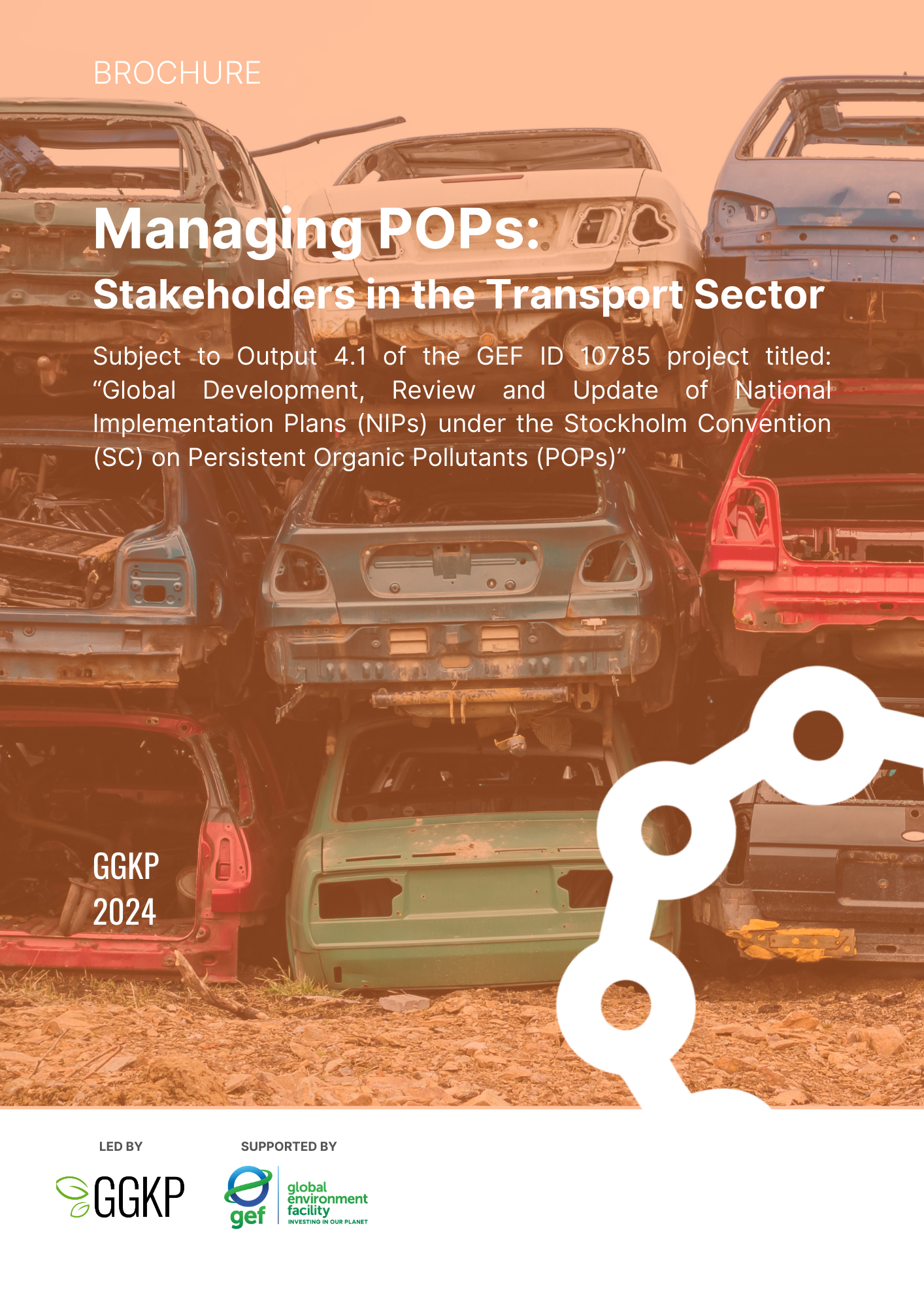
From plastics to synthetic textiles, vehicles contain hidden dangers of persistent organic pollutants (POPs) and other chemicals of concern (CoC). These hazardous chemicals persist in ecosystems and can accumulate through the food chain, threatening both human health and biodiversity. This… Read More

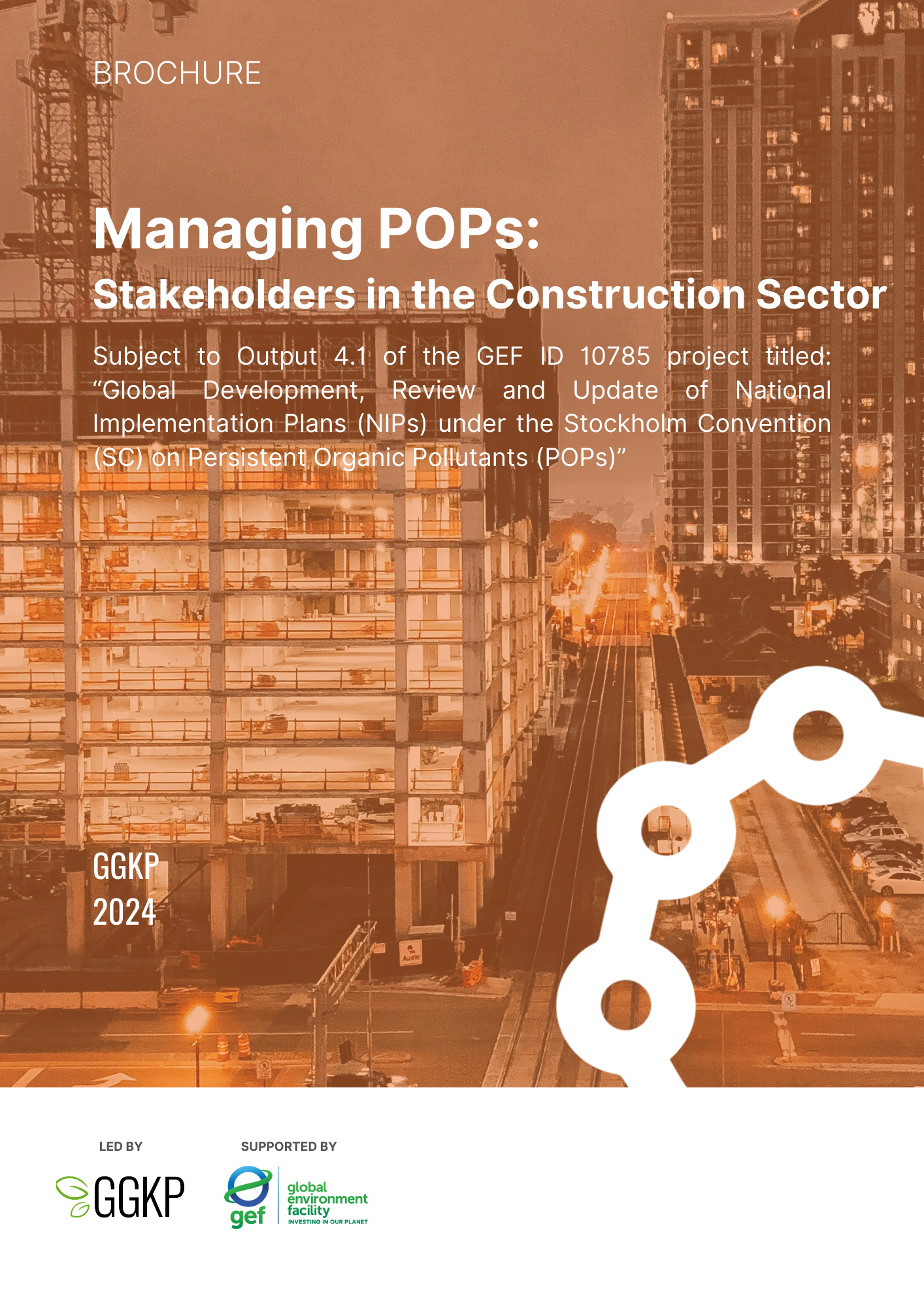
The construction sector is one of the most chemically intensive industries, making the management of persistent organic pollutants (POPs) and chemicals of concern (CoC) a critical challenge. From material selection to demolition, these substances can pose risks at every stage of a building’s… Read More

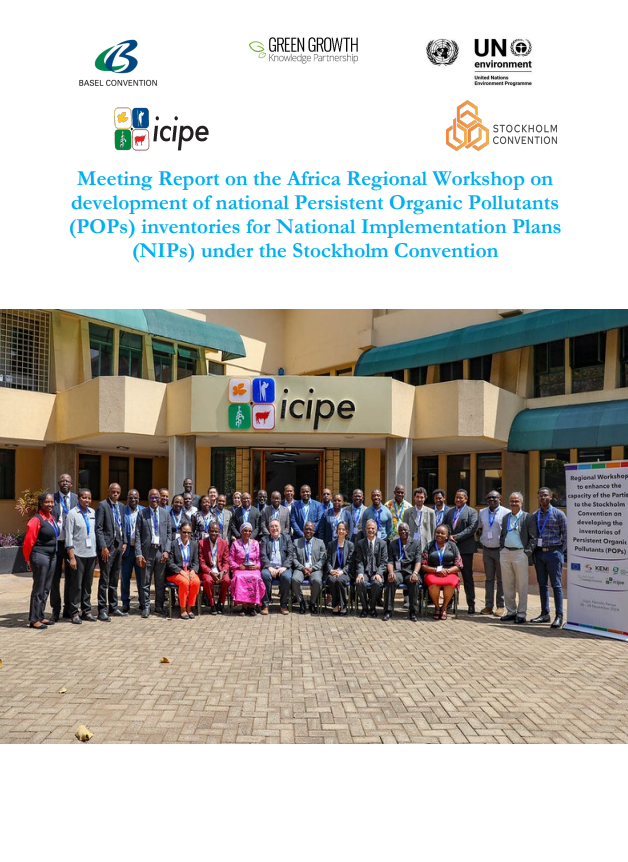
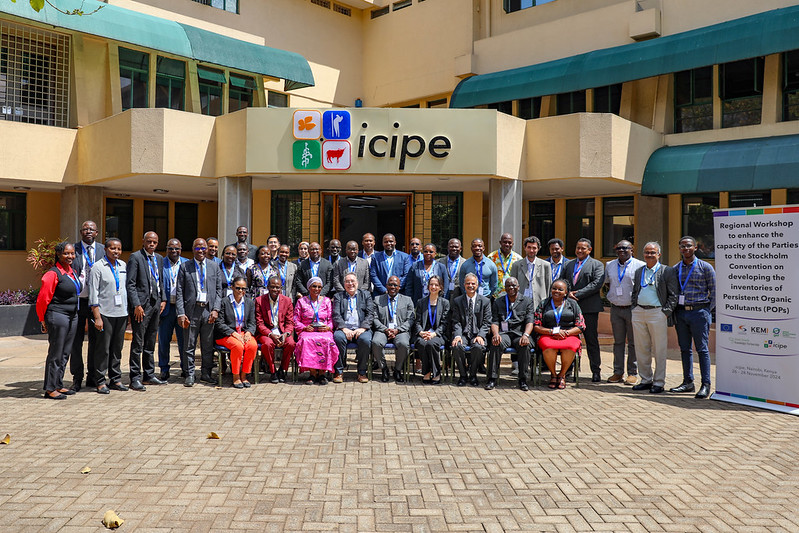
From November 26-28, 2024, experts from Africa and Europe gathered in Nairobi, Kenya, for a transformative workshop aimed at enhancing national capacities for developing and updating National Implementation Plans (NIPs) under the Stockholm Convention.Key highlights: ✅ Practical inventory… Read More

In a landmark initiative to strengthen global environmental governance, the Secretariat of the Stockholm Convention in collaboration with the International Centre of Insect Physiology and Ecology (ICIPE) successfully conducted a three-day technical workshop from November 26-28, 2024, in Nairobi, Kenya. Collaborating closely with the Green Growth Knowledge Partnership (GGKP), the event brought additional countries in the African region, as a part of the GEF-funded project (ID 10785), titled “Global Development, Review, and Update of National Implementation Plans (NIPs) under the Stockholm Convention on Persistent Organic Pollutants (POPs).”

The workshop brought together over 40 experts from Africa and beyond, tackling the challenges of newly listed industrial POPs. With a strong focus on building capacity and enhancing understanding of Article 7 of the Convention, participants delved into sectoral inventories for POPs in the electrical, transport, and construction sectors considering regional specifics. The sessions featured case studies with regional context, practical exercises, and discussions on harmonized reporting tools and sustainable management practices.

The event not only provided invaluable training but also facilitated networking among national officials, regional experts, and international agencies, fostering a collaborative approach to environmental management and public health.

For further details on the workshop's outcomes and upcoming initiatives, please visit the Stockholm Convention Secretariat's website.

Read More

https://chm.pops.int/Implementation/NationalImplementationPlans/Workshops/WorkshopKenyaNov2022/tabid...
pdfUNEP-POPs-NIP-Workshop-Kenya-LOP-20241126.English (1).pdf144.58 KB
Green Growth Knowledge Partnership(GGKP)

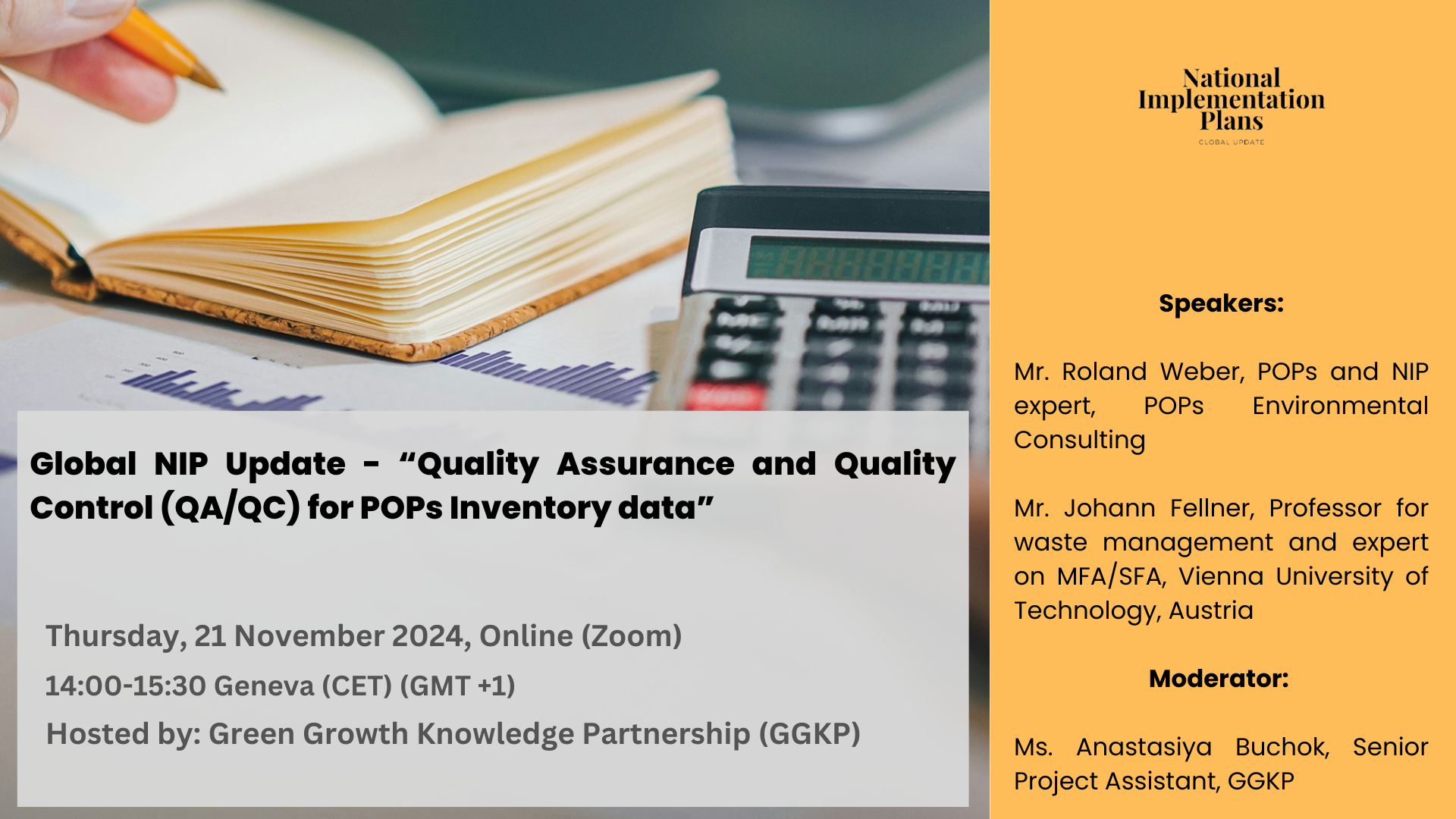
On 21 November 2024, GGKP will host a webinar on "Quality Assurance and Quality Control (QA/QC) for POPs Inventory Data". Read More